
The U.S. has offered to help Ukraine expand Starlink to carry out strikes deep inside Russia — WSJ
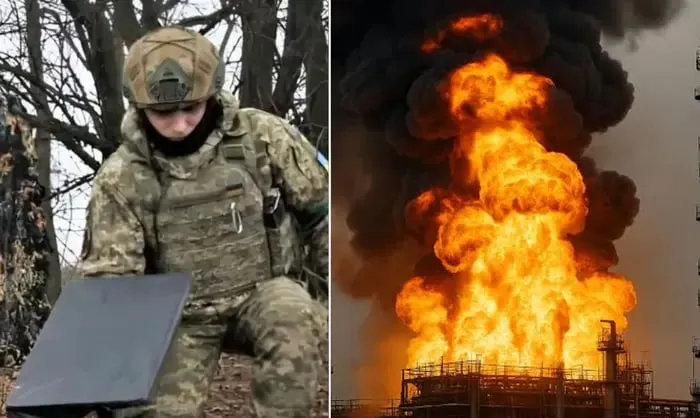
U.S. Senators— U.S. Republicans Roger Wicker and Kevin Cramer—have proposed that Ukraine suspend strikes on Russian energy facilities for 100 days in exchange for expanding the coverage of the Starlink satellite network approximately 300 km deeper into Russian territory. Such an agreement could provide the Ukrainian military with access to satellite communications at greater distances from the Russian border.
According to the publication, the initiative was presented during a visit by U.S. lawmakers to Kyiv on October 9. The senators arrived as part of a bipartisan U.S. congressional delegation and discussed a potential agreement with the Ukrainian side.
According to the proposal’s authors, expanding Starlink’s coverage area would enable the Ukrainian military to more effectively counter Russian missile launchers used to strike Ukrainian cities.
The terms of a potential exchange stipulate that Ukraine would refrain from striking Russian energy facilities for 100 days. In return, the U.S. would expand the Ukrainian military’s access to Starlink within Russian territory, approximately 300 km from the Ukrainian border.
According to the publication, Zelenskyy has expressed his willingness to agree to this initiative. The publication also reported that the Ukrainian president had considered exchanging a suspension of attacks on Russian oil refineries for additional missiles for the Patriot air defense systems.
At the same time, the information regarding the Ukrainian president’s willingness to accept the proposal is based on data from the publication’s sources. No final agreement between Ukraine and the U.S. has been reported.
Discussions of the initiative took place amid reports of restrictions on satellite communications for the Ukrainian military. Starlink is used, in particular, to provide communications and control unmanned systems.
Extending coverage to Russian territory, as envisioned by the senators, could help Ukraine detect and neutralize Russian assets used to launch missile and other attacks. In return, a 100-day pause in strikes on Russia’s energy infrastructure would constitute a concession on Kyiv’s part.
It is currently unknown whether this proposal will be implemented or whether the parties will agree to its terms. No officially announced agreement on such an exchange exists.
According to The Wall Street Journal (WSJ), President Volodymyr Zelenskyy has expressed his willingness to accept such a proposal.
Musk explained who controls the Starlink restrictions in Ukraine.
Fedorov announced the partial restoration of Starlink service for the military.
On the night of October 14, SpaceX imposed speed limits on Starlink terminals for the StarShield military service package. This was reported by electronic warfare specialist Serhiy Flash, who specified that the limit is 100 miles per hour (about 161 km/h). According to Serhiy Sternenko, an activist, volunteer, and former advisor to the Minister of Defense, this disrupted several important missions. However, the speed limit was later lowered even further, to 60–70 km/h.
In the Huliaipole sector, units of the 7th Corps of the Airborne Assault Forces reported problems with Starlink connectivity on the night of October 14 due to data transmission speed limitations. This affected drone control and led to the cancellation of some combat missions.




