
Sea-level rise in Hong Kong and Shanghai will be 15–20% higher — South China Morning Post
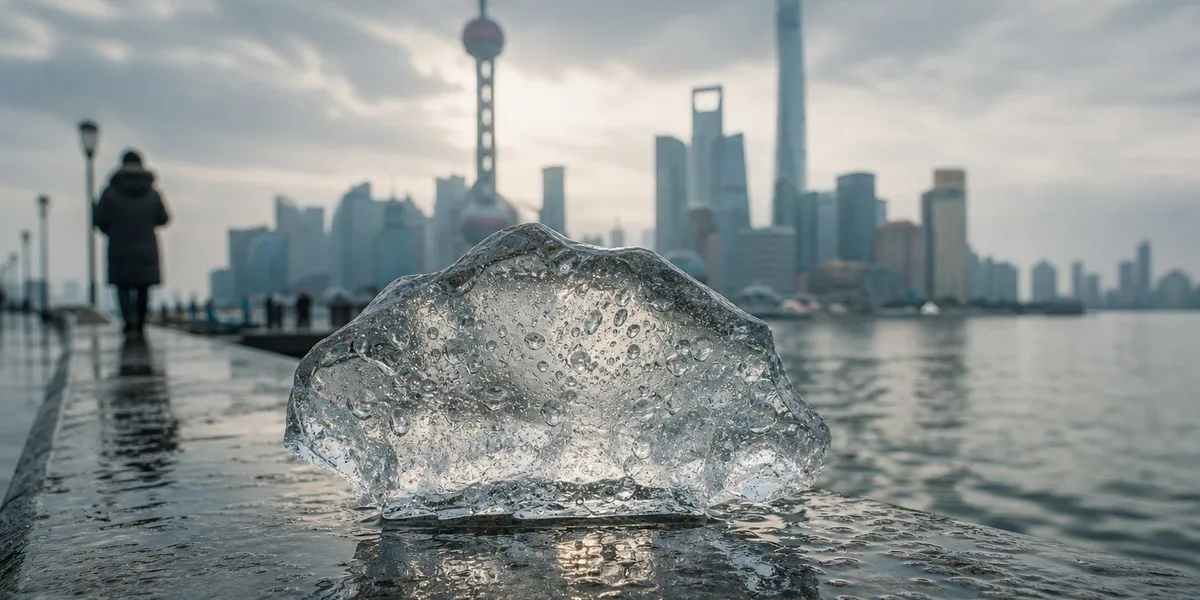
In Hong Kong and Shanghai, sea-level rise associated with mass loss from the Antarctic Ice Sheet will be 15–20% higher than the global average. An international group of scientists reached this conclusion, South China Morning Post reports.
Researchers explain this by gravitational changes linked to the shrinking Antarctic ice. They redistribute water in the world ocean, causing sea levels to rise more strongly along China’s densely populated coast.
Risk even with limited warming
The study’s lead author, Lin Yuchen, an assistant professor at the School of Energy and Environment at the City University of Hong Kong, said that even if global warming is limited to 1.5 degrees Celsius, Antarctica has a 92% probability of losing mass throughout this century.
More current news is available on the UA.News Telegram channel Telegram.
Scientists analysed thousands of models of the Antarctic Ice Sheet and concluded that its contribution to sea-level rise in Shanghai and Hong Kong will be higher than the global average. According to Lin, after Antarctic ice enters the ocean, water is redistributed over several weeks or months. Therefore, this effect already applies to every centimetre of Antarctica-related sea-level rise.
Possible rise by 2100
The study, published on September 30 in the peer-reviewed journal Nature Geoscience, also describes a possible chain effect if greenhouse gas emissions are not reduced quickly enough. Ocean warming near Antarctica thins floating ice shelves, and their collapse accelerates the flow of ice from the glaciers they hold back into the ocean.
Under this scenario, Antarctica alone could add up to 25 centimetres to global sea level by 2100. For Hong Kong and Shanghai, this contribution could reach approximately 29–30 centimetres, excluding the melting of the Greenland Ice Sheet, mountain glaciers, and thermal expansion of ocean water. Researchers estimate that such a rise could be enough to permanently flood the homes of more than 10 million people.




