
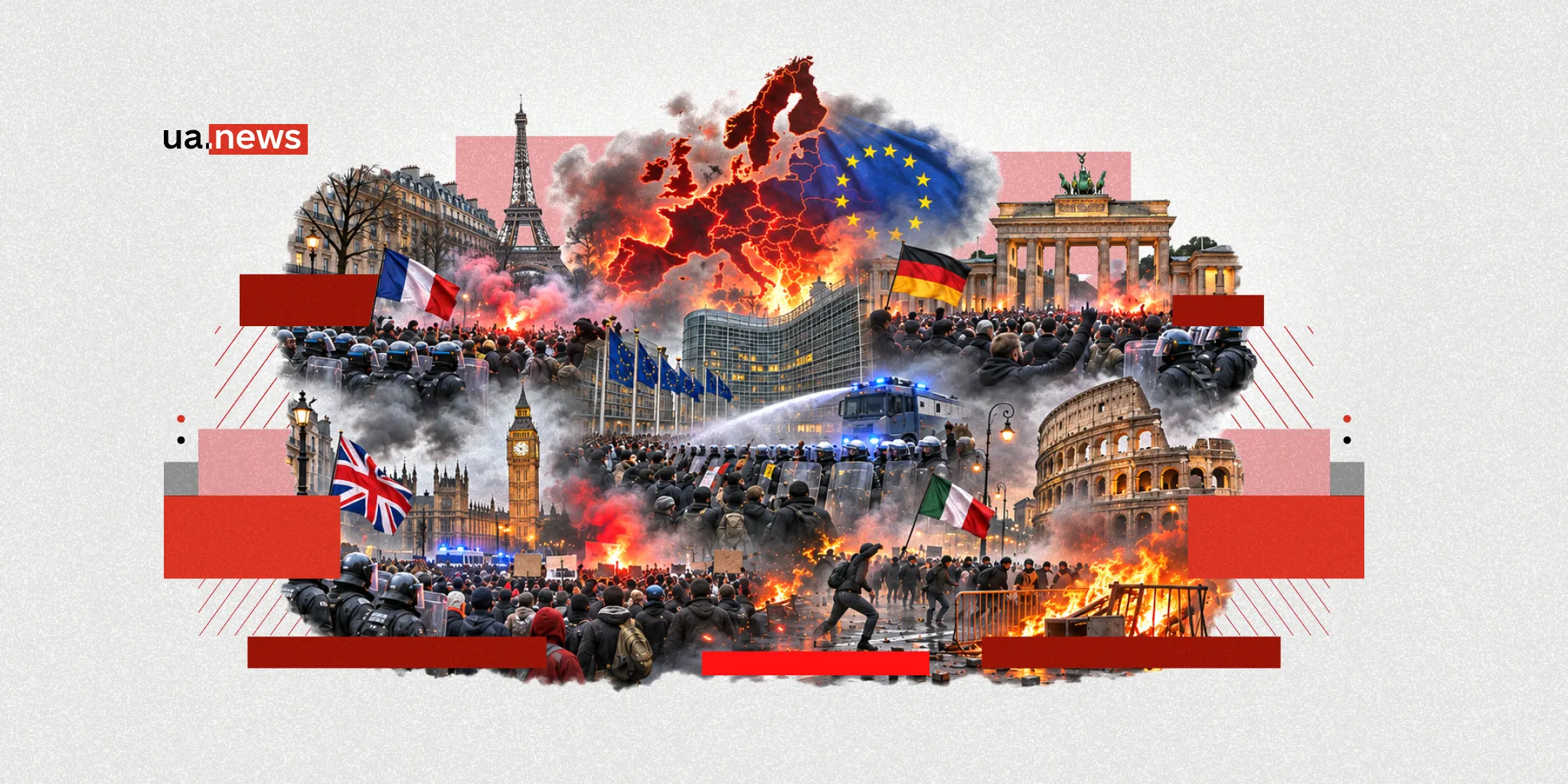
Mass protests continue to rage in France, Germany, and a number of other European countries. And if you take a closer look at how these events are described in some Ukrainian media outlets and on social media, you’ll see a fairly persistent narrative that’s very far from reality. Most often, when the media show riots, barricades, and burning police cars, the focus is on the idea that “migrants” are supposedly behind it all: as if to say, “There you have it—the true face of the newcomers who have flooded Europe.” At first glance, such claims seem convincing—but only to those who know neither the history of France nor the political culture of Europe as a whole. Because if you dig deeper into the situation, the anatomy of this fall’s protests in the EU turns out to be quite different—more complex, more profound, and at the same time quite logical and predictable.
So what is really happening on the streets of European cities? Why are people protesting en masse, and are these truly “migrant riots” and acts of vandalism for the sake of vandalism? UA.News political analyst Mykyta Trachuk examined the issue.
The Socioeconomic Basis of the Protests: Why Europeans Took to the Streets
As of now, the protests have spread to at least 10 countries—France, Germany, Italy, Spain, Portugal, Belgium, Albania, the Czech Republic, Greece, and Denmark. The total number of participants is estimated at several hundred thousand (or perhaps 1–2 million), and the vast majority of them are young people under the age of 30–35. But what matters most here is not geography or numbers, but what lies behind these protests. Because if we set aside our emotions and look at the protesters’ demands, it becomes clear: this is a deeply socio-economic movement that has grown out of very specific and painful problems.

First and foremost, these
include issues such as sky-high rent prices, which are often simply unaffordable for a young person earning an average salary. In Madrid, Lisbon, and Barcelona, tents have been set up in public squares for weeks—a form of protest against the housing crisis, which has made affordable housing unattainable for an entire generation. It’s also about low wages that can’t keep up with rising prices, and chronic underfunding of education—French schools lack teachers, buildings are in disrepair, and the university admissions system remains confusing and opaque. It’s also about climate concerns, which for young Europeans are not an abstract topic from “first-world” news—as it’s perceived from Ukraine—but a real fear for their own future. And, of course, there is the issue of defense spending, which is rising before our very eyes, while social programs are being cut. In Germany, in particular, there are plans to reinstate mandatory military conscription—a move that has sparked mass protests by locals, among others.
This broad pan-European movement has no single leader, no clear ideology or program, and no single hidden, mysterious “puppet master,” and so on. It is a fundamentally decentralized, horizontal mobilization, in which student organizations, labor unions, environmental activists, and simply concerned citizens act in parallel—sometimes overlapping, sometimes not. That is precisely why attempts to explain these protests as some kind of “orchestrated campaign” seem downright naive: there is no single center from which this could be coordinated, and the list of participants and their demands is so diverse that it is fundamentally impossible to unify them. There is only a shared weariness with the current way of life, fear for the future, and one common feeling: “We’ve had enough.”
France—the source of the protest movement: history and political culture as an explanation for everything
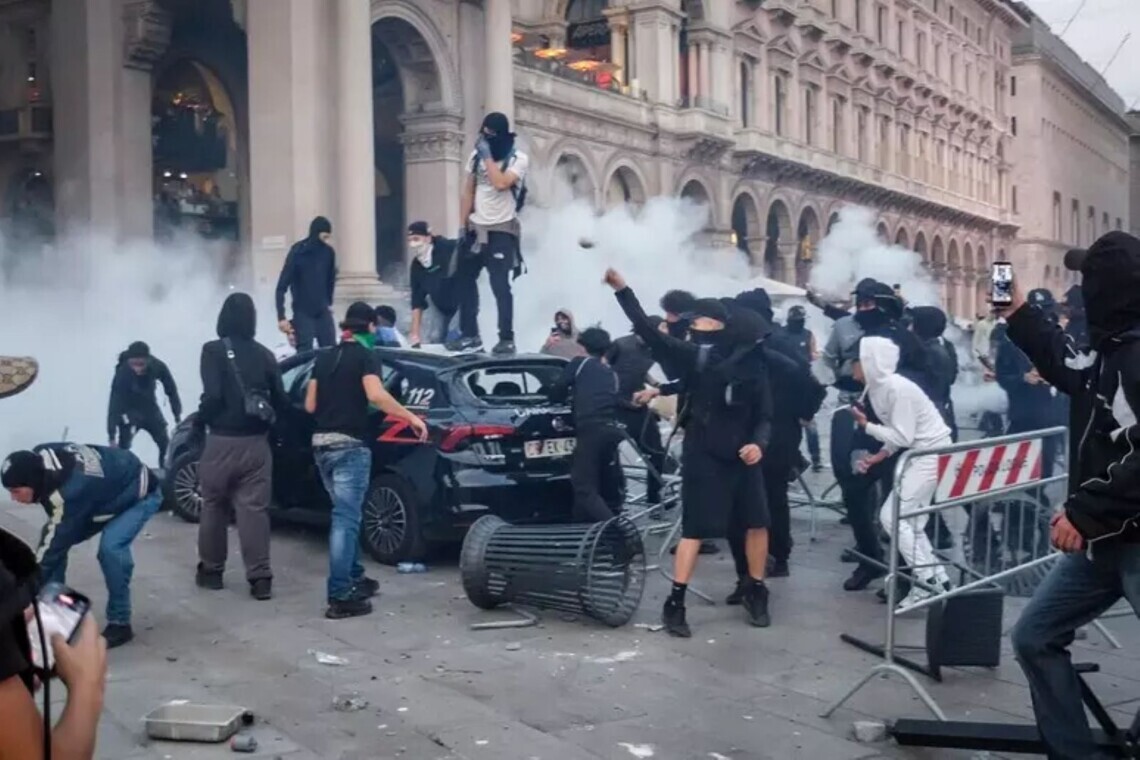
France, the “cradle” of these protests, deserves special mention. It was there that the rallies first erupted, and it is precisely the French example that most clearly illustrates how superficial the interpretation of these events as a “migrant revolt” really is.
The fact is that France has a long, almost sacred tradition of street protest. This does not mean that every French protest, with its characteristic riots, is justified or constructive. But it does mean that analyzing events in France without taking this tradition into account is like starting to read a book from the end and then being surprised that you don’t understand a thing.
The tone of modern French political culture was set by the Great French Revolution of the late 18th century: mass demonstrations, barricades in the streets of Paris, the storming of the Bastille, the execution of the king, and so on. This was not some marginal event: it laid the ideological and moral foundation of modern France. This was followed by the July Revolution of 1830, the February Revolution of 1848, the Paris Commune of 1871, and so on. Each of these events was accompanied by bloodshed, destruction, pogroms, and chaos, while simultaneously shaping the political consciousness of the French nation.

May 1968,
however, was a phenomenon all its own: student unrest in Paris escalated into the largest general strike in the country’s history, joined by some nine million (!) people, which led to the resignation of the “eternal” president, Charles de Gaulle.

French political culture views mass, high-profile, and often violent protest not as an extraordinary event, but as a fully legitimate instrument of political pressure—often destructive and chaotic, yet deeply rooted in French identity.

So those who wonder today why the French are setting fire to and ransacking their own cities are wondering in vain. This is exactly how France protests—and has done so for centuries. And although from an outside observer’s perspective this may quite rightly appear barbaric and savage, for the French themselves it is a familiar way of resolving political conflicts and “letting off steam.” The same applies to many other European countries, especially those in the south—Spain, Italy, Portugal, Greece, Albania, and so on. The “passionate” Mediterranean temperament, a large number of “disaffected” young people, long-standing traditions of street protests, low trust in institutions, and so on—all of this makes protest activity there particularly intense.

The
Migrant Factor: Who Is Really Wreaking Havoc in European Cities
And now we come to the most manipulative part of this story—the widespread claim that the protests are supposedly a “riot by Islamist migrants.” Let’s be clear: this is not true, and it does not stand up to any factual scrutiny.
Hundreds and hundreds of thousands of people are taking to the streets across Europe. In France alone, up to 700,000–800,000 protesters and a nationwide strike are expected this coming weekend. On the streets are schoolchildren and students, blue-collar workers, teachers, employees of infrastructure facilities such as railroads and ports, labor unions, environmental activists, and who knows who else. And when we see men of clearly African appearance in footage from Paris, Lyon, or Marseille, it’s worth remembering that the country is home to up to 6 million (!) ethnic Algerians (Algeria is a former French colony), who have been French citizens for two or three generations. They are just as much full-fledged French citizens as everyone else.

At the same time, it would be pointless to deny that there are also people of migrant origin among the protesters. There are also radical Islamist elements, pro-Palestinian activists, and so on. People talk about this too, and it is also part of reality.
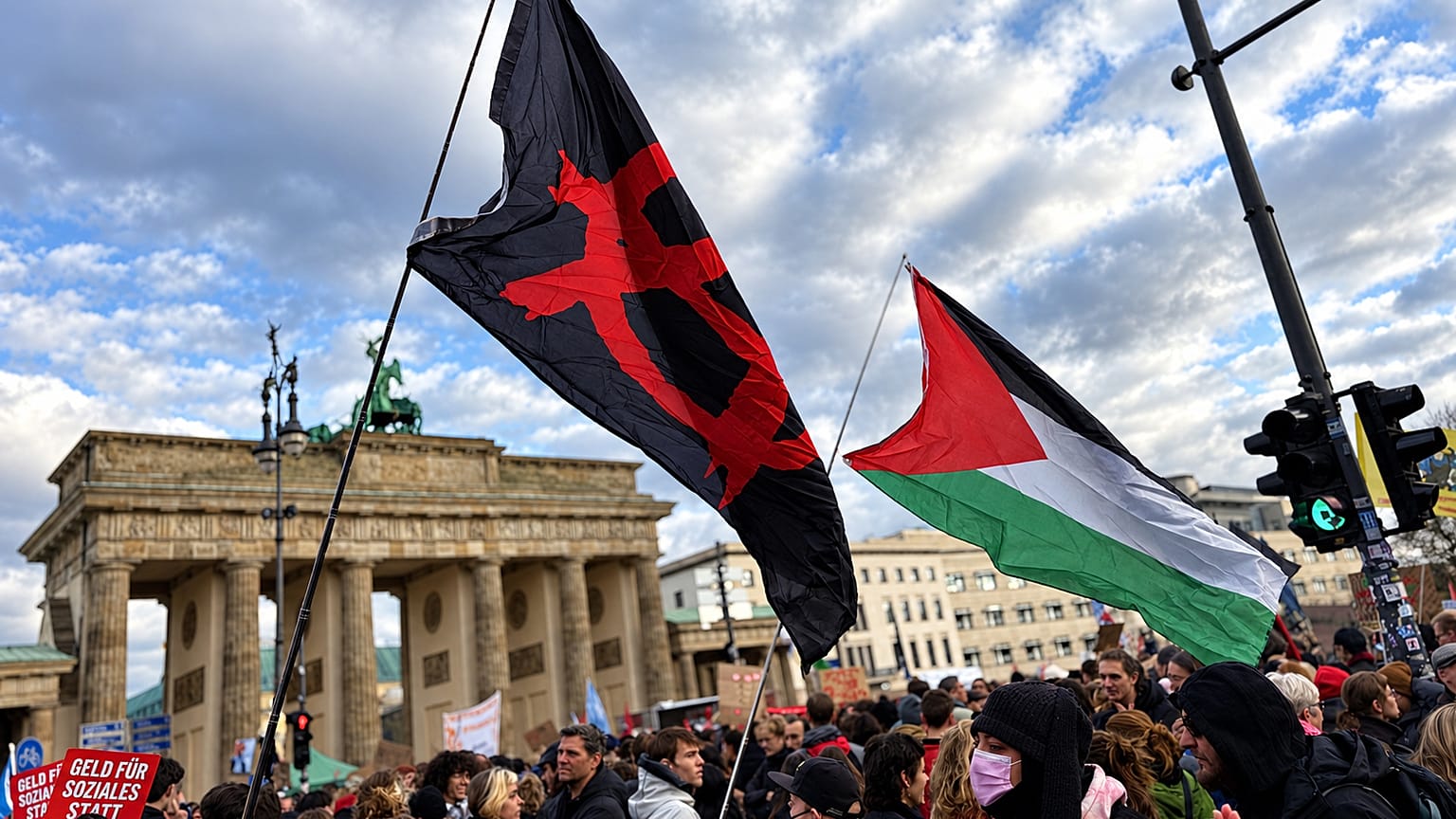
But the fact is that in any mass protest — especially one as large-scale, emotional, and often violent as this — there will always be people who simply enjoy smashing things, setting fires, fighting, clashing with the police, and looting trendy boutiques and electronics stores. This has nothing to do with ideology or background: it’s about the psychology of crowd behavior, which manifests itself in every country and throughout history. At any protest, there are always both radicals who want to “stir things up” and ordinary thugs who have come only to loot and fight with the police. Singling out these very people in television footage and extrapolating their behavior to the entire movement of millions is a classic form of manipulation that distorts the essence of the phenomenon.
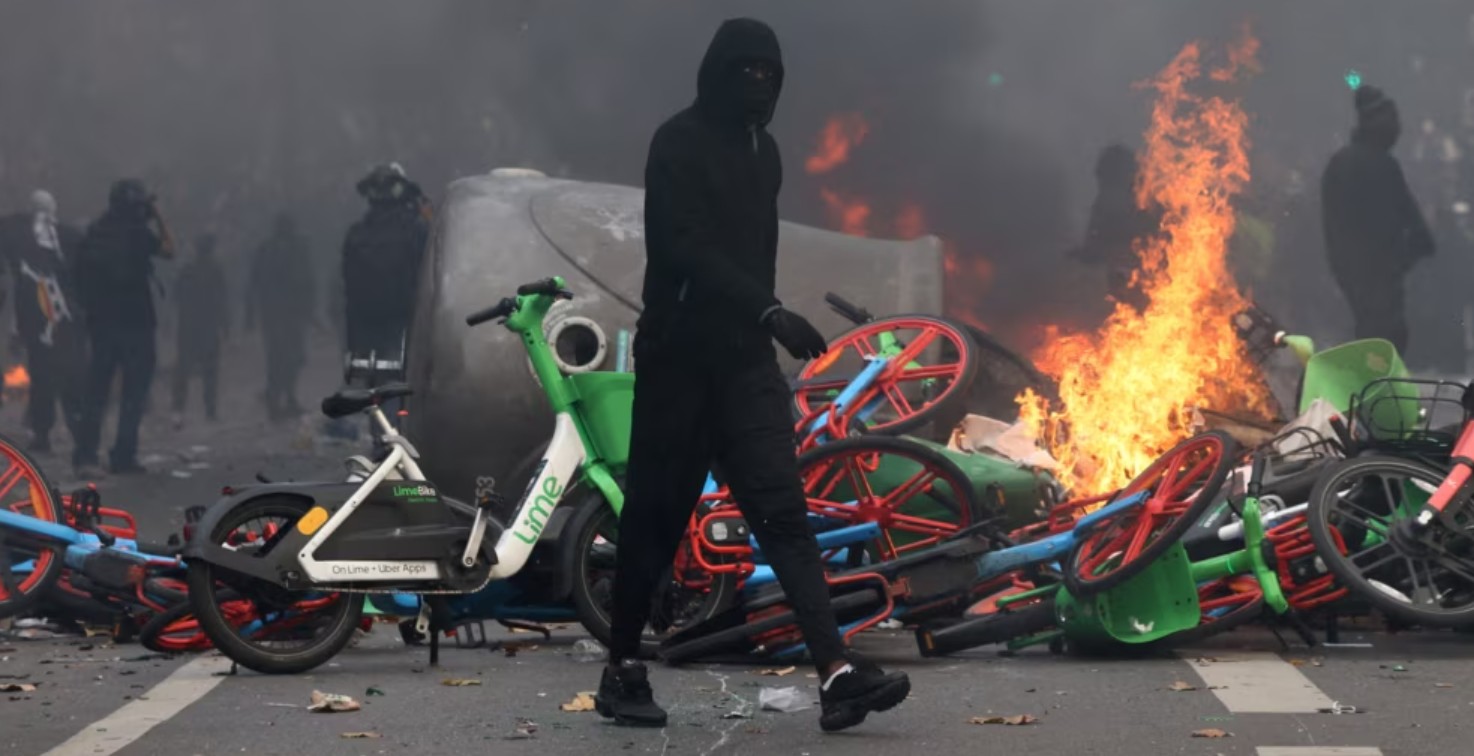
The
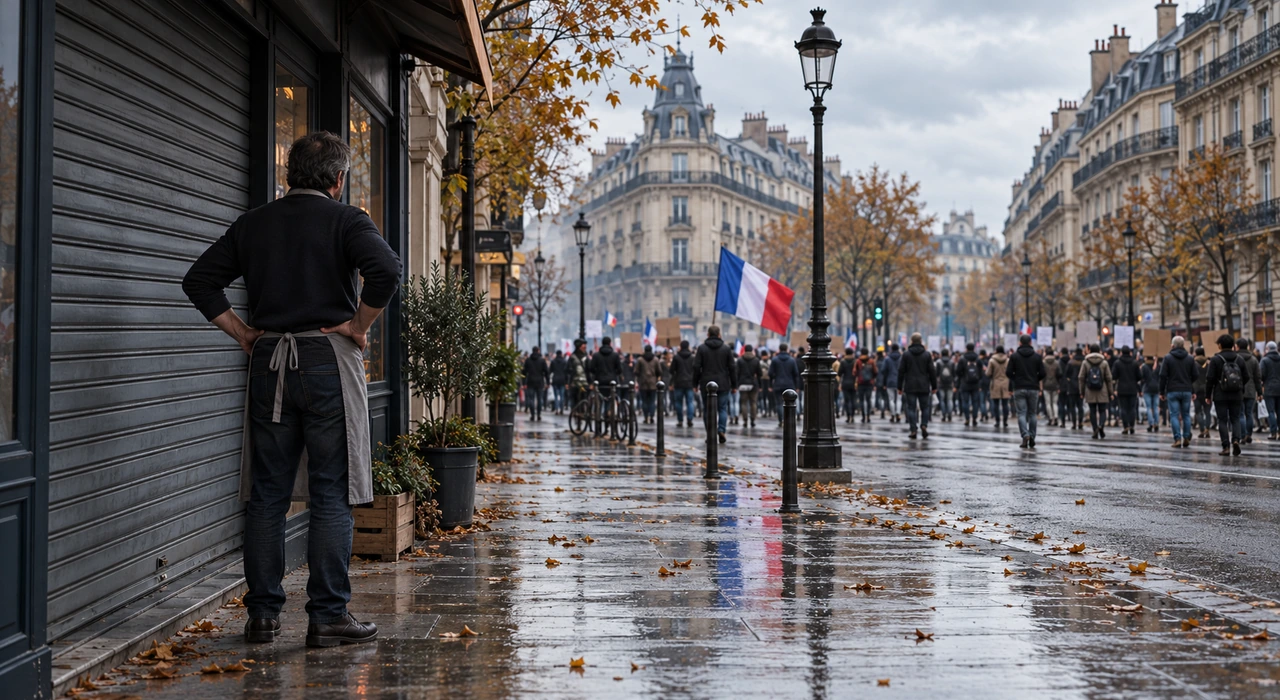
reality is that the streets of French cities are filled mainly with students, high schoolers, teachers, medical professionals, railroad workers, factory workers, and so on. In other words, they are ordinary Europeans demanding a raise in the minimum wage, better educational conditions, and affordable housing. The current European protest movement is distinctly social in nature; it is rooted in socioeconomic problems, not issues of migration, Islam, or violence for violence’s sake. It is precisely the masses of ordinary people who are the face of these protests, not some radical elements who smash up Gucci and Prada boutiques only to resell the stolen bags on the streets.
In
summary, we can, of course, have different views on how the French, Albanians, Germans, or Spaniards express their dissatisfaction. In Ukraine, where the socioeconomic situation is far worse, where sporadic protests are permitted only for activists from grant-funded organizations and those close to them, and where riots against the arbitrariness of law enforcement and violence against conscripts are immediately and severely punished, this all seems like nonsense. But such is the political culture of France and many other European countries: as soon as they don’t like something, they take to the streets en masse and stage riots. This has been the case for centuries, it is the case now, and it will most likely continue to be so.
What’s more: as paradoxical as it may sound, the ability and right of people to take to the streets and loudly voice their demands is an indicator of a healthy political system. Citizens “let off steam,” the state is forced to respond, society negotiates a new balance—and European capitals quickly return to normal life. Yes, this is by no means a perfect mechanism; it is often accompanied by destruction and violence. But it is still far better than a situation where there are no protests at all, where almost all civic activity is frozen and taboo, and all citizens are “satisfied” simply because being dissatisfied is equated with treason or something of the sort.
European capitals will eventually return to their normal appearance, the authorities will meet the protesters halfway, the protesters will disperse to schools, universities, and workplaces, and the owners of fashion boutiques will receive huge compensation payments from insurance companies and rebuild their stores even more beautifully than they were before. But the very fact that millions of people are willing to take to the streets, speak out loudly about problems, and demand a better life shows that these societies remain politically alive and healthy. And that is, perhaps, the main lesson to be learned from this story.




