
Remains of a likely flightless Jurassic predatory bird found in China — Live Science
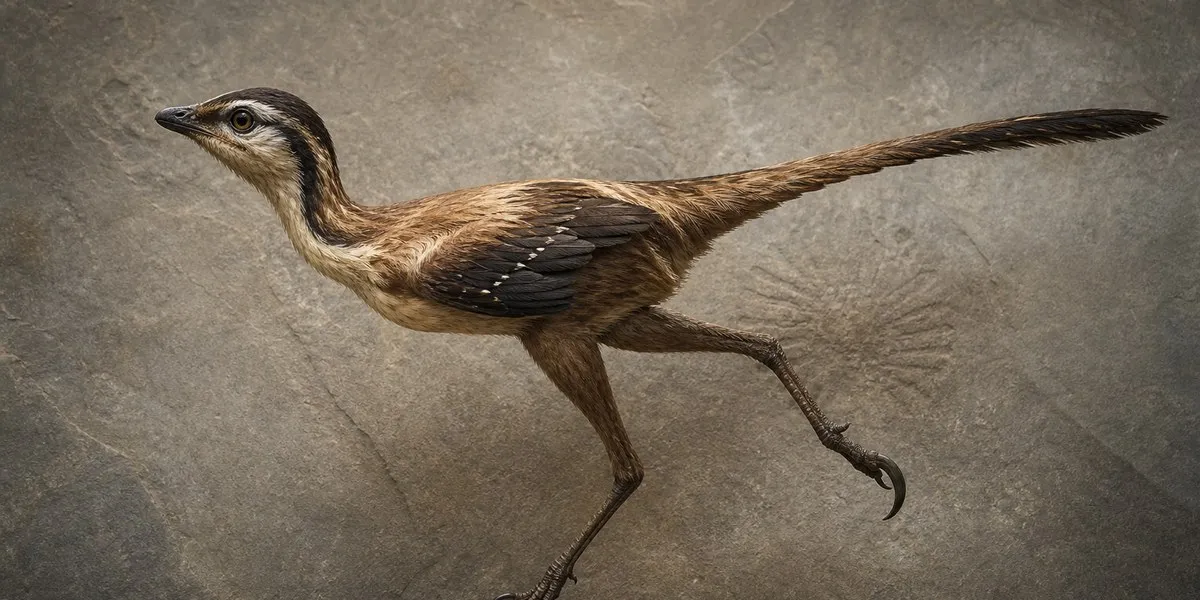
Paleontologists have discovered in southeastern China the remains of a small Jurassic bird, Yuezhuornis yangyuanensis, which was likely a ground-dwelling predator and did not fly. The fossil animal was found in 2024 in the Upper Jurassic Zhenghe fossil assemblage. It lived about 150–148 million years ago, when birds were only beginning to appear in the fossil record, Live Science reports. The study results were published in the journal Nature.
A combination of bird and dinosaur traits
Analysis of the fossil skeleton showed that the animal weighed about 0.8 kg and was approximately the size of a crow. According to Min Wang, a researcher at the Chinese Academy of Sciences, its forelimbs were about one-third shorter than its hind limbs. This distinguishes Y. yangyuanensis from modern birds and many other Jurassic paravians, in which longer forelimbs are associated with generating lift during takeoff.
The species combined traits of early birds and predatory deinonychosaur dinosaurs, including Velociraptor. The second toe was hyperextensible and bore a sickle-shaped claw similar to those of some dinosaurs. At the same time, the thin skull bones and pelvic structure resembled traits of early birds.
More current news is available on the UA.News Telegram channel Telegram.
Adaptations for running and hunting
Widely spaced teeth, thin skull elements and curved claws that the animal could use to hold prey indicate that its diet likely included meat. A comparison of limb proportions with 377 modern bird species showed the greatest similarity to ground birds. In Wang's view, Y. yangyuanensis was a small predator with pheasant-like proportions and was well adapted for running.
Despite its likely inability to fly, researchers placed this species on the evolutionary tree closer to modern birds than Archaeopteryx, which is considered one of the earliest birds and likely could fly. Paleontologist Fernando Novas noted in an accompanying article in Nature that this adds to evidence that flight arose independently multiple times among bird-related groups of predatory dinosaurs.




