
In Latvia, grave of six possible victims of a Viking attack examined — Live Science
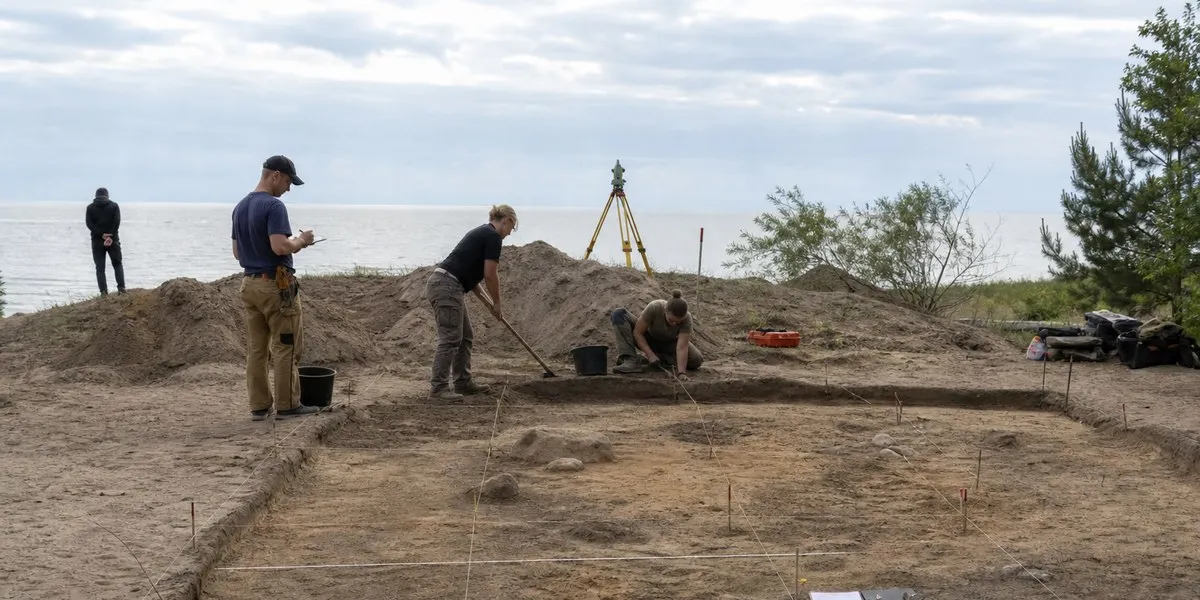
In Latvia, archaeologists examined the burial of six people who may have died during a violent event about 1,200 years ago. Radiocarbon dating places the grave in the second half of the ninth century, an early period of the Viking Age. As Live Science reports, one theory for these people's deaths is a Viking attack, although researchers do not consider it proven.
Family ties and injuries
Four men, a boy and a girl were buried in the grave at the Chunkani-Drengeri cemetery near the Gulf of Riga. Genetic analysis showed that the boy was the son of one of the men, while another man was their third-degree relative — likely a cousin or great-uncle. It was not possible to obtain the girl's ancient DNA.
Marks of fatal injuries inflicted by a sharp object were found on the bones of three men. One of them had defensive wounds on his forearm and hand, another had his jaw shattered by a blow, and the third was nearly decapitated. The cause of death of another man and the two children could not be determined: they may have had soft-tissue injuries that did not survive on the remains.
More current news is available on the UA.News Telegram channel Telegram.
Burial according to local custom
Scientists emphasize that this was not a mass grave where bodies were hastily thrown without order, but a multiple burial. Each deceased person was laid to rest in accordance with local rites and accompanied by traditional burial goods. The girl was buried with her head to the northwest, while all the male individuals were placed beside her in a row with their heads to the southeast.
Genetic data indicate that those buried were of indigenous Baltic origin. Researchers identified them as Semigallians, an Iron Age community that lived on the fertile plains of this region. Two men were not related to the other members of this family group, which, according to the study's authors, may indicate that they belonged to the same community or large household.
Study co-author Elina Petersone-Gordina, an archaeologist at the University of Latvia, noted that it is impossible to establish the attackers with certainty. At the same time, the time of the burial and the nature of the injuries allow a Viking attack to be considered as one possible version, alongside violence within the community or a clash with neighbors.




