
Nepal fails to agree on scope of constitutional reform — Kathmandu Post
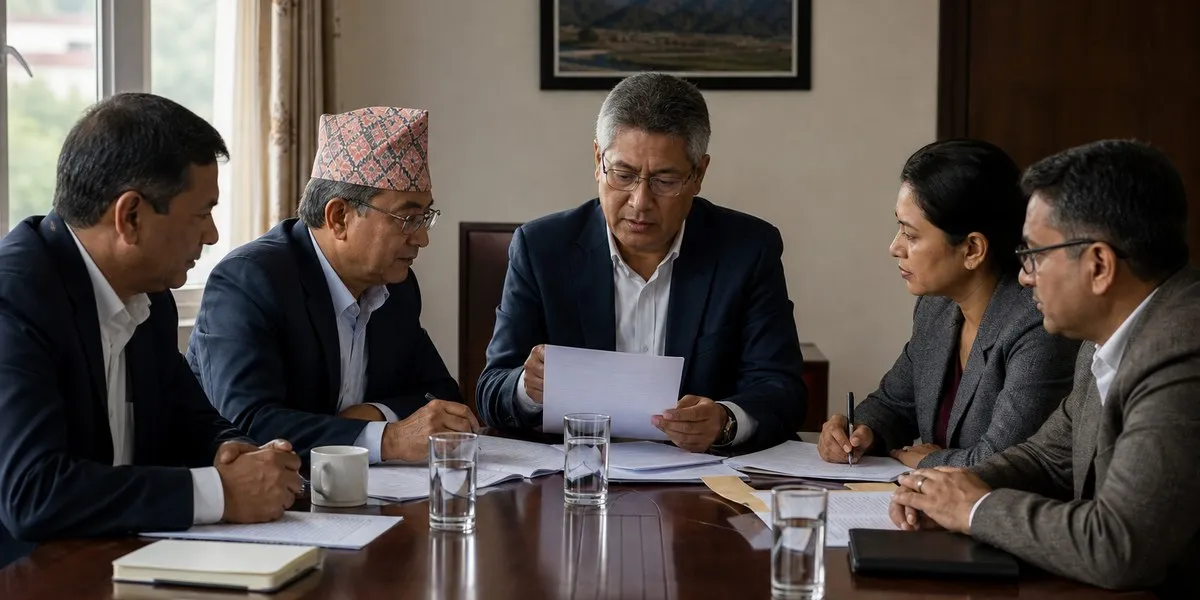
In Nepal, the government of Balendra Shah has failed to secure the support of parliamentary parties in preparing changes to the 2015 Constitution. A working group formed after the government’s decision of March 30, 2026, submitted its report on July 16, but the document has still not been made public. As the Kathmandu Post reports, the report proposes amending 245 of the Constitution’s 308 articles — nearly 80% of the document.
Parties’ distrust of the initiative
The scale of the potential changes has raised concerns among political forces that participated in drafting and adopting the fundamental law. The Nepali Congress, Communist Party of Nepal — Unified Marxist-Leninist, Nepal Communist Party, and several Madhesh-based parties questioned the government’s purpose, asking whether it was seeking amendments or an effective rewriting of the Constitution.
The Nepali Congress refused to delegate a representative to the working group. A representative of the Communist Party of Nepal — Unified Marxist-Leninist boycotted its meetings, while representatives of other parties that initially joined the discussions later withdrew from the process.
The group’s coordinator, Asim Shah, a political adviser to the prime minister, said it had not been tasked with drafting amendments directly. According to him, the report is intended to serve as reference material for a future commission tasked with preparing constitutional changes and includes all proposals received during consultations. They include restoring a constitutional monarchy, revising the model of state governance and the electoral system, introducing an executive president, and changes to the functioning of independent constitutional bodies.
More current news is available on the UA.News Telegram channel Telegram.
Barrier in parliament
Amendments require the support of two-thirds of lawmakers in both chambers of the federal parliament. The ruling Rastriya Swatantra Party holds nearly two-thirds of seats in the lower house but has no representation in the National Assembly. An amendment to the House of Representatives’ rules had previously been proposed that would calculate two-thirds of votes jointly across both chambers. The Supreme Court suspended it, finding it unconstitutional.
Constitutional expert Bipin Adhikari believes that the government’s lack of transparency and the absence of a clear position on the specific provisions it plans to review hinder a substantive discussion. Another expert, Chandra Kanta Gyawali, stressed the need to assess problems identified over the Constitution’s 11 years in force.
Positions on the future model
The Nepali Congress and the Communist Party of Nepal — Unified Marxist-Leninist advocate preserving the parliamentary model, republican system, and mixed electoral system, while allowing limited administrative adjustments. The Nepal Communist Party and Janata Samajbadi Party Nepal support direct elections for the head of the executive and a fully proportional electoral system. The Rastriya Prajatantra Party seeks the restoration of a constitutional monarchy and a Hindu state.
At the same time, most parties agree on the need to clarify the division of powers among the federal, provincial, and local levels of government, reduce the number of local units, and cut the size of provincial assemblies and cabinets. Asim Shah said the government plans to first advance changes on which a nationwide consensus can be reached.


