
Child’s necklace and perfume bottle found in wardrobe in Pompeii — The Guardian
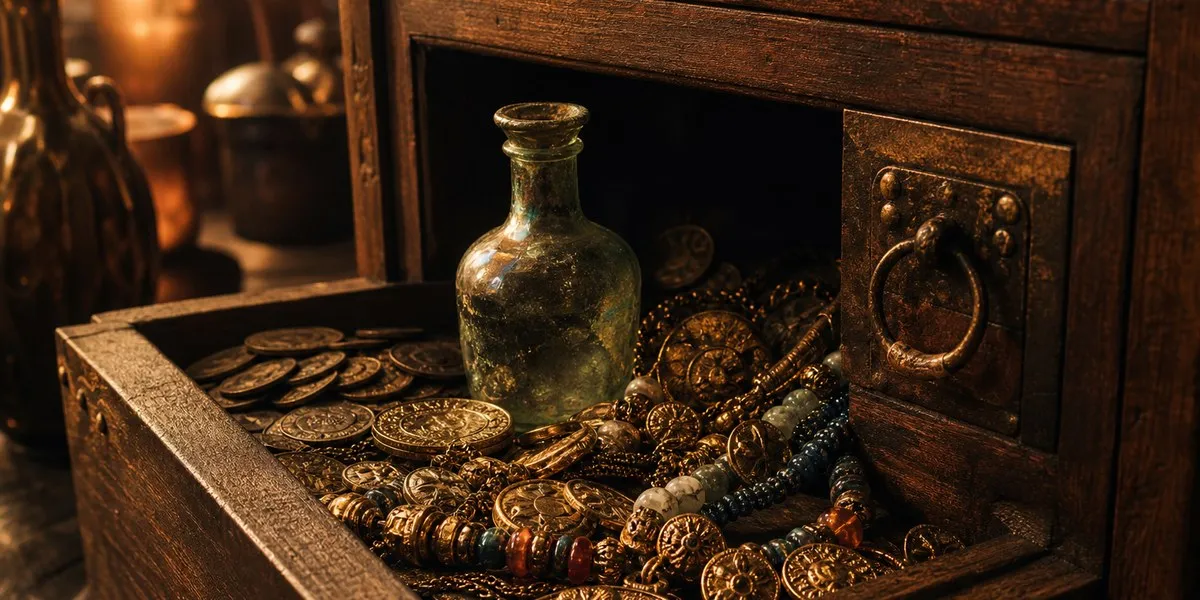
In Pompeii, archaeologists found personal belongings in a wooden wardrobe that had remained sealed for nearly 2,000 years after the eruption of Vesuvius in AD 79. The finds include cosmetic tools, a small glass perfume bottle, coins and a necklace traditionally worn by children. The Guardian reports.
Belongings of residents of the ancient city
The wardrobe was discovered in a room of a house on Via dell'Abbondanza, one of the busiest streets of ancient Pompeii. It also contained tweezers, an incense burner, a bronze lantern, kitchen utensils and 38 bronze coins.
The most interesting find was a crepundia-type necklace, traditionally worn by children. It contains more than 20 small pendants made of different materials, including depictions of the gods Bes and Mercury. The pendants jingled so that parents could keep track of their children and could also help establish their identity.
More current news is available on the UA.News Telegram channel Telegram.
Signs of trade and a hurried escape
The wardrobe also held a wooden box with lead weights and other items which, according to researchers, may indicate that one of the residents was engaged in trade. Pompeii Archaeological Park director Gabriel Zuchtriegel noted that the money and personal belongings left behind may point to the owners' hurried escape during the eruption.
In a storage room of the house, archaeologists also found fragments of the skeletons of two mice inside an amphora. The house had previously been linked to a person named Cornelius Maximus because of inscriptions that are no longer visible. Its facade was first excavated in 1912, while individual rooms are only now being investigated as part of a restoration project.
Further excavations
Excavations are also continuing at the Villa of the Mysteries on the outskirts of Pompeii. Researchers are working in the rooms where servants lived, hoping to learn more about their daily lives and household. According to Zuchtriegel, most of the villa's residents were servants.




