
In Singapore, employees are increasingly managing AI agents
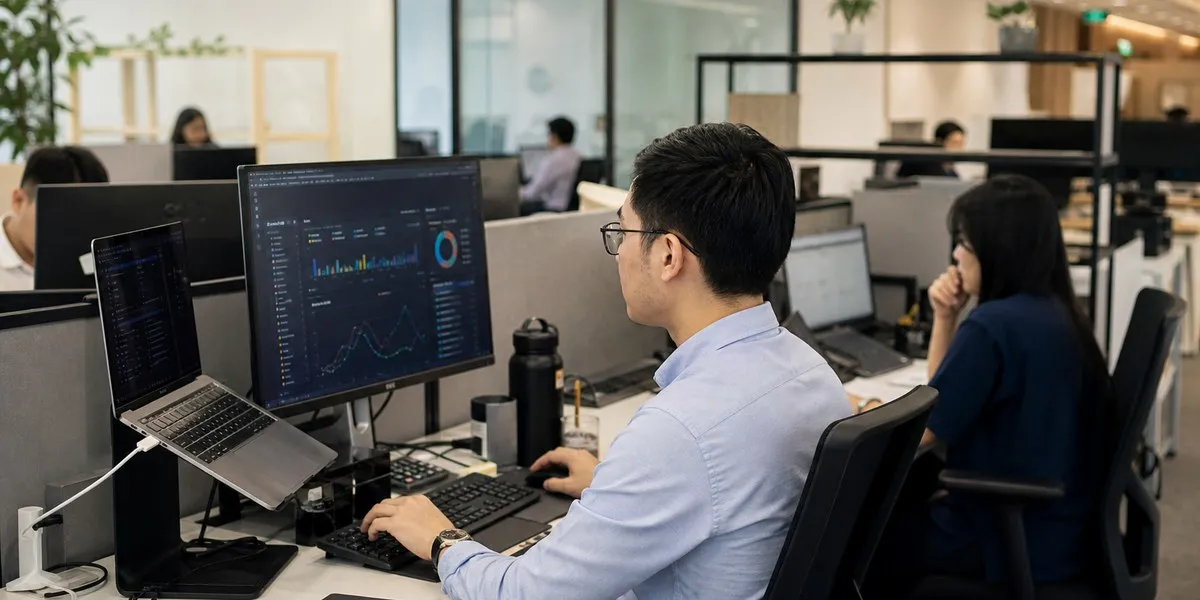
In Singapore, companies implementing agentic artificial intelligence are increasingly assigning employees to manage digital agents and verify the results of their work. As Channel NewsAsia reports, such systems can analyse documents, process data and complete tasks within minutes, but the final decision remains with humans.
AI speeds up document reviews
Ong Chee Chuan, senior manager for audit services at EY, said that with the help of AI agents, he can delegate the analysis of working papers while handling other tasks in parallel. According to him, analysing materials prepared by employees takes about three minutes, while a detailed review of documents could take around two hours.
Lee Wai Hok, head of audit services at EY Singapore, noted that regulators and other stakeholders expect human professional judgment to be retained in auditing. He stressed that the acceptable level of errors caused by AI hallucinations is extremely low, while accountability remains a key condition for using the technology.
More current news is available on the UA.News Telegram channel Telegram.
Job titles change more slowly than job content
Audrey Chan, executive director and head of the human resources practice at Kerry Consulting, said that artificial intelligence is changing the content of work faster than job titles. In her assessment, employers are generally not replacing employees entirely, but are revising work processes and training staff to use AI to improve productivity and work with data. This applies in particular to human resources, finance, legal, risk and marketing.
A SAP survey of 200 companies in Singapore showed that 92% of them are already using or exploring the possibilities of agentic AI, compared with 69% a year earlier. AI currently supports an average of 27% of tasks in Singaporean companies, and over the next two years, businesses expect this figure to rise to 47%.
Risk to training junior specialists
Eileen Chua, managing director of SAP Singapore, warned that young employees' use of AI without developing independent thinking could weaken critical judgment and on-the-job learning. She believes companies should maintain a mentorship approach: junior specialists should first develop their own view of a problem and only then use technology. Chua also called the combination of professional knowledge with an understanding of AI capabilities a necessary skill.


