
Israel demolishes 80 homes and displaces 400 people — Anadolu Agency
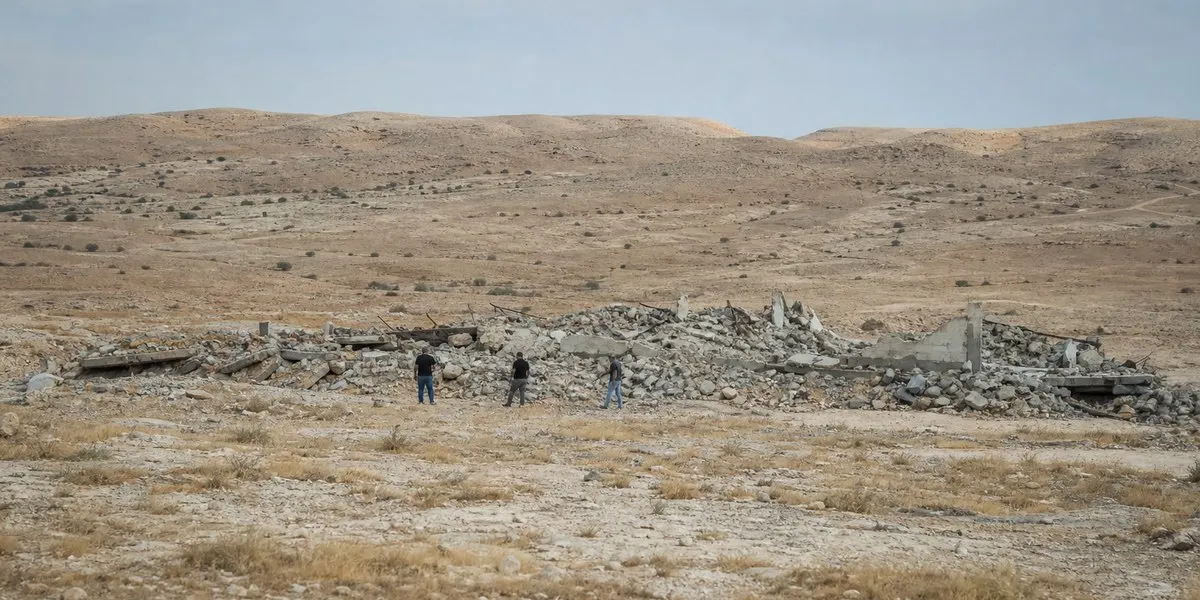
Israeli authorities on October 12 demolished around 80 homes in the Palestinian village of Al-Dahiya in the Negev desert in southern Israel. Approximately 400 residents were left homeless, Anadolu Agency reports.
Decision after court rejection
According to Israeli public broadcaster KAN, the homes were demolished by employees of the Israel Land Authority with the support of reinforced police forces under the authority of the Ministry of National Security. KAN reported that the structures were demolished over claims that they had been built without permits.
Al-Dahiya is located north of the city of Rahat and is not recognized by Israeli authorities. The demolition was carried out after the Beersheba District Court on October 11 rejected a petition to postpone the demolition.
Reaction of Arab parties
The Joint List, which includes three Arab parties, condemned the demolition, calling it a continuation of the policy of destruction, uprooting and displacement of residents of Arab villages in the Negev. Rahat Deputy Mayor Hassan al-Nasassra said the authorities’ actions were pre-election propaganda by National Security Minister Itamar Ben-Gvir.
More current news is available on the UA.News Telegram channel Telegram.
The source also notes that Ben-Gvir is accused of using home demolitions as part of his election campaign. United Arab List leader Mansour Abbas, according to KAN, appealed to Attorney General Gali Baharav-Miara, demanding an immediate suspension of home demolition orders until the elections are completed and a new government is formed.
Abbas said that residents of unrecognized Negev villages cannot obtain building permits because of the lack of planning, for which, in his view, the state is responsible. Israel’s general elections are scheduled for October 27.
Dozens of Palestinian villages in the Negev are not recognized by the authorities, and their homes are considered unauthorized. Such settlements are not connected to water and electricity networks or roads and are not provided with schools, clinics or other basic services.




