
Vitaker explained Trump's position on Putin and the peace talks
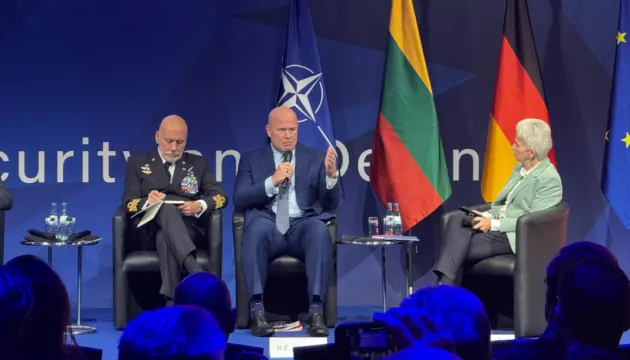
U.S. Ambassador to NATO Matthew Whitaker rejected the suggestion that Donald Trump is allegedly more inclined toward Vladimir Putin than toward European allies. This view was previously expressed by Member of the European Parliament Marie-Agnes Strack-Zimmermann during a discussion at the Berlin Security Conference. In response, the American diplomat stated that this impression does not correspond to reality and explained why Washington continues to seek the conditions for a peace agreement.
U.S. Ambassador to NATO Matthew Whitaker categorically disagreed with the assertion that President Donald Trump is closer to Kremlin leader Vladimir Putin than to European partners. He made this statement on Wednesday during a discussion at the Berlin Security Conference, responding to a question from the conference’s chairwoman, Member of the European Parliament Marie-Agnes Strack-Zimmermann. “I must categorically reject that. Perhaps that is how it is perceived on the European continent. But it certainly does not correspond to reality,” Whitaker said.
Prior to that, Strack-Zimmermann had spoken about the need to increase U.S. pressure on Russia to force it to end the war against Ukraine. She noted that Europeans are concerned about the U.S. president’s stance. According to her, one sometimes gets the impression that Trump listens more to Putin than to European allies.
What Vitaker Said About Negotiations with Russia
Responding to this criticism, the American diplomat stated that Trump is trying to find terms for a peace agreement. At the same time, he acknowledged that reaching an agreement with the Russian leadership is not easy. “Vladimir Putin is who he is. We may wish he were different. We may wish he would agree to what we all consider a reasonable deal. But he won’t agree,” the ambassador noted.
According to Vitaker, this is precisely why negotiators have to look for an option that both sides in the war—Ukraine and Russia—could accept. “We must find terms that both Ukrainians and Russians can agree to. And this has proven to be very difficult, as we all know, since the war has been going on for five years now, following the invasion in 2022,” he said.
Vitaker also expressed dissatisfaction with the fact that European partners constantly criticize the negotiation process. In his view, the main task now is not to discuss the format of the negotiations themselves, but to achieve a result and end the war.
Should Europe Be at the Negotiating Table?
Separately, the U.S. ambassador commented on the role of European countries in peace consultations. He noted that the mere presence of European representatives at the negotiating table is not the most important condition. The top priority, he said, should be ending the war and achieving a lasting peace.
At the same time, Whitaker acknowledged that Europe is already actively participating in the consultations and supporting Ukraine. He did not rule out that European representatives could play a decisive role in the negotiations. “If Europe’s voice at the negotiating table is what tips the scales, then they need to be there,” the diplomat concluded. He made these remarks during a discussion at the Berlin Security Conference on Wednesday, responding to comments by the conference’s president, Member of the European Parliament Marie-Agnes Strack-Zimmermann.
The Democrats won the U.S. midterm elections and gained control of both chambers of Congress. This weakens President Donald Trump’s position domestically, but does not mean that his policy toward Ukraine will change immediately.
The Democratic Party won a majority in both chambers of the U.S. Congress following Tuesday’s midterm elections. At the same time, vote counting was still underway in some districts: 68 seats in the House of Representatives remained undecided, with particular attention focused on the results in Alaska and Mississippi.
U.S. House Speaker Mike Johnson has decided to step down following the Republican Party’s defeat in the midterm elections, Politico reports, citing sources. His decision could trigger a leadership battle among Republicans, who will now find themselves in the minority in the lower chamber of Congress.




