
Ford made more than 5,000 castings for the Fathom electric pickup — Electrek
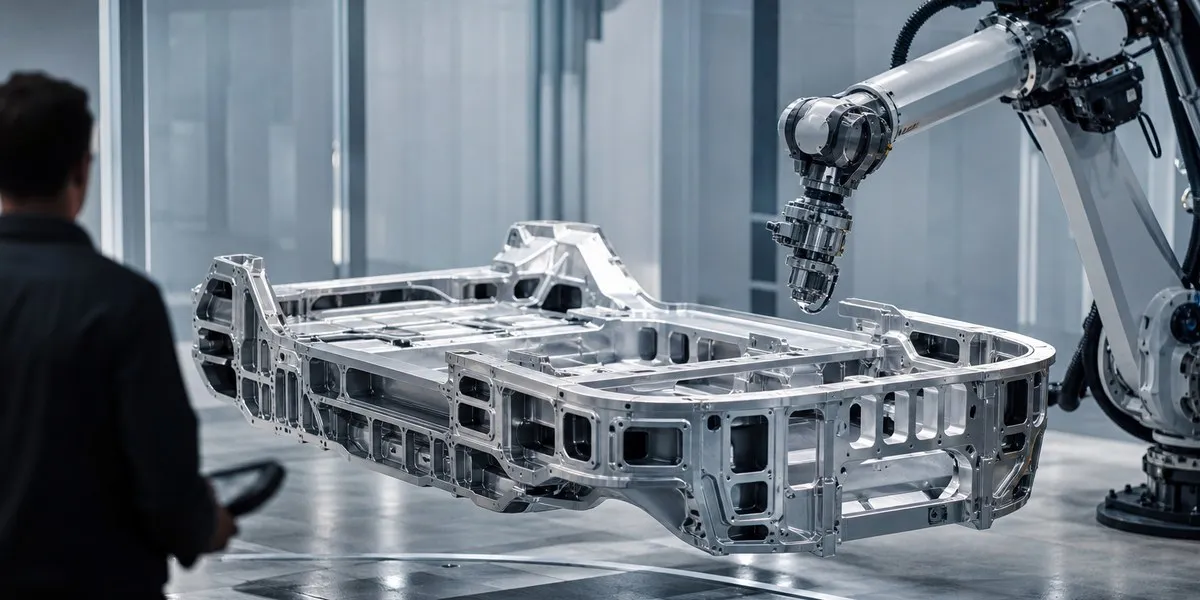
Ford has produced more than 5,000 large aluminum castings for the upcoming midsize Fathom electric pickup. The company is refining the technology ahead of the model’s planned 2027 launch, with a starting price of $28,350, Electrek reports.
Each pickup will have two such elements — for the front and rear sections of the structure. Together, they are intended to replace 146 separate parts. Information about the production was disclosed by Volodymyr Bohachuk, Ford’s chief engineer for advanced vehicle architecture, on the company’s From the Road blog.
Production and inspections
The castings are manufactured at Ford’s technical center in Shelbyville and then sent to the Louisville assembly plant for production-process testing and prototype assembly. The Louisville plant is being retooled to produce the Fathom and other vehicles on Ford’s universal electric vehicle platform.
More current news is available on the UA.News Telegram channel Telegram.
The company melts aluminum ingots at a temperature of about 700°C and injects the metal into a mold for the front or rear structural part. After the casting is removed by a robot, it is cooled, trimmed and machined. Batches are checked with industrial X-rays for pores and voids, measured in a climate-controlled room, surface-scanned, and samples are tested for strength and chemical composition.
Approach to large-scale casting
Ford does not send batches to Louisville until they have passed all inspections. The company is also working to reduce production cycle times and enable modular repair of cast elements. The high cost of repairing large one-piece cast parts is one reason why some automakers are cautious about this approach.
Tesla began using large-scale casting in 2020 for the rear body section of the Model Y, replacing 70 parts with a single element. Ford plans to use large front and rear castings together with an updated assembly scheme in Louisville. According to Ford’s estimate, the new production organization could potentially speed up assembly by up to 40%, or by about 15% after reinvesting part of the savings in automation and in-house production.




