
Trump administration seeks $50 billion for air traffic control system — Jerusalem Post
The administration of Donald Trump in the United States has increased its funding request for the air traffic control system to $50 billion after a communications outage that halted thousands of flights across the country for several hours on Friday. This was reported by the Jerusalem Post.
Earlier the same day, U.S. Transportation Secretary Sean Duffy and the White House asked Congress to allocate $30.1 billion to modernize aging airports and the air traffic control system. Duffy called the situation an emergency and stressed the need for a functional air traffic control system.
Outage affected FAA centers
The problem affected U.S. Federal Aviation Administration route centers, which manage aircraft traffic between airports. The U.S. Senate Committee on Commerce, where Republicans hold a majority, said the incident demonstrates the need to prioritize the modernization of these centers. Congress has already approved $1.9 billion to replace aging route centers.
More current news is available on the UA.News Telegram channel Telegram.
In January 2025, a midair collision near Ronald Reagan Washington National Airport claimed the lives of 67 people. In July 2025, Congress also approved $12.5 billion over five years to upgrade air traffic control systems and increase the number of controllers.
What the funds were planned to be spent on
The previous $30.1 billion request included $10.1 billion to modernize the air traffic control system, including $7.2 billion for a common automation platform and controller workstations, as well as $2 billion for cloud computing. Another $2 billion was planned for replacing and improving FAA control towers, while $18 billion was earmarked for airport projects, including $10 billion to renovate or replace old terminals.
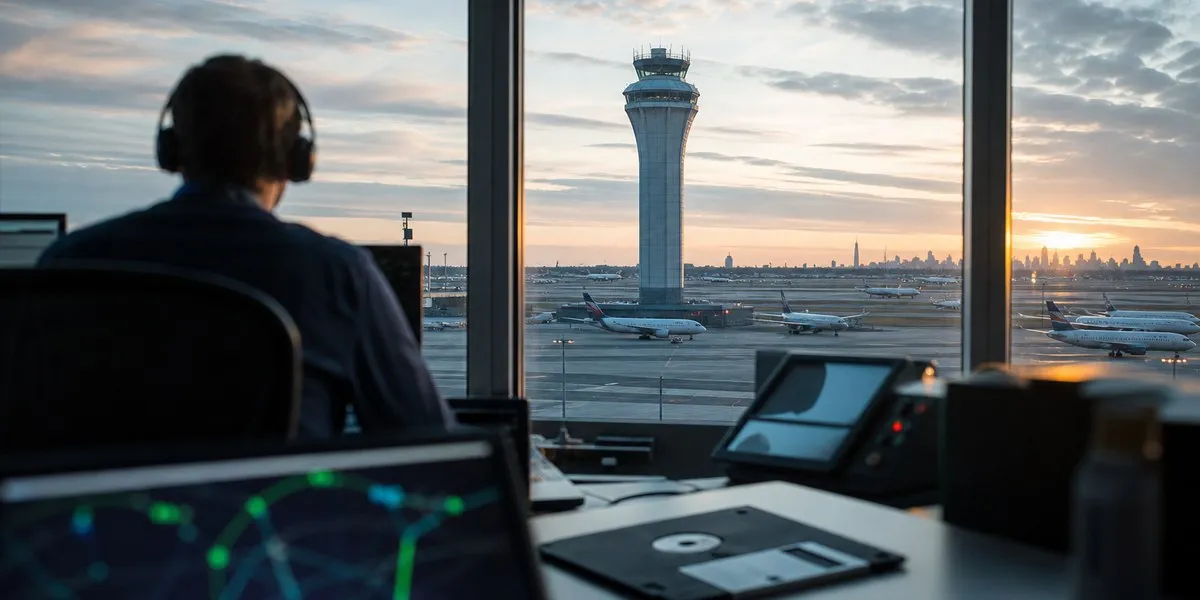
The FAA still uses computers that are several decades old and purchases some spare parts from auction websites. The agency said it would replace floppy disks used for weather and other critical information at more than 400 air traffic control facilities by the end of 2028.




