
CITES lifts trade sanctions against Laos — Mongabay
The Standing Committee of the Convention on International Trade in Endangered Species of Wild Fauna and Flora (CITES) has lifted trade sanctions against Laos that were imposed in 2023. The decision, adopted on November 4 in Geneva, allows the country to once again trade in species listed by CITES without special restrictions, although Laos will remain under monitoring regarding compliance with the convention's requirements, Mongabay reports.
The sanctions were imposed because Laos failed to counter criminal networks trafficking illegal wildlife products, as well as due to problems regulating bear bile farms and tiger farms. CITES said the country had made “significant progress” in addressing these issues.
Monitoring and law enforcement action
Somvang Phimmavong, director general of Laos’ Department of Forestry, said that further investigations, prosecutions, demand reduction and effective oversight of wildlife holding facilities are needed for sustained progress.
A joint investigation by Mongabay and the NGO GI-TOC in 2025 identified 35 illegal wildlife trade outlets in Vientiane and Luang Prabang. Chinese tourists were sold, among other items, ivory, rhino horns and pangolin scales there. According to the outlet’s sources, most of these shops later ceased operations, and as of August 2026, six or seven outlets remained active.
Phimmavong said authorities inspected 25 shops, ordered six of them to close and detained 27 foreigners. Laos’ annual report to CITES recorded 13 seizures from December 2024 through June 2026, as well as the seizure of more than 1,755 kilograms of ivory in Bolikhamxay province in August.
More current news is available on the UA.News Telegram channel Telegram.
Conditions for macaque exports
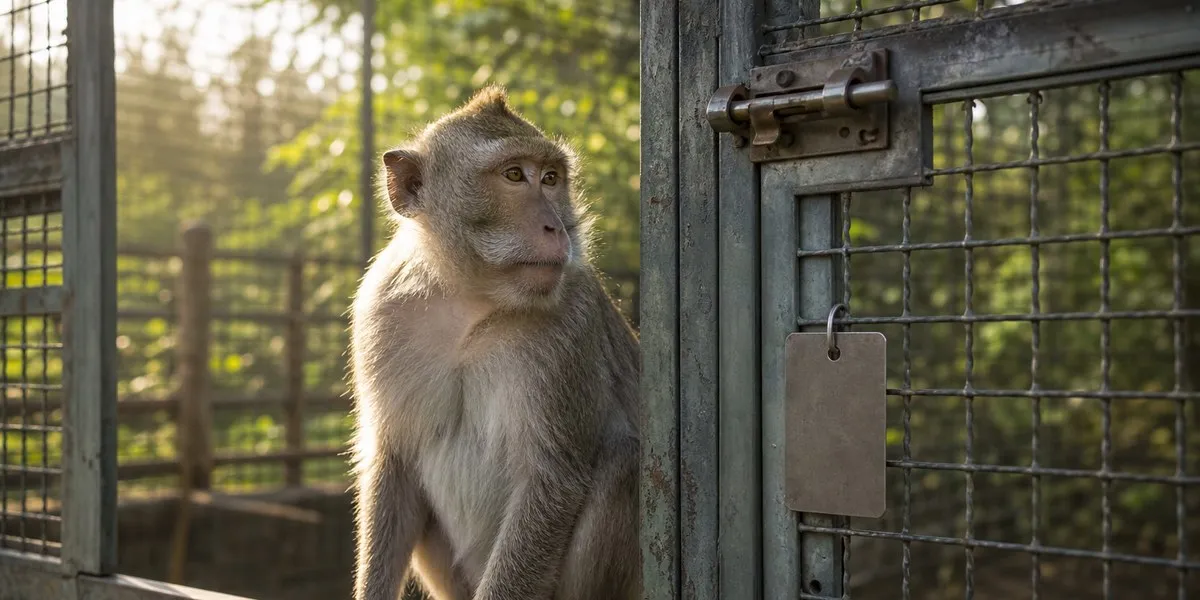
CITES established separate safeguards for trade in long-tailed macaques used in biomedical research. Before resuming exports of live captive-bred macaques, Laos must introduce annual quotas for three registered breeding facilities, reliable individual identification and traceability of animals, reconciliation of records, pre-export inspections and compliance with transport rules.
According to Phimmavong, lifting the sanctions does not in itself grant export permits to any company. Each application must confirm the legal origin of the animals, their captive breeding and compliance with the new safeguards.
Conservationists’ concerns
Some conservationists called the decision premature. Debbie Banks, a representative of the Environmental Investigation Agency, said Laos must move from arrests and seizures to prosecuting the companies and individuals leading illegal trade networks. Other experts stressed that holding senior members of such networks accountable will test the country’s genuine commitment to reforms.
Conservationists also question an assessment by the National University of Laos, according to which there are 30,586 long-tailed macaques in the country. According to field data cited by Born Free policy chief Mark Jones, the species is not detected in many habitats, and only a few hundred individuals may remain in the country.




