
Study in Brazil shows nearly 50% loss of Amazon forest biomass — Mongabay
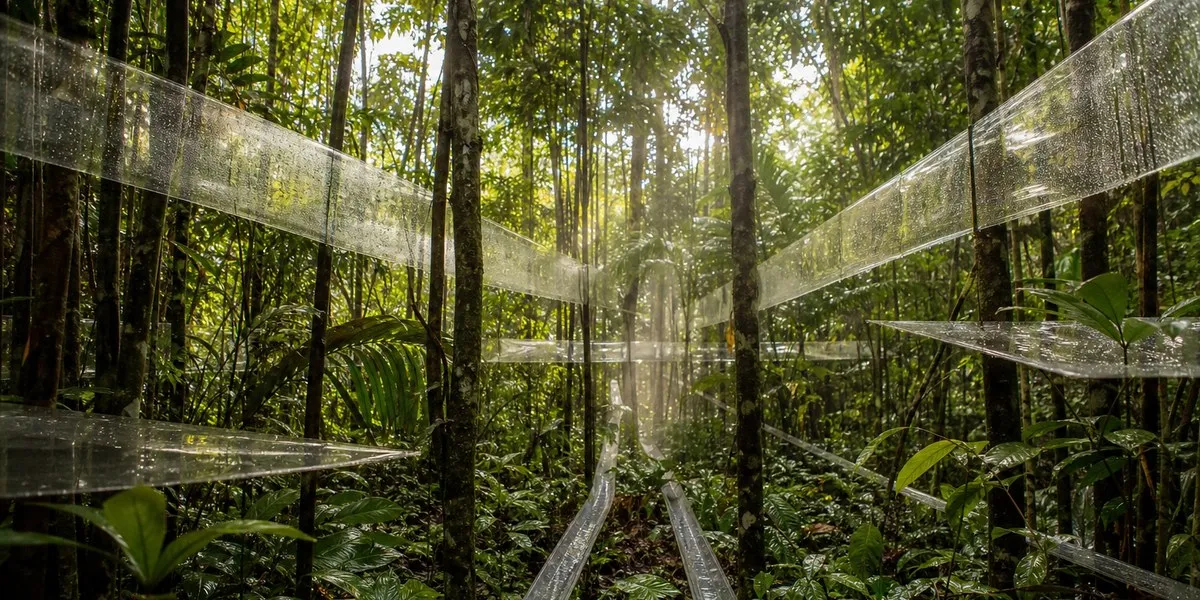
An experiment in the Caxiuanã National Forest in Brazil’s Pará state showed that prolonged water scarcity led to the loss of nearly 50% of biomass in an experimental plot of Amazon forest. At the same time, smaller trees were able to redistribute limited water reserves in the soil, their mortality later declined, and the ecosystem reached a new state of equilibrium, Mongabay reports.
How the experiment was conducted
The Esecaflor project has been running for 25 years and is the longest and largest study of artificial drought in a tropical forest. In 2001, researchers installed 6,000 transparent plastic panels beneath the tree canopies on a one-hectare plot. They diverted about 50% of rainwater through gutters and channels. Nearby, scientists monitored an untouched plot of the same size for comparison.
On both plots, researchers measured soil moisture, air temperature, tree growth, sap flow, and root development. During the first three years, there were no noticeable changes due to the forest’s moisture reserves. After about five years, trees began to die, primarily large specimens with trunk diameters exceeding 50 centimeters. After eight years, the plot had lost 40% of its total biomass.
More current news is available on the UA.News Telegram channel Telegram.
Not a savanna, but a degraded forest
After more than two decades of water stress, the experimental area became a shorter and less dense forest with a lower capacity to store carbon. The researchers do not believe that such a forest is turning into a savanna. In their view, it is a new, severely degraded ecosystem with no natural analogues.
In November 2024, after 23 years of experimental drought, the panel structure was dismantled, so precipitation is once again reaching the plot in normal amounts. Scientists are now determining whether large tree species, including kapok, andiroba, and angelim vermelho, will be able to recover. According to the researchers’ estimate, such recovery could take decades or even centuries, while a more open forest with less biomass may be more vulnerable to new climate extremes.




