
Researchers describe two new howler monkey species in the Amazon — Mongabay
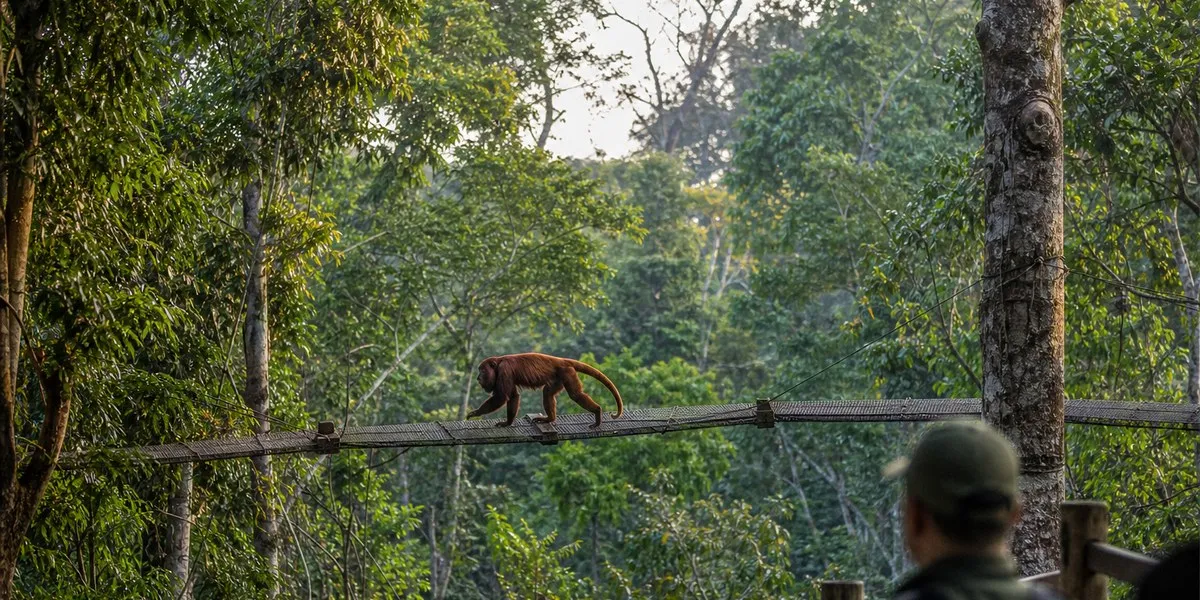
A genetic study of howler monkey populations in the Amazon, particularly in northern Brazil, has enabled the formal description of two previously unrecognized species of red howler monkeys: the Pantepui howler monkey Alouatta iroi in the northwestern Amazon and the Mato Grosso howler monkey Alouatta matogrossensis in the south of the Brazilian Amazon, Mongabay reports.
Genetic lineages on both sides of the river
Scientists studied genetic relationships within the genus Alouatta by combining genomic data, the animals’ physical characteristics, and museum specimens. The study’s lead author, Romina Batista, a biologist at the University of Salford and Brazil’s National Institute of Amazonian Research, analyzed more than 2 terabytes of raw genomic data. The research was based on more than ten years of fieldwork and sample collection.
The analysis found that howler monkeys on opposite banks of the Branco River in northern Brazil belong to different genetic lineages. The findings also confirmed physical differences between the populations: in particular, the fur of A. iroi has a more yellowish shade. Historical museum specimens helped researchers identify the traits that distinguish these populations.
More current news is available on the UA.News Telegram channel Telegram.
Conservation questions for the new species
The authors also recommend recognizing the howler monkey population in Trinidad and Tobago as a separate species, Alouatta insulanus, which was previously classified as A. seniculus insulanus.
Scientists are particularly concerned about the status of A. matogrossensis. The species’ range overlaps with Brazil’s deforestation arc, where agricultural development has contributed to forest fragmentation and substantial habitat loss. Researchers believe the species may be classified as critically endangered, but this requires an official assessment.
A planned Bem Querer hydroelectric power plant on the Branco River has been identified as a potential threat to A. iroi and its related species A. macconnelli. In Mato Grosso state, the Reconecta project has installed canopy crossings connecting fragmented forests; researchers have already recorded their use by A. matogrossensis, including by a female with an infant.




