
Two NASA ESCAPADE spacecraft perform maneuver near Earth en route to Mars — Space.com
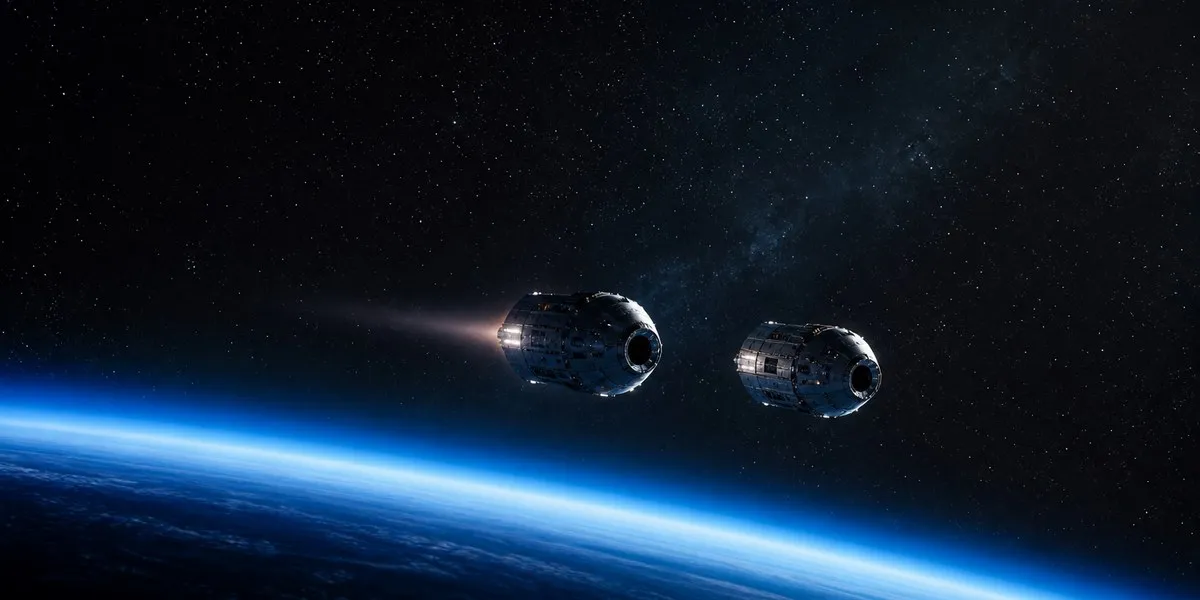
Two spacecraft from NASA’s ESCAPADE mission performed an Earth flyby with their engines firing to change their trajectory on the way to Mars. The first spacecraft carried out the maneuver on November 7, and the second on November 9. NASA said both engine firings were successful.
Earth flyby with engines firing
During their close approach to Earth, the spacecraft used its gravity to alter their trajectory while simultaneously firing their engines, enhancing the effect of the maneuver. Asal Naseri, acting associate director for flight in NASA’s heliophysics division, said this was the first time the agency had used an Earth flyby with engines firing to send a spacecraft to Mars.
As Space.com reports, after several minor course corrections, ESCAPADE is expected to continue its journey to Mars, with arrival anticipated in September 2027. Mission lead Rob Lillis of the University of California, Berkeley, noted that no NASA mission had previously performed such a maneuver because it is unnecessary for most flights.
More current news is available on the UA.News Telegram channel Telegram.
Loop-shaped trajectory
The ESCAPADE spacecraft were launched in November 2025 during the second flight of Blue Origin’s New Glenn rocket. The mission was initially planned for launch in October 2024, when Earth and Mars were in a favorable relative position. However, delays involving the rocket forced the mission to miss that launch window.
Instead of waiting for the next window, specialists developed a loop-shaped trajectory that returned the two probes to Earth in early November 2026. During the journey, the spacecraft also studied the distant tail of Earth’s magnetic field. According to Lillis, they simultaneously recorded its structure, the movement of the magnetic field, and plasma flows at a distance of about 1.91 million kilometers from the planet.
Each of the two spacecraft is approximately the size of two refrigerators and is equipped with three scientific instruments and cameras. Their instruments are designed to study Mars’ magnetic field, which is affected by charged particles from the Sun, the planet’s atmosphere, and areas of strongly magnetized crust.




