
Farmers in southern Malawi travel 27 km for livestock feed — Al Jazeera
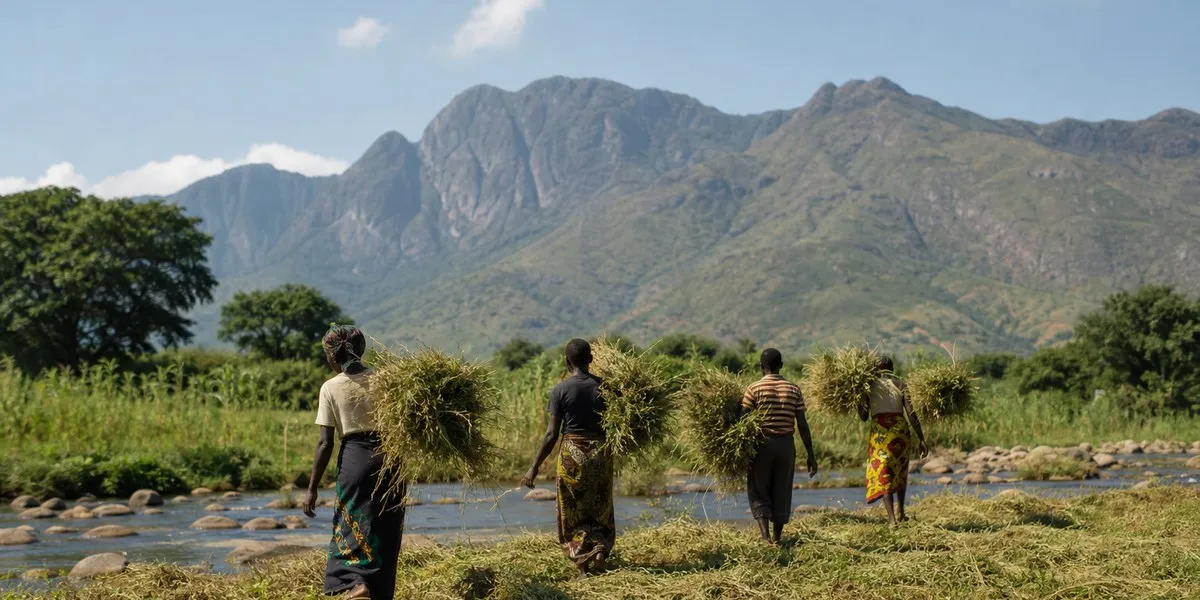
Farmers in Malawi’s southern Mulanje District are travelling increasingly long distances to collect grass for livestock. In particular, 25-year-old Lawrence Abison and three companions set out at dawn from Nsandzami for the banks of the Likhubula River, located 27 kilometres away, Al Jazeera reports.
In two hours, the men collected enough grass to feed 10 head of livestock for one day. That same day, dozens of people carrying bundles of grass were seen near Chitakale: they had arrived from different parts of the district in search of animal feed.
Feed shortage
During the 2023–2024 rainy season, dry spells and high temperatures were recorded in some areas of Malawi, while El Niño affected rainfall patterns in southern Africa. The Department of Climate Change and Meteorological Services had warned at the time of below-normal rainfall and prolonged dry spells, including in the country’s southern districts.
Abison and other feed collectors said they began travelling to rivers earlier than usual and now cover greater distances. Previously, they would set out for the river by bicycle after October, but this year such trips had already continued for several months.
More current news is available on the UA.News Telegram channel Telegram.
Farmer McDonald Khandalawo, who keeps 10 head of livestock in Nsandzami, said searching for grass sometimes takes an entire day. According to him, the feed shortage has already affected milk yields, as animals eat less and feed is delivered later.
Pressure on rivers
Farmers also complain about the high cost and shortage of maize bran, which they use to supplement livestock diets. They say lower maize harvests have made bran less available.
Khandalawo is a member of the New Thuchira Milk Bulking Group cooperative, which brings together up to 400 farmers, collects milk from members, stores it and sells it to commercial processors. Some farmers stockpile maize stalks, as well as pea and rice residues, to add to animal feed.
Local residents also link the reduction of vegetation along rivers to vegetable cultivation on riverbanks. They say that in some sections the Likhubula River has become shallower, while trees, reeds and grass have disappeared. Farmer Alefa Saulo from Nkando said her three cows are losing weight because of the feed shortage and hopes for rains that will allow grass to regrow.




