
China opens institute for ancient scripts — South China Morning Post
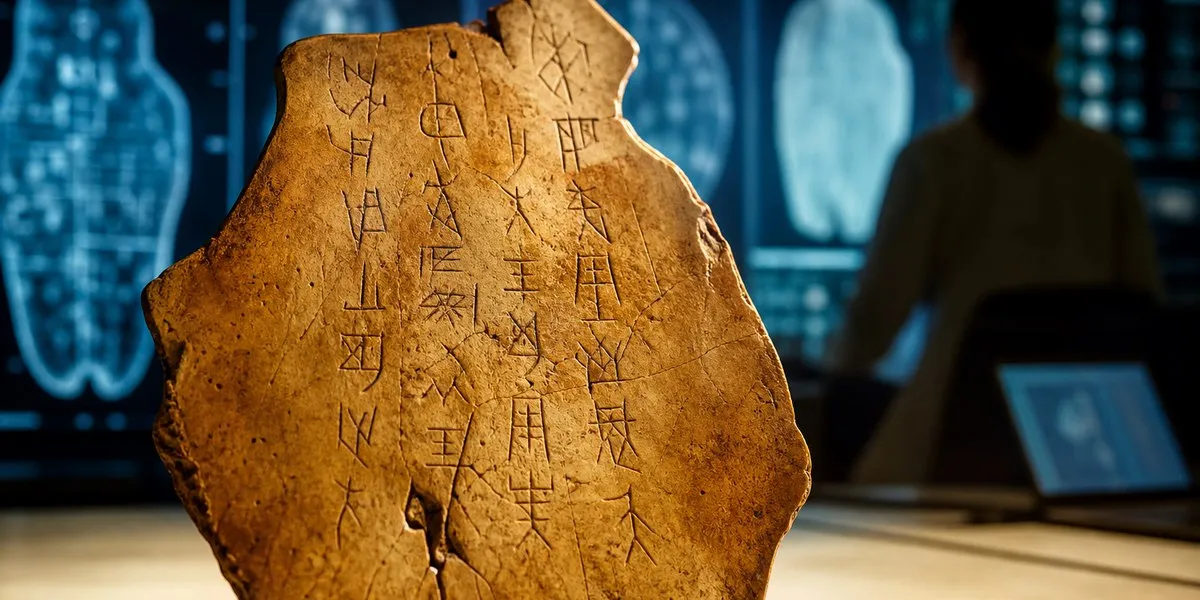
An institute for preserving and studying rare and endangered historical disciplines has opened at the University of the Chinese Academy of Social Sciences in Beijing. At the same time, an association was established to pool resources in this field across China, South China Morning Post reports.
Scripts under threat of disappearance
The institute’s areas of work include around a dozen ancient scripts of ethnic minorities, including Tangut and Old Tibetan. Preserved texts written in these scripts contain information about the history of China’s northwestern border regions. The institute will also cover research into oracle bone inscriptions more than 3,000 years old, China’s earliest known fully developed writing system.
The dean of the new institute, Zhan Long, told CCTV that many ancient scripts of ethnic minorities may be lost. Some are already on the verge of disappearance, while documents related to them are scattered around the world. According to him, training a specialist capable of deciphering ancient writing may take more than 10 years.
More current news is available on the UA.News Telegram channel Telegram.
Shortage of researchers and digital methods
Nanfang Daily estimates that only around 500 researchers in China study ancient Chinese writing. Of approximately 4,500 identified oracle bone characters, nearly two-thirds have yet to be deciphered. A 2025 report by China’s National Archives Administration said that the country’s archives had just over 30 specialists in Manchu documents, although there are around 5 million such materials.
The institute offers an integrated program of study at bachelor’s, master’s and doctoral levels, and has also established a digital research laboratory. According to Beijing Daily, students will be encouraged to apply digital technologies in interdisciplinary research. Artificial intelligence is not yet able to independently decipher ancient Chinese characters, but, according to Nanfang Daily, it can classify already deciphered oracle bone characters with an accuracy of more than 80%.
SCMP notes that the opening of the institute is part of Beijing’s efforts to support vulnerable areas of ancient culture studies and strengthen its own historical narrative. In an article published in May in Study Times, the newspaper of the party school of the Communist Party of China, researcher Du Yunhui wrote that such studies can provide historical and legal grounds for territorial claims and border demarcation.




