
Coalition files 14 money-laundering complaints against JBS and Barclays — Mongabay
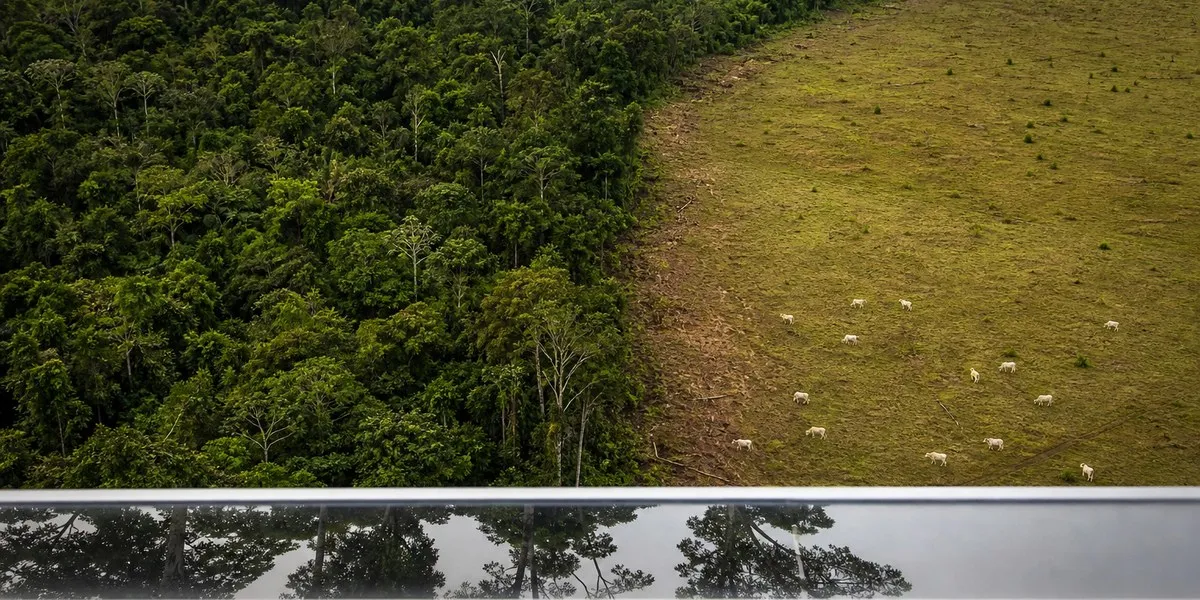
A transnational legal coalition on November 5 filed 14 complaints with prosecutors and financial regulators in the United Kingdom, Ireland, Germany and the Netherlands. They concern the world’s largest meat processor, JBS, and 12 financial institutions, investors and advisers, including the British bank Barclays. The complainants allege that JBS’s profits may be linked to illegal deforestation in the Brazilian Amazon, Mongabay reports.
The coalition’s arguments
The coalition believes that profits from cattle raised on illegally cleared land may be considered proceeds of crime under anti-money-laundering laws. In its view, this could potentially create legal risks for both JBS and the institutions that service the company’s financial transactions.
The coalition includes the Global Legal Action Network, the European Center for Constitutional and Human Rights, as well as Mighty Earth, FIND and King’s College London. The complaints are based, among other things, on research by the nonprofit organization AidEnvironment, which linked JBS suppliers to the deforestation of more than 6.5 million hectares in the Brazilian Amazon between 1988 and 2026.
More current news is available on the UA.News Telegram channel Telegram.
Supplier data and the company’s response
According to a 2024 Global Witness investigation, Barclays is JBS’s largest financier and received $1.7 billion from transactions with the company in 2018–2023. An analysis by the Center for Climate Crime Analysis conducted for the same investigation found that during this period, nearly 8,000 cattle raised on the illegally occupied Apiterewa Indigenous Territory in Pará state entered JBS’s supply chain.
AidEnvironment also reported signs of deforestation in legally protected areas on more than 80% of the surveyed farms that directly or indirectly supply cattle to JBS. These include Legal Reserves, meaning parts of rural properties that landowners are required to preserve under Brazilian law, as well as permanent preservation areas, where vegetation clearing is generally prohibited.
Barclays declined to comment. JBS denied the allegations, stating that it had not received the data and research methodology needed to assess the claims. The company also said that since 2010 it has monitored suppliers in the Amazon under a protocol of Brazil’s Federal Public Prosecutor’s Office and automatically blocks farms with illegal deforestation or those overlapping with protected areas.




