
Schwarzmilzferner in Austria loses glacier status — Der Spiegel
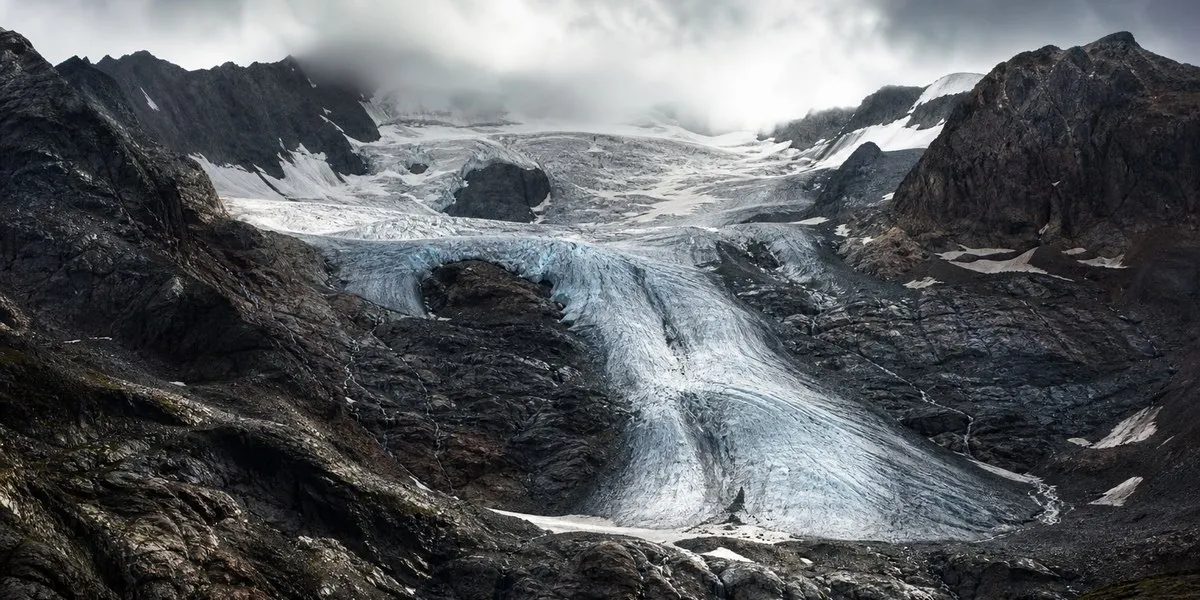
Schwarzmilzferner on the Austrian side of the Allgäu Alps has lost its glacier status after a hot summer. During the warm months, it lost about four metres in thickness and approximately half of its volume, Der Spiegel reports.
The ice has stopped moving
Christoph Mayer, a glaciologist at the Bavarian Academy of Sciences, said that after next summer, Schwarzmilzferner will probably disappear completely. Scientists have been monitoring it for 26 years and have recorded significant ice mass losses since 2016. According to Mayer, the process has accelerated considerably since 2022.
For an ice mass to be classified as a glacier, not only its thickness and volume but also the movement of the ice are important. Schwarzmilzferner is no longer moving. The ice field is located at an altitude of about 2,450 metres, south of Oberstdorf, on the southeastern side of the Mädelegabel and Hochfrottspitze peaks.
More current news is available on the UA.News Telegram channel Telegram.
Forecasts for the Alps
Mayer noted that several small glaciers disappear in the Alps every year. In his view, even substantial winter snowfall cannot stop the rapid shrinking of ice masses because summers have become too hot. The glaciologist predicts that the Eastern Alps could become completely ice-free between 2060 and 2070.
Germany's last four glaciers, as of 2025, lost more than a quarter of their area over two years. According to measurements conducted last year by geographer Wilfried Hagg of Munich University of Applied Sciences and Christoph Mayer, they lost about one million cubic metres of ice in total.
Scientists suggest that Blaueis Glacier and Watzmann Glacier in the Berchtesgaden mountains could lose their glacier status in the coming years. By the end of the decade, this could also happen to Northern Schneeferner on Zugspitze, according to their estimates. Researchers expect Höllentalferner in the Zugspitze area to survive the longest, although it, too, is forecast to have no more than ten years left.




