
Starship launches 26 Starlink V3 satellites into orbit — Ars Technica
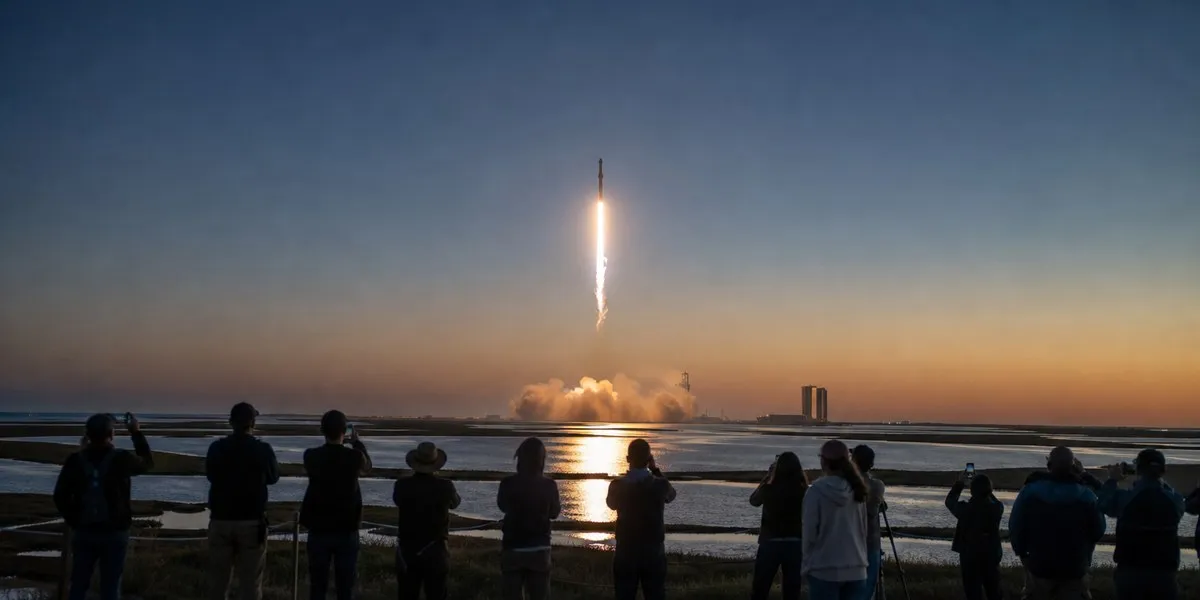
On November 13, SpaceX conducted the 15th Starship test flight from Starbase in Texas, United States, and launched 26 Starlink V3 satellites into low Earth orbit. This was Starship's second flight to low Earth orbit, Ars Technica reports.
Satellites in orbit
The first stage separated from the upper stage over the Gulf of Mexico. The Starship upper stage then ignited its Raptor engines and reached its nominal orbit.
About 40 minutes after launch, the vehicle deployed 26 satellites through a narrow hatch in the lower part of the spacecraft. All satellites successfully reached orbit and are to use onboard thrust to raise it. Once fully deployed, their solar arrays are 60 meters long.
The first stage did not return to Starbase
During its return, the first stage was not directed to the Starbase complex for capture by the launch tower. Due to an unspecified issue, the vehicle was commanded to divert to the Gulf of Mexico, where it exploded.
More current news is available on the UA.News Telegram channel Telegram.
SpaceX had planned to recover this booster, refurbish it, and reuse it. The company had previously landed and reflown Starship boosters, but had not yet done so with the newest third version of the system.
The next stage of the mission could be the return of the Starship upper stage to Starbase on Saturday, November 14. To do so, the vehicle must undergo checks in orbit and during atmospheric reentry. If successful, the return was planned for about 15:15 local time in Texas, or 21:15 UTC. Otherwise, the spacecraft may be deorbited over the ocean.
For this flight, SpaceX also made changes to the spacecraft's thermal protection system. The company installed additional tile attachment mechanisms in areas with the greatest risk of tiles falling off and used curved tiles across a significant part of the heat shield, which are intended to reduce heating in the gaps between them.




