
20 Denisovan fossil remains identified in China — Live Science
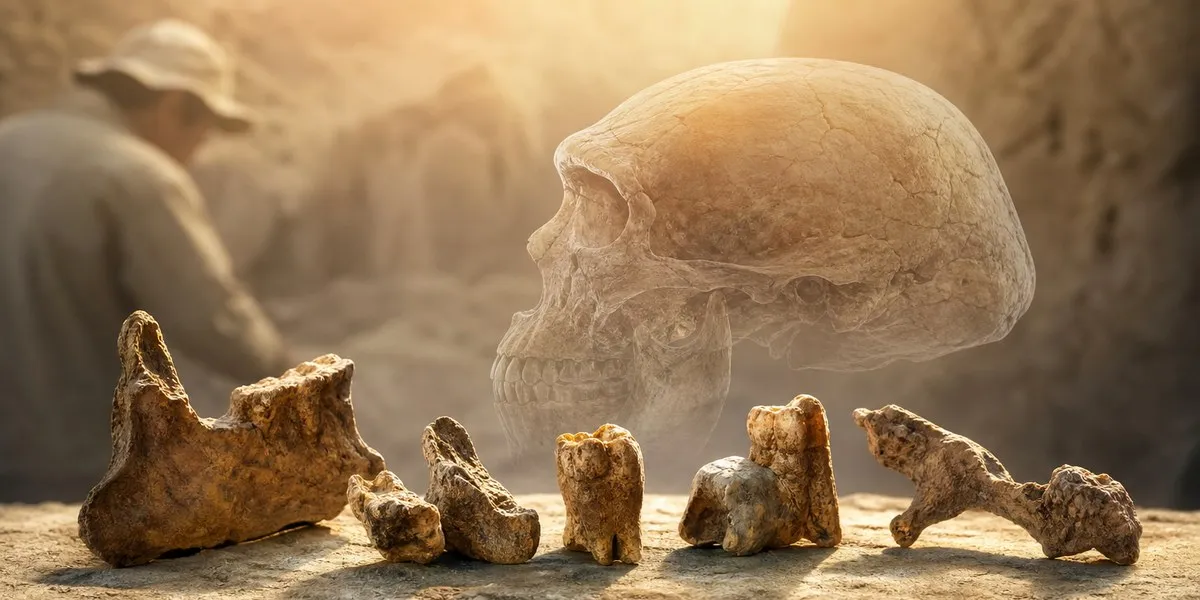
Researchers analyzed 20 fossil remains from the Xujiayao site in northern China and determined that all of them belonged to Denisovans, an extinct group of ancient humans. The analysis made it possible to describe the features of their skull structure in greater detail, Live Science reports.
Proteins instead of DNA
The remains, including bones and teeth, were excavated in the late 1970s. They are estimated to be 138,000–199,000 years old. Before the discovery of Denisovans, these finds were classified as either Neanderthals or archaic Homo sapiens because of their shape and age.
The authors of the study, published on October 21 in the journal Nature, used paleoproteomics, a method of studying proteins from bones and teeth that can persist longer than DNA. Specific variants detected during protein analysis made it possible to distinguish Denisovans from other groups of ancient humans.
More current news is available on the UA.News Telegram channel Telegram.
Skull features
The skulls from Xujiayao combined traits characteristic of Homo erectus, Neanderthals, and modern humans. In particular, they had a low and broad braincase and thick cranial bones, like H. erectus. At the same time, some features of the premolars — teeth between canines and molars — were closer to those of Neanderthals and modern humans.
Scientists also identified traits they consider specific to Denisovans. The occipital part of their skull was more vertical and less rounded than that of Neanderthals or modern humans. The researchers compared these finds with other remains from East Asia, which some specialists classified as Homo juluensis or Homo longi, and noted that the similarities found may call into question the division of Denisovans into separate species.
Study co-author Qiaomei Fu noted that other human lineages may also have lived in East Asia during the time Denisovans existed. Paleoanthropologist Chris Stringer, who was not involved in the study, said that DNA already indicates considerable genetic diversity among Denisovans, and that new differences in their appearance may emerge as the number of fossil samples increases.




