
98-million-year-old mantis with leaf-like abdomen described in Myanmar — ScienceAlert
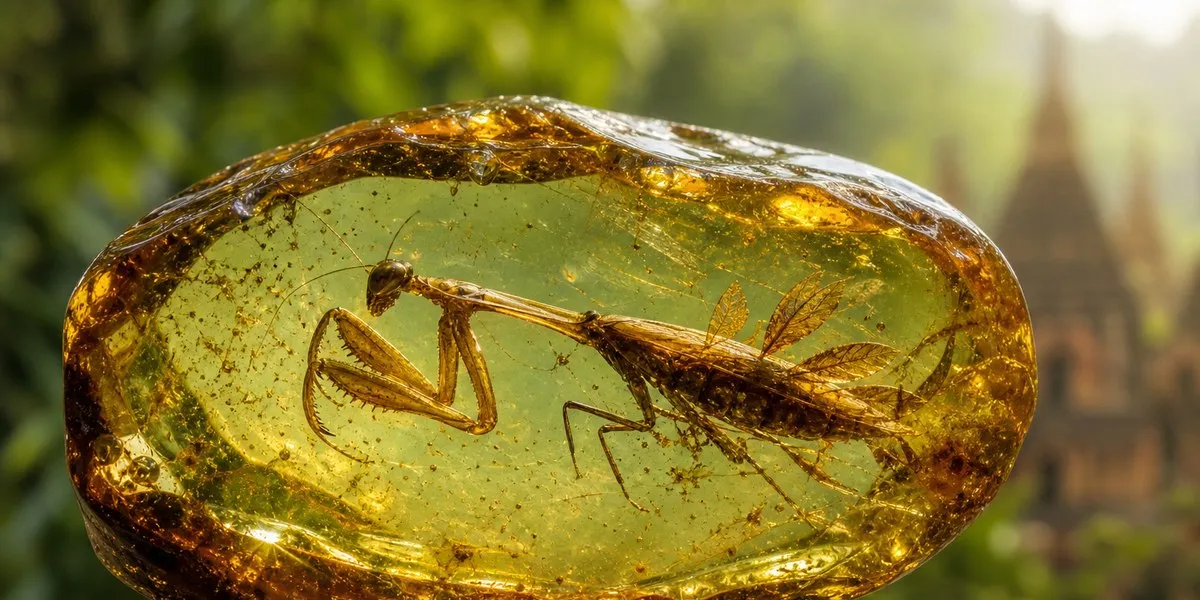
Scientists have described the fossil mantis Folimantis hyalinala, which lived 98 million years ago in what is now Myanmar. The insect was preserved in mid-Cretaceous amber and became the oldest clear fossil evidence that mantises mimicked plant leaves, ScienceAlert reports.
An abdomen resembling leaves
The abdomen of F. hyalinala had leaf-like outgrowths similar to the leaves of the extinct clubmoss Selaginella grimaldii. Remains of this plant have also been found in amber from the same region. The species was described in the journal New Phytologist. The genus name Folimantis literally means “leaf mantis,” while the species name hyalinala refers to the glass-like transparency of the insect’s wings.
The study’s authors noted that there are few reliable fossil examples of insects mimicking plants, although such relationships have evolved for at least 200 million years. According to their data, no modern mantis species imitate Selaginella.
More current news is available on the UA.News Telegram channel Telegram.
Early stages of camouflage
Researchers suggest that the resemblance to a plant may have helped the mantis approach prey unnoticed and hide from predators. During the time of F. hyalinala, flowering plants had not yet become dominant, so the insect evolved to resemble leaves.
A distinctive feature of the find is that the leaf-like elements are located only on the abdomen and are visible through the transparent wings. In many modern mantises that mimic plants, similar features are also present on other parts of the body. This may indicate that such adaptations first emerged on the rear part of the body and later appeared on the wings and thorax.




