
In Montana, a grizzly tried to cross a highway 46 times — Live Science
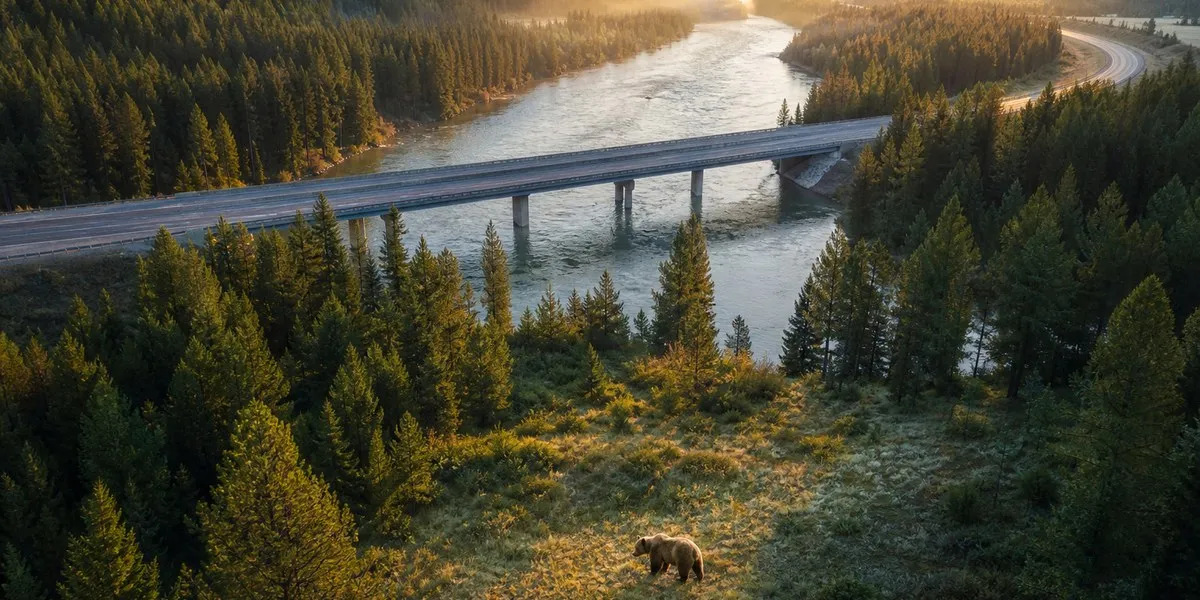
In western Montana, a young male grizzly nicknamed Lingenpolter tried 46 times to cross the four-lane Interstate 90 highway over 53 days between autumn 2020 and spring 2021. GPS collar data recorded that the bear, weighing about 160 kg, moved along the road in search of a safe passage. Eventually, it likely managed to get to the other side beneath a bridge over a river, Live Science reports.
Barriers to movement
Scientists in the United States and Canada are studying grizzly movements to understand how the animals respond to roads, railways and development. The ability to move between populations is important for bears’ reproduction: isolated small groups may lose genetic diversity.
Researchers are paying particular attention to an area about 3,400 km long between Yellowstone in Wyoming and Yukon in northern Canada. This region encompasses five U.S. states, two Canadian provinces and more than 75 Indigenous territories. Its valleys are fragmented by transport infrastructure and human activity.
More current news is available on the UA.News Telegram channel Telegram.
GPS collars and safe corridors
GPS collars that record animal movements every hour help researchers determine not only grizzlies’ routes, but also the reasons for their choices. Data collected by University of Alberta biologist Andrew Derocher and his colleagues showed that about two-thirds of bears remember well the places and seasons when they previously found food. Observations also showed that wild grizzlies generally avoid people, but may approach populated areas when food is scarce.
In southeastern British Columbia, researchers used bear movement data to model routes through populated valleys. There, scientists and land trusts purchased individual plots, installed fences and created safe corridors between the South Selkirk and Purcell mountain ranges. As of 2021, nine bears that arrived in the previously isolated South Selkirk population had produced 27 offspring.




