
In Germany, a tobacco-like plant was modified to produce paclitaxel — Der Spiegel
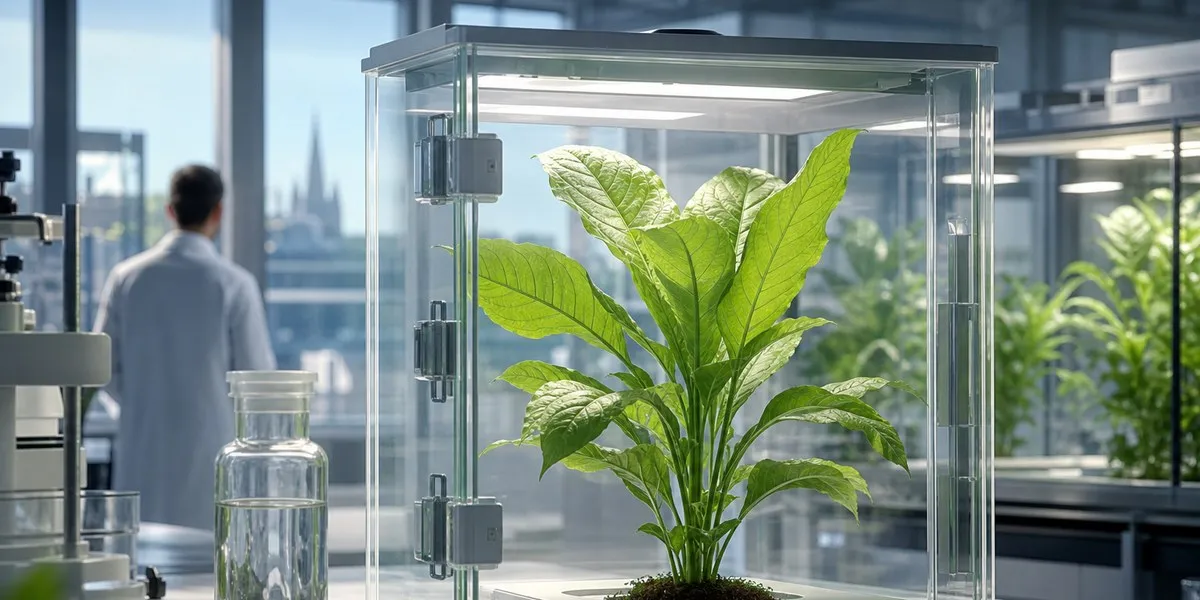
In Germany, scientists have achieved the production of paclitaxel in the genetically modified tobacco-like plant Nicotiana benthamiana. The drug is used, among other things, to treat breast, ovarian, lung and pancreatic cancer, Der Spiegel reports. The researchers described their results in Nature Chemical Biology.
The complete synthesis pathway
Paclitaxel is a natural cytostatic agent that blocks the division of cancer cells. It is found in the bark of the Pacific yew Taxus brevifolia, but only in small quantities. Currently, the drug is produced semi-synthetically from a substance found in the needles of the European yew Taxus baccata.
The researchers introduced yew genes into the genetic material of Nicotiana benthamiana using the bacterium Agrobacterium tumefaciens. This enabled the plant cells to produce proteins required for individual stages of the drug’s biosynthesis. To ensure that the synthesis products did not originate from the plant’s normal metabolism, the same stages were also reproduced in the yeast Saccharomyces cerevisiae.
More current news is available on the UA.News Telegram channel Telegram.
Yield increased more than 500-fold
The team established the entire metabolic pathway of paclitaxel formation — from geranylgeranyl pyrophosphate through 20 intermediate compounds to the finished substance — and also identified the sites of its synthesis in the plant cell.
Initially, the modified plant produced 0.104 micrograms of paclitaxel per gram of dry plant mass. By placing several genes on a single DNA strand and using more efficient bacterial strains, the yield was increased more than 500-fold, to 61.05 micrograms per gram. According to the researchers’ estimate, this is comparable to the paclitaxel content in the bark of the Pacific yew.
Heribert Warzecha, an expert at the Technical University of Darmstadt, noted that the current method does not yet have an advantage over the established production of the drug from yew cell cultures or through the extraction of a precursor from needles followed by its chemical modification. In his view, the technology will become competitive only if the amount of paclitaxel produced is increased further.




