
1,500-year-old burial of likely elite Moche child found in Peru — Live Science
Archaeologists have discovered in northern Peru the burial of a child under two years old, dated to the 6th or 7th century. According to Carlos Rengifo-Chunga, head of the Huacas de Moche Archaeological Project at the University of Trujillo, the rich grave goods and the location of the tomb indicate that the child likely belonged to the elite of the Moche culture. Live Science reports on the discovery.
Objects in the burial
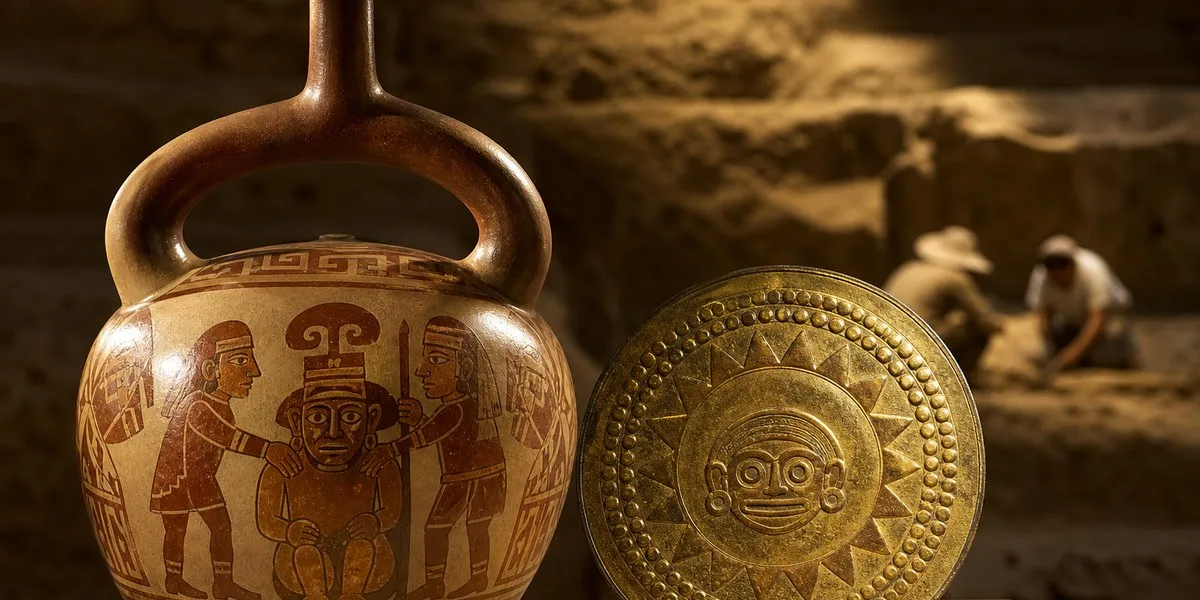
A small skeleton was found in the tomb, and the child's sex has not yet been established. Beside it lay 32 ceramic objects associated with the Moche culture, including two vessels depicting captives with ropes around their necks. Archaeologists also found two copper objects: a disk-shaped item that covered the child's face and a crescent-shaped item near the child's feet.
One of the ceramic objects depicts a possible deity with a human body, bird wings, and a tail. The figure holds a square shield and a goblet, while two bird helpers in ceremonial attire are shown beside it. Rengifo-Chunga noted that some researchers may interpret this image as a deity in the process of transformation.
More current news is available on the UA.News Telegram channel Telegram.
Rare burial rite
The tomb was discovered on the Uhle Platform of the Huacas de Moche archaeological complex. It is a mausoleum adjacent to the Huaca de la Luna temple, where there is a courtyard known to archaeologists as the Courtyard of the Snakes. Among more than 80 burials previously found there, this is the only known burial of a child with such lavish decoration.
The depictions of captives are associated with the “combat ritual” common in Moche art. In such scenes, two warriors fight, and the defeated one is stripped of clothing and weapons, tied with a rope around the neck, and offered as a human sacrifice. The presence of such objects in a child's burial is unusual, as such motifs could usually indicate the deceased's participation in combat. The artifacts were transferred to the laboratories of the Santiago Uceda Castillo Museum in Peru for conservation.




