
Rawalpindi bans road digging without permission — Dawn
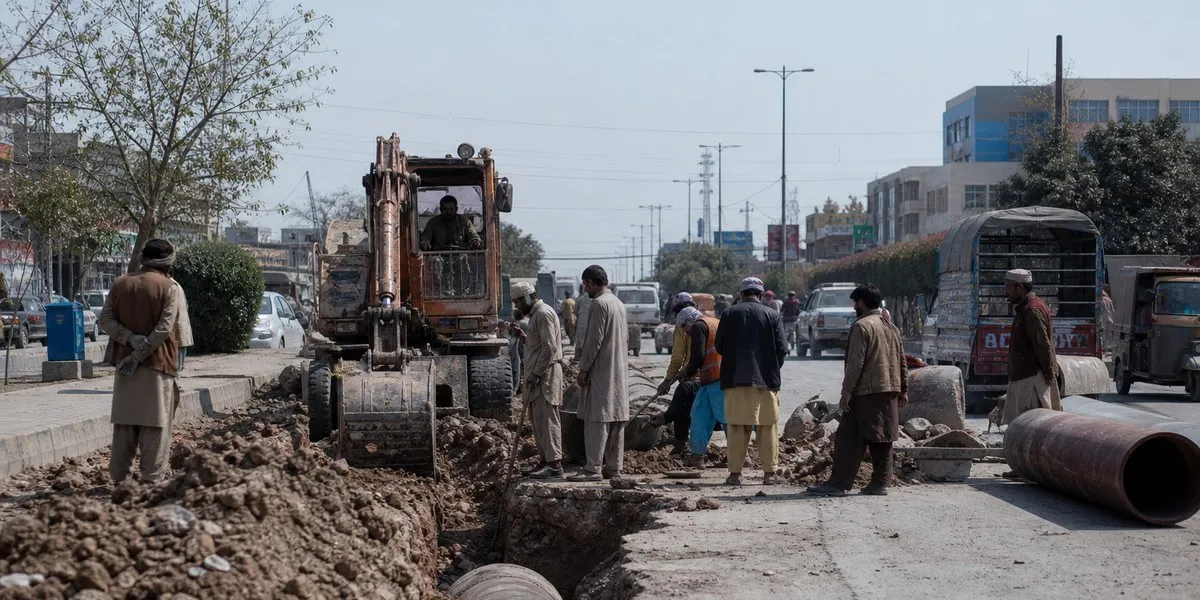
The administration of Rawalpindi in Pakistan has required utility services, government departments and service operators to obtain permission to excavate a road and a no-objection certificate before starting work. The relevant order was issued by Rawalpindi Commissioner Salman Ghani, Dawn reports.
Coordination of works
The decision was made at a meeting on permits for road excavation, as well as the installation and maintenance of underground utilities. According to Ghani, repeated digging up of streets in urban areas causes inconvenience to residents, traffic congestion and wasteful spending of public resources.
The commissioner instructed all departments, organizations and service providers to exchange information in advance about planned projects and underground networks. This is intended to help avoid repeated excavation of newly built roads. He also stressed that road excavation should be only a last resort.
More current news is available on the UA.News Telegram channel Telegram.
Restoration of road surfaces
Where possible, the official called for the use of alternative methods, including horizontal drilling and the laying of utility ducts, to reduce damage to road surfaces and infrastructure. If excavation cannot be avoided, the road must be restored to its previous standard and strength within 15 days.
PTCL was allowed to carry out work in the Shah Khalid Colony, Phase II, area over two days. WASA received permission to lay a 12-inch sewer pipe at Al-Khidmat Al-Razi Children's Hospital; the work must be completed within seven days while ensuring an alternative traffic route. A request to restore the colony's sewer line on Mushtaq Beg Shaheed Road, with a two-day completion period, was also considered.
The gas company SNGPL also received permission for work in ten areas of the city, including Pirwadhai, Asghar Mall, Fazalabad, Dhoke Hukamdad, Dhoke Kala Khan and Chandni Chowk. Ghani instructed that the relocation of utilities and the need for road excavation be considered at the planning stage of major infrastructure projects.




