
Traces of 55 ancient lakes found in Rub' al Khali, but no humans — ScienceAlert
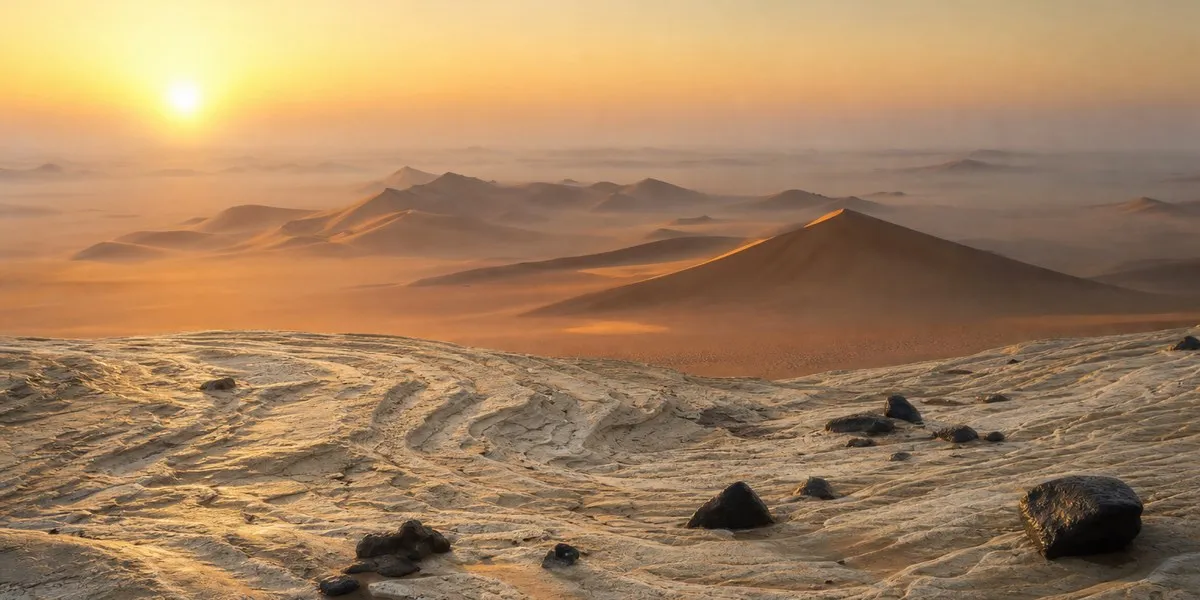
In the Rub' al Khali desert on the Arabian Peninsula, researchers discovered deposits from 55 ancient lakes, but found no evidence of ancient human presence. The expedition surveyed 125 locations, covering approximately 1,500 kilometers across the desert, ScienceAlert reports.
Ancient lakes in the desert
Rub' al Khali, also known as the Empty Quarter, stretches for approximately 1,000 kilometers and is the world's largest continuous sand desert. During wet periods of the Pleistocene, temporary lakes and green corridors emerged here, along which early humans could have traveled from Africa through Arabia to Asia.
Previous studies dated lake deposits in the region to approximately 122,000 to 67,000 years ago. During the new expedition, scientists found no human-made objects near the ancient lakes examined.
More current news is available on the UA.News Telegram channel Telegram.
There was a lack of stone for tools
The study's authors believe that access to water alone was insufficient for long-term settlement by ancient humans. Of the 125 locations surveyed, only ten contained deposits of stone suitable for knapping and making stone tools. All these sites were located on the desert's periphery.
The central basin of Rub' al Khali consists mainly of carbonate and evaporite rocks, which are unsuitable for making stone tools. According to the researchers' calculations, 57% of the territory of prehistoric Arabia that had access to water lacked suitable stone raw material.
The scientists concluded that habitable areas of the Arabian Peninsula formed where water and raw materials for stone tools were available simultaneously. The study's results were published in the journal Nature.




