
Monumental statue of Emperor Antoninus Pius reconstructed in Scotland — Live Science
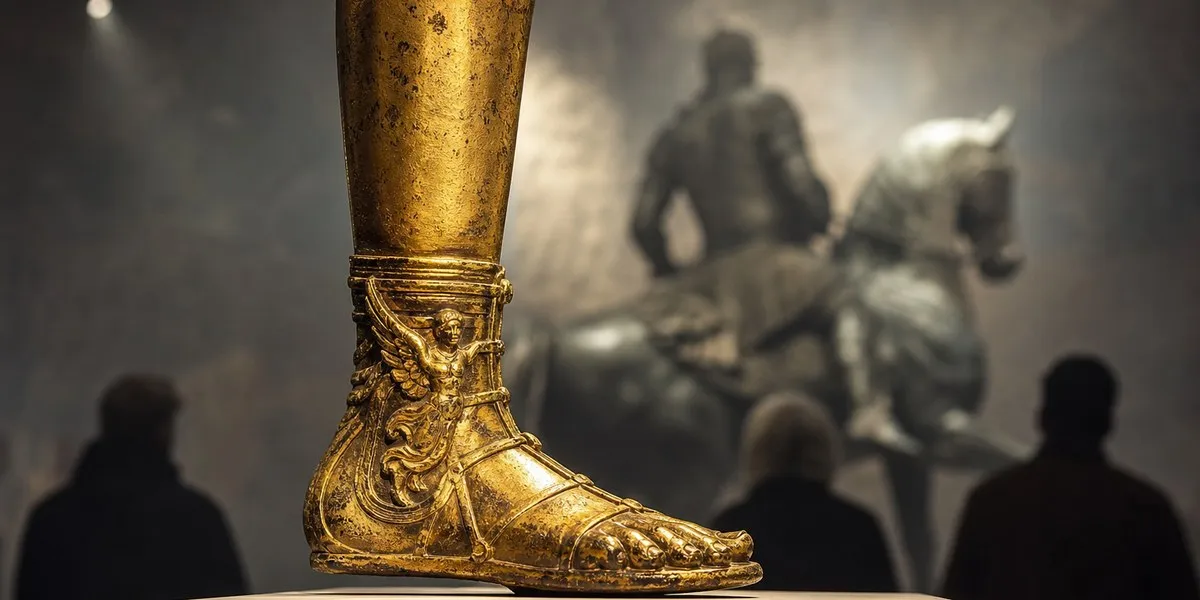
In Scotland, specialists have reconstructed the appearance of a monumental equestrian statue that, in their assessment, may have depicted the Roman emperor Antoninus Pius. Only the lower right part of the leg has survived from the sculpture — a gilded bronze foot and calf. The fragment, known as the Milsington leg, was found in a bog in 1820, Live Science reports.
This is the only known example of a monumental statue of a Roman emperor in Scotland. According to experts, the sculpture was made around AD 140. Previously, researchers suggested that the bronze statue may have been brought from the English city of York, but further research into the Roman frontier provided grounds to associate the find with Scotland.
An equestrian monument on the empire’s frontier
Experts believe that the leg came from an equestrian statue of Antoninus Pius, similar to the famous sculpture of Marcus Aurelius in Rome. Antoninus Pius ruled the Roman Empire from 138 to 161, succeeding Hadrian on the throne.
More current news is available on the UA.News Telegram channel Telegram.
During the reign of Antoninus Pius, the governor of Roman Britain was ordered to advance north, invade southern Scotland and build the Antonine Wall. After the emperor’s death, the fortifications were no longer defended, and the Romans withdrew from the territory of Scotland.
The statue may have been dismantled during the withdrawal
National Museums Scotland suggests that during their withdrawal, the Romans may have dismantled valuable statues they had installed in the area. An examination of the leg before a new exhibition found no cut marks on the bronze. This indicates that the fragment was likely separated carefully rather than chopped off during deliberate destruction or for recycling as scrap metal.
The exact reason why only the leg remained from the sculpture is unknown. The fragment, along with Mithras altars from Inveresk and other Roman finds, will be displayed from November 14 at the exhibition “Roman Scotland: Life at the Edge of Empire” at the National Museum of Scotland.




