
Jupiter company created in the US to recycle solar panels — Electrek
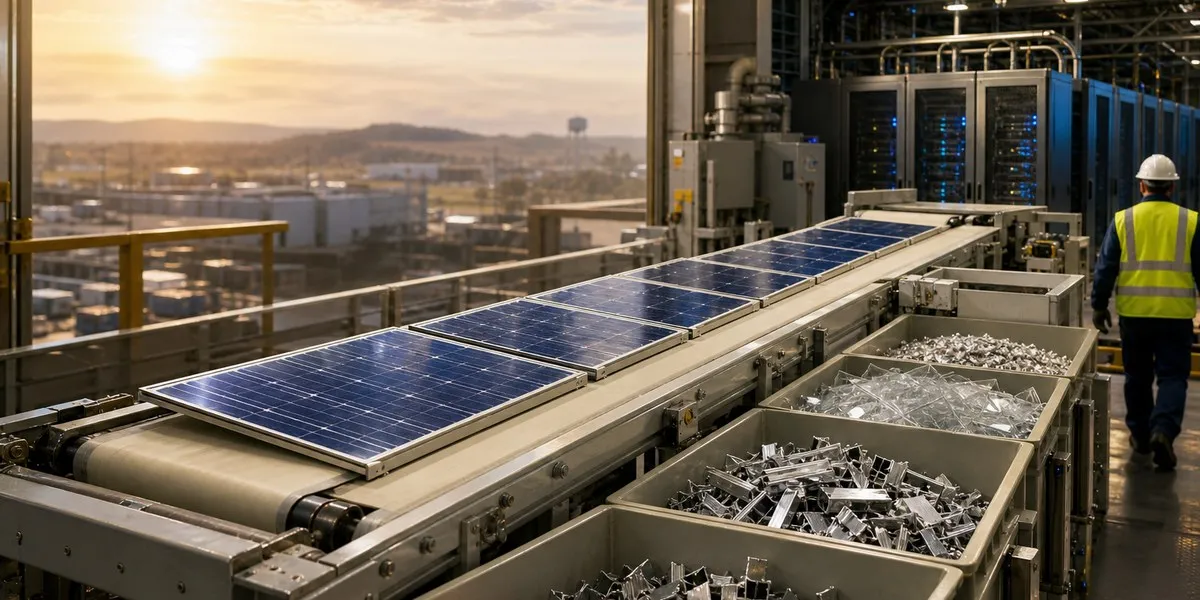
In the United States, solar panel recycler Solarcycle and PedalPoint Recycling, Korea Zinc’s US recycling and metals business, have joined to form Jupiter, a new fully integrated company. It will work with decommissioned solar panels and data center equipment, and plans to supply recovered metals to Korea Zinc’s metallurgical facilities, including a planned $7.4 billion plant in Clarksville, Tennessee.
As Electrek reports, Jupiter is launching with eight certified facilities in the US, nearly 1 million square feet of processing space and approximately 250 employees. The company will also serve clients of both predecessor businesses, including Microsoft, Prologis and Brookfield.
Services for operators
Jupiter will offer solar power plant and data center operators a full range of services for retired equipment: decommissioning, resale of parts that remain usable, and recycling of the remaining materials. Customers will be able to track where materials go and return them to their own supply chains.
More current news is available on the UA.News Telegram channel Telegram.
Korea Zinc will hold a controlling stake in Jupiter. Suvi Sharma of Solarcycle will become the new company’s CEO, while Kevin Ham of PedalPoint Recycling will serve as CFO. Solarcycle’s existing investors include Microsoft and Prologis Ventures.
Capacity in Georgia and Tennessee
After opening, Solarcycle’s facility in Cedartown, Georgia, processed thousands of old solar panels each week. According to the company, at full capacity it can process panels with a combined capacity of up to 5 GW per year and recover glass, aluminum, copper and silver.
Korea Zinc is developing the Project Crucible metallurgical complex in Clarksville with support from the US government. Production there is expected to be launched in stages starting in 2029. The facility’s designed capacity is about 1.1 million tonnes of raw materials per year, while output of finished products is expected to reach approximately 540,000 tonnes.




