
Remains of a 30-kilogram rodent dating back 34 million years found in Thailand — ScienceDaily
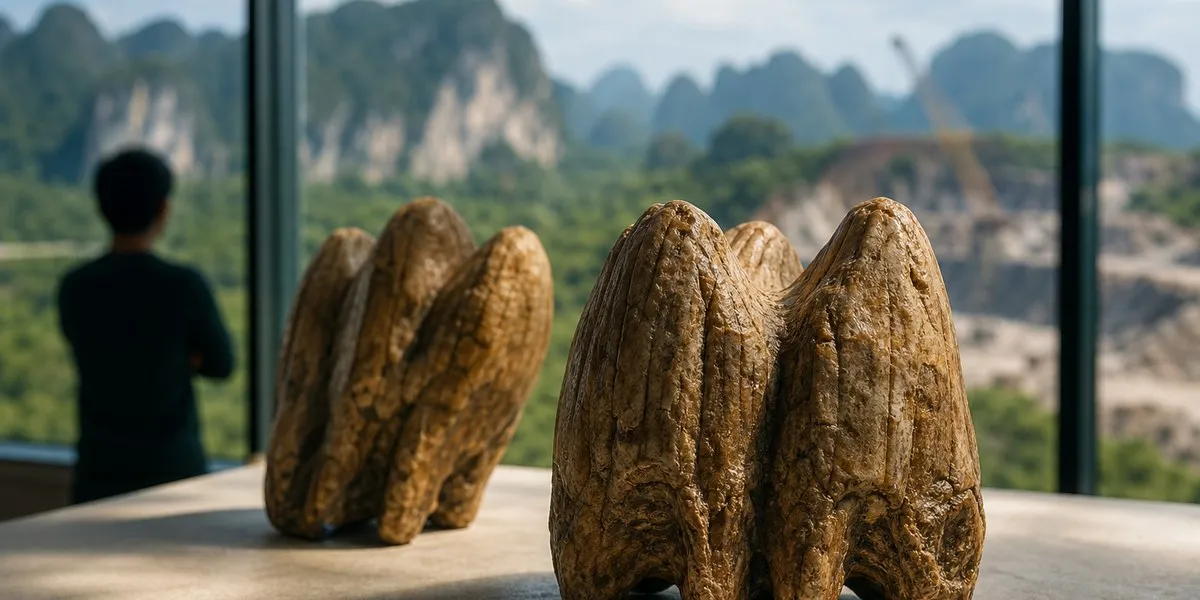
In Krabi province in southern Thailand, paleontologists discovered the remains of a previously unknown species of large rodent that lived about 34 million years ago. The animal was named Yakamys sirindhornae; researchers estimate that its weight may have reached about 30 kilograms. ScienceDaily reports on the discovery.
Two teeth from a lignite mine
The remains consist of a second lower molar and a lower incisor. They were found at the Bang Mark quarry in a lignite mine in the Krabi Basin. Researchers described these fossil teeth as exceptionally large.
The genus name Yakamys combines the Thai word yak, meaning “giant,” and the Greek mys, meaning “mouse” or “rat.” The species name sirindhornae was given in honor of Princess Maha Chakri Sirindhorn, recognizing her long-standing support for science and paleontological research in Thailand.
More current news is available on the UA.News Telegram channel Telegram.
Body mass estimate has substantial uncertainty
The team used seven existing methods for estimating body mass based on tooth size. The results indicate that Yakamys sirindhornae weighed approximately 30 kilograms, about twice as much as other known rodents from this period, including Hulgana.
The researchers emphasize that such calculations have substantial uncertainty because they are based on only two fossil teeth. The find indicates that gigantism among rodents emerged earlier and in more regions than previously believed, and that Southeast Asia may have played a more important role in the early evolution of large members of this group.
The study was conducted by an international group involving scientists from McGill University, Thailand’s Department of Mineral Resources, CNRS, and the University of Poitiers. An article about the find was published in the journal Scientific Reports.




