
Israel studies 800,000-year-old elephant tooth — Jerusalem Post
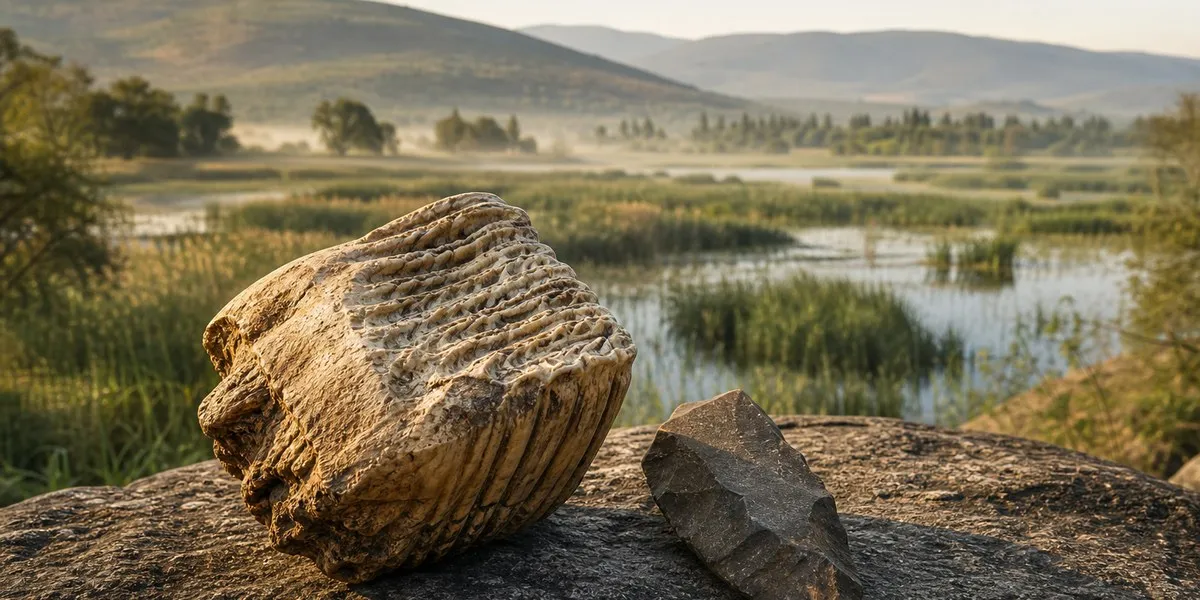
Archaeologists examined a molar and tusk fragments of a straight-tusked elephant found at the Gesher Benot Ya'aqov site in the Hula Valley in northern Israel. The remains, which are nearly 800,000 years old, helped scientists reconstruct the ecosystem inhabited by large mammals and early hominins, the makers of stone tools. This was reported by The Jerusalem Post.
An ancient inhabitant of the Hula Valley
The tooth belonged to the species Palaeoloxodon antiquus, a straight-tusked elephant and one of the largest land mammals of the Pleistocene. According to researchers' estimates, members of this species weighed about 10 tonnes. The remains were found next to basalt hand axes and cleavers of the Acheulean tradition, one of the oldest and most widespread stone-tool-making technologies.
The results were published in the journal Quaternary Science Reviews. The study was led by University of Haifa doctoral student Hannah Farrell, while excavations at the site were conducted by Professor Gonen Sharon of Tel-Hai University. The team also included specialists from the University of Haifa and Tel Aviv University.
More current news is available on the UA.News Telegram channel Telegram.
A wetland landscape
The scientists used high-resolution computed tomography, 3D reconstruction, microwear analysis, isotope geochemistry and pollen research. Carbon isotope values indicate that the elephant lived in a consistently moist environment.
Pollen from the sediments showed the presence of rich wetland vegetation: reeds, sedges, willows, tamarisk and aquatic plants. The team believes that a mosaic of forests, meadows, marshes, rivers and shallow bodies of water existed in the valley for a long time.
Gesher Benot Ya'aqov is located in the Levantine Corridor, through which animals and human groups moved between Africa and Eurasia. At the site, covering an area of about 100 square meters, researchers found no human remains but discovered tens of thousands of animal bones and stone tools. According to Sharon, the resources of local bodies of water, forests and vegetation created conditions for the existence of both large animals and early humans.




