
Acorns may predict an increase in tick numbers in two years — ScienceDaily
Researchers at the Cary Institute of Ecosystem Studies in Millbrook, New York, found that an especially abundant acorn crop may predict an increase in the number of blacklegged tick nymphs two years later. The conclusions are based on more than 35 years of observations of ticks, mice, oaks, predators and weather in the forested areas of Dutchess County, ScienceDaily reports.
The study, published in the Proceedings of the National Academy of Sciences, summarized nine unexpected observations about the ecology of Lyme disease. It is caused by the bacterium Borrelia burgdorferi, which is usually transmitted to humans by an infected blacklegged tick. Nymphs, or immature ticks, play a significant role in transmitting the infection to people.
Mice are more important than deer
At the 2,000-acre research site, scientists found no statistically significant relationship between the number of white-tailed deer and the number of tick nymphs. Deer are a blood source for adult female ticks, but they do not transmit the bacterium Borrelia burgdorferi to them.
Instead, after years with especially high mouse numbers, about 40% more nymphs were recorded the following year. White-footed mice are effective hosts for tick larvae and readily transmit the bacterium to them. Ticks infected at the larval stage can retain the bacterium after becoming nymphs.
More current news is available on the UA.News Telegram channel Telegram.
The chain from oaks to ticks
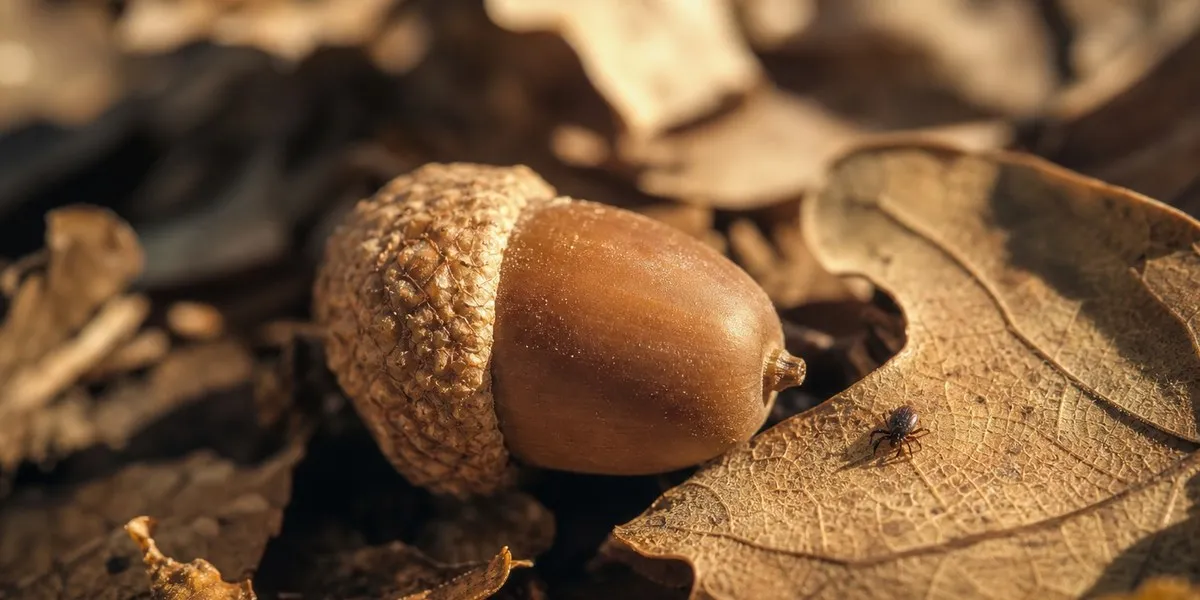
Oaks periodically produce large acorn crops in synchrony. A large amount of this food promotes growth in forest rodent populations the following year, and more mice support a greater number of young ticks. This is why a substantial acorn crop is associated with an increase in nymph numbers two years later.
At the same time, more mice do not automatically mean a higher share of infected ticks. Larvae also feed on skunks, squirrels and opossums, which transmit the bacterium much less effectively. The distribution of larval feeding among different animal species can reduce the proportion of nymphs infected with the Lyme disease pathogen.
Observations also showed that ticks in the wild can survive intense heat and cold by hiding in the soil or under fallen leaves. Overall, warmer years at the research site preceded fewer nymphs, although warm conditions also favor mice. Scientists will continue monitoring the impact of climate change, invasive species and landscape changes on ticks and their hosts.




