
LSD speeds up brain rhythms and makes neural signals more complex — News-Medical
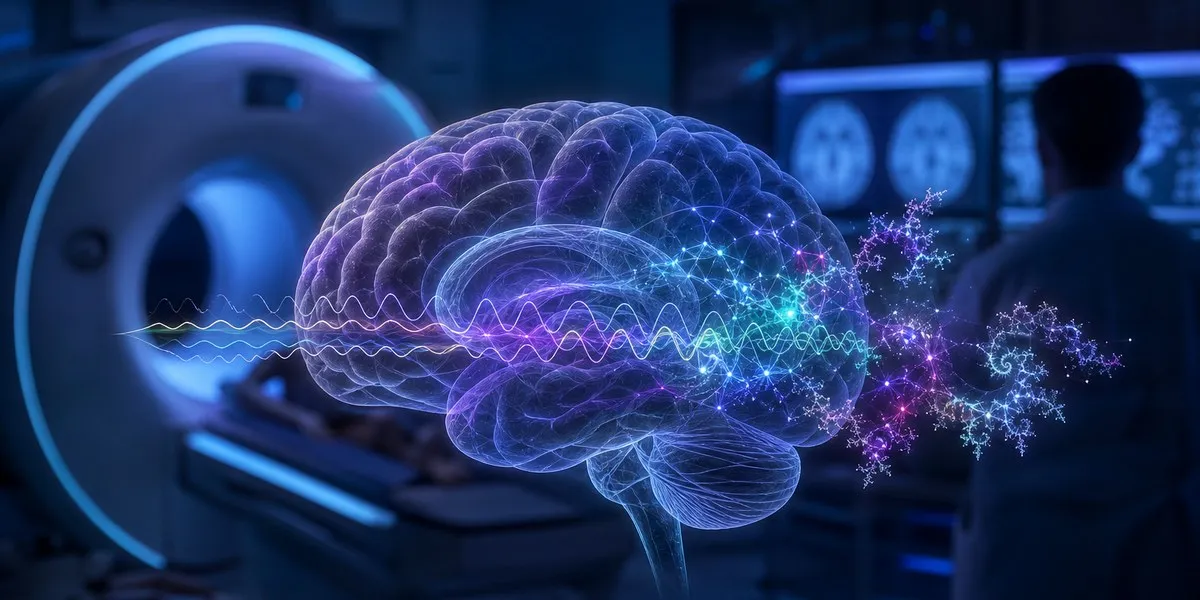
An international group of scientists analyzing magnetoencephalography data collected at Imperial College London in the United Kingdom found that LSD not only weakens certain brain rhythms but also speeds them up and makes brain signals more complex. The study results were published on October 7, 2026, in the journal Communications Biology, News-Medical reports.
The researchers analyzed recordings of magnetic fields generated by neuronal activity. The study involved 17 healthy volunteers, each of whom underwent two sessions two weeks apart. During one session, participants received 75 micrograms of LSD intravenously, while in the other they received a saline placebo.
Faster alpha and beta rhythms
Under the influence of LSD, alpha waves in large areas of the cerebral cortex sped up by about 2 hertz, while beta waves sped up by about 5 hertz. Alpha rhythms usually predominate during rest with closed eyes, whereas beta rhythms are associated, among other things, with concentration and decision-making.
Previously, a decrease in the intensity of such waves under the influence of psychedelics was mainly interpreted as desynchronization — that is, less coordinated neuronal activity. The study authors noted that conventional analytical methods did not always make it possible to distinguish an actual weakening of a rhythm from a change in its frequency. According to Professor Karim Jerbi, ignoring the shift toward faster rhythms may lead to an erroneous interpretation of LSD's effects on the brain.
More current news is available on the UA.News Telegram channel Telegram.
More complex and less predictable signals
The scientists also recorded an increase in fractal dimension and diversity of patterns in brain signals. This means that brain activity under LSD became more detailed, irregular and less predictable. These changes were most pronounced in areas associated with sensory perception, language, emotions and mental imagery. The motor cortex, meanwhile, underwent relatively minor changes.
A machine-learning algorithm trained to distinguish LSD and placebo sessions using only brain signals classified them correctly in 88% of cases, compared with 50% for random selection. At the same time, the study did not assess the substance's therapeutic effect, as it was conducted among healthy people after a single administration.
In further studies, scientists are already comparing the effects of LSD, psilocybin and dimethyltryptamine on brain activity. Their goal is to more precisely identify the changes characteristic of each substance and, in the future, predict patients' individual responses to treatment.




