
FIA proposes hybrid V8 engines for Formula 1 in 2030 or 2031 — BBC Sport
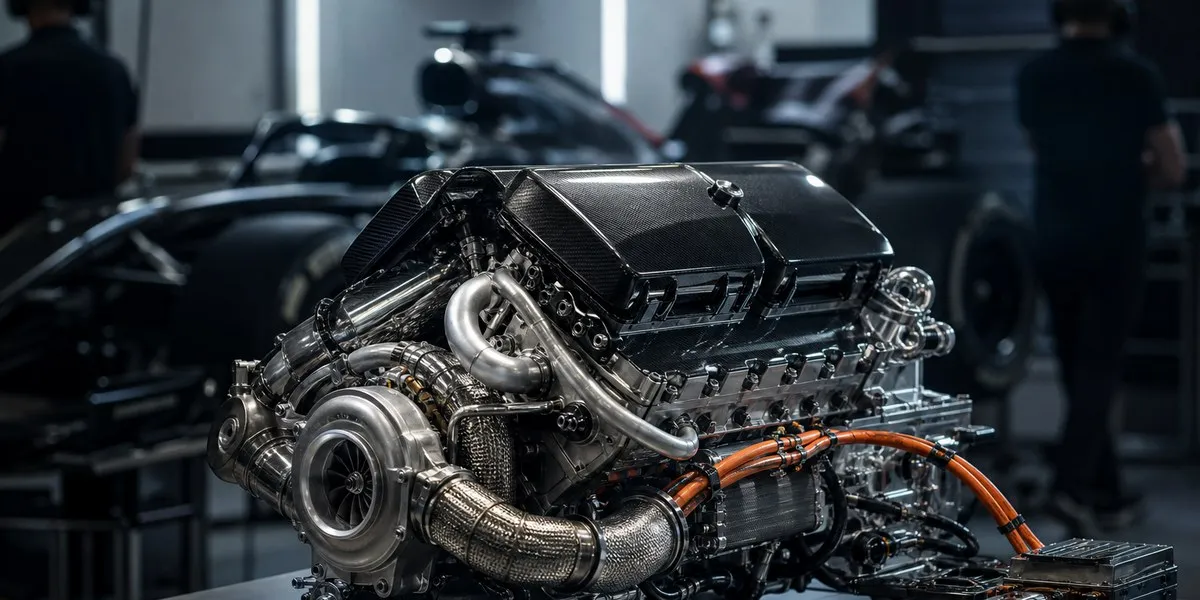
The International Automobile Federation (FIA) has proposed introducing new hybrid turbocharged V8 engines in Formula 1 that would be simpler, lighter and cheaper than the current power units. The FIA sent a document outlining the framework parameters of the future regulations to the six automakers competing in the championship. The new rules could take effect in 2030 or 2031, BBC Sport reports.
Parameters of the new engine
Under the proposal, Formula 1 could switch to V8 engines with a displacement of 2 to 2.3 litres, a more compact turbocharger, reduced boost pressure and a less powerful hybrid system. The power of the energy recovery electric motor is proposed at 200 kW, compared with the current 350 kW.
It is envisaged that 100 kW of electric power would be permanently available to the driver, while another 100 kW could be used in push-to-pass mode for overtaking. The total power output of the power unit is expected to be about 900 horsepower, with most of it generated by the internal combustion engine.
Formula 1 currently uses 1.6-litre turbocharged V6 engines. The power split between the internal combustion engine and the electric component currently stands at 53% to 47%, and by 2028 it is to be changed in two stages to 60% to 40%.
More current news is available on the UA.News Telegram channel Telegram.
Weight, fuel and costs
The proposal provides for retaining the use of fully sustainable fuel, while the requirements for it are to be simplified to reduce production costs. Another goal is to cut the overall weight of the cars by 80 kg so that they are lighter and more responsive to driver input.
Separately, the document provides for a 50% reduction in the engine spending cap, which currently stands at $190 million per year. This figure is an initial proposal for discussion, as manufacturers need to account for the simultaneous development of current and new power units.
Discussions with manufacturers
The FIA is considering two approaches: minimally adapting the existing engines or creating a standardized base power unit from an external supplier that manufacturers could partially refine. According to BBC Sport, manufacturers want to design and produce engines themselves so that power units remain a competitive advantage.
The federation expects to agree on a proposal in the coming weeks that could be submitted to the FIA World Council for consideration in December.




