
Two different gamma-ray bursts occurred four minutes apart — ScienceAlert
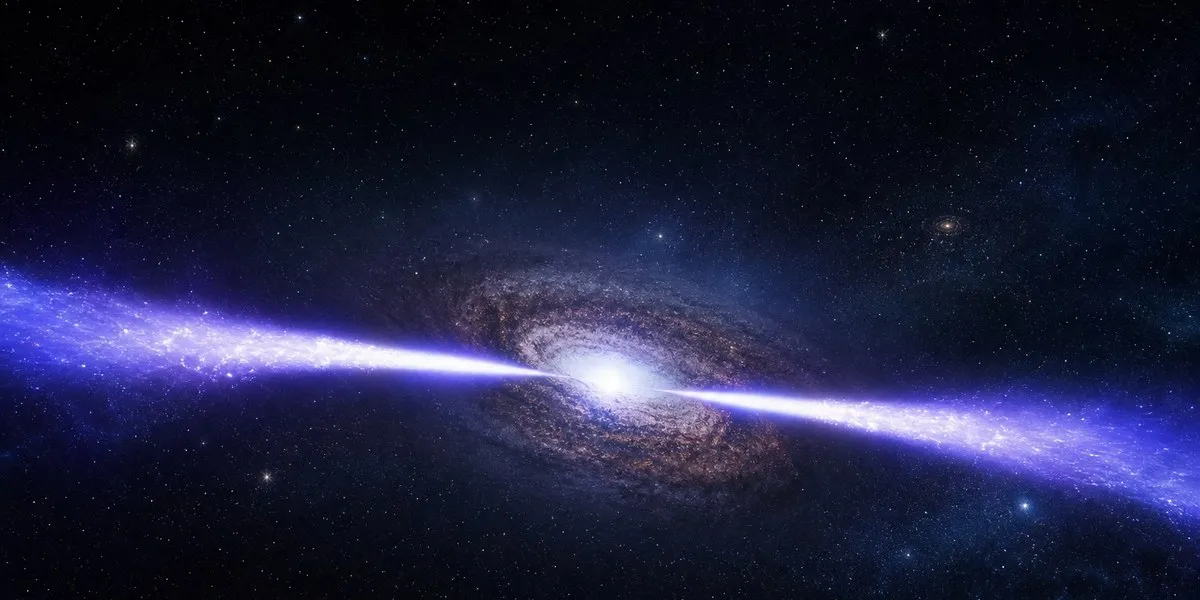
Astronomers recorded the GRB 160425A event, during which two gamma-ray bursts of different types occurred about four minutes apart. The first lasted 1.7 seconds, and the second 51.2 seconds. As ScienceAlert reports, researchers consider this combination unprecedented in gamma-ray burst observations.
Swift observations
The event on April 25, 2016, was detected by the Neil Gehrels Swift Observatory space observatory. Ground-based telescopes subsequently observed the fading afterglow. Light from the source traveled to Earth for about 5.5 billion years. According to the authors' estimate, the event's host galaxy may consist of two merging galaxies.
The short component, designated G1, is associated with the merger of compact objects, including neutron stars or black holes. The longer component, G2, usually corresponds to the scenario of a massive star's collapse. Gamma-ray bursts are among the most energetic phenomena in the Universe and, scientists believe, release energy in narrowly directed jets.
More current news is available on the UA.News Telegram channel Telegram.
Five possible explanations
The authors of the study, published in Nature Astronomy, considered five explanations. One of them suggests a chance coincidence of two independent bursts in nearby directions in the sky. By their estimates, the probability of such a coincidence within one time interval and area of the sky is approximately two cases per trillion.
Other options include two sources in one galaxy, an unusual short burst with a long tail of radiation, or a long burst preceded by a weaker signal from a collapsing star. The researchers note that each scenario faces significant difficulties: in particular, the second burst is too energetic to be considered an ordinary continuation of the first. Another hypothesis suggests a single complex source with an undetermined number of celestial bodies.




