
China unveils two-launch Moon landing plan — The Express Tribune
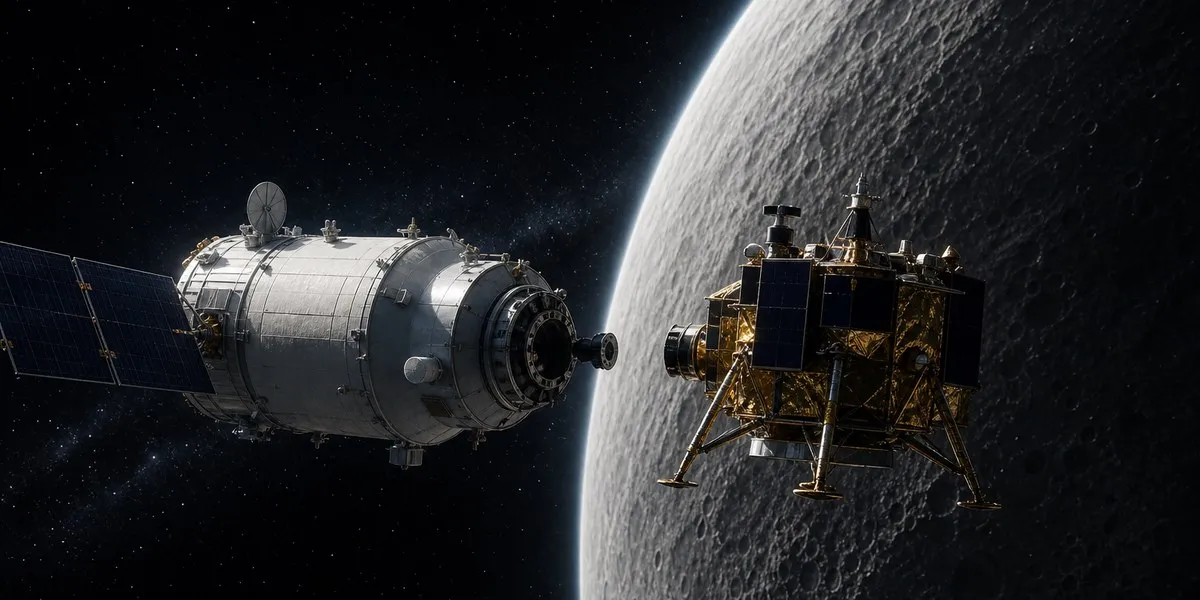
China presented in Beijing a plan for a crewed Moon landing that involves separate launches of the Lanyue lunar lander and the Mengzhou crewed spacecraft. After the vehicles dock in lunar orbit, astronauts are to transfer to the lander to descend to the surface of Earth’s satellite.
Wang Xiang, deputy chief designer of China’s crewed space program and chief designer of the lunar program, outlined the program’s architecture at the 7th Symposium on Manned Spaceflight in Beijing. According to The Express Tribune, this approach has been called in China the “two launches and rendezvous in lunar orbit” plan.
Two spacecraft for the mission
Two rockets are to separately place Lanyue and Mengzhou on an Earth-to-Moon flight trajectory. The spacecraft must then conduct a rendezvous and docking in lunar orbit. After transferring from Mengzhou to Lanyue, the crew will descend to the Moon’s surface to conduct scientific work.
More current news is available on the UA.News Telegram channel Telegram.
According to Wang Xiang, this plan corresponds to China’s existing technical capabilities and infrastructure. The separate development of the spacecraft and lander may also facilitate the standardization of production and the creation of a long-term spacecraft lineup.
Development and testing
Development of the Long March 10 launch vehicle, the Mengzhou spacecraft and the Lanyue lander is progressing successfully, according to the designer. Tests already conducted include Mengzhou’s launch abort tests at zero altitude and maximum dynamic pressure, Lanyue landing and ascent tests, as well as a low-altitude demonstration and validation test of the Long March 10 rocket.
Wang Xiang said the program has unified system plans, technical standards and quality requirements, while particular attention is being paid during design to verifying interactions between subsystems. He also noted that achievements from China’s uncrewed Chang’e lunar program will be used for the crewed landing.




