
NASA unveils SpaceX and Blue Origin module test schedule for Artemis — Space.com
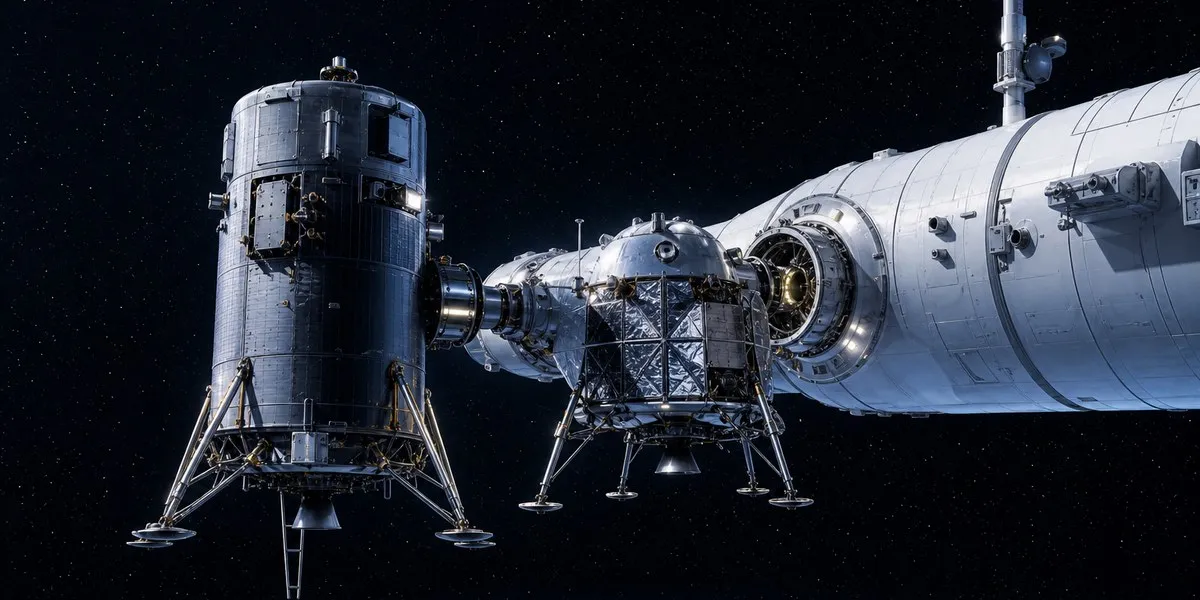
NASA unveiled a schedule for preparing SpaceX and Blue Origin lunar landers for the Artemis program at the International Astronautical Congress in Antalya, Turkey. The Artemis III mission is planned for the third quarter of 2027: four astronauts aboard Orion are to enter low Earth orbit and dock with test versions of both companies’ vehicles, Space.com reports.
No lunar landing is planned during Artemis III. Compatibility checks between Orion and the landers are intended to help NASA determine which one will carry astronauts to the lunar surface as part of Artemis IV, tentatively planned for early 2028.
Starship tests
SpaceX is developing a landing version of Starship for NASA. For Artemis III, the company plans to use an existing Starship V3 upper stage with certain modifications, including a docking system and nose section covering. The vehicle will not have a crew cabin, so astronauts will not transfer to it from Orion.
Among SpaceX’s next tasks is the first demonstration of fuel transfer between Starships in orbit. For a flight to the Moon, the lander will need to be refueled in space; according to an estimate cited in the report, this could require up to 12 launches of tanker spacecraft. The company must also complete the initial assembly of the crew cabin, conduct a demonstration of the landing legs, begin testing the cabin airlock, and prepare its simulator for astronaut training.
More current news is available on the UA.News Telegram channel Telegram.
The first launch of a tanker version of Starship is expected within several months after Artemis III. The launch of an uncrewed landing version of Starship is planned for late in the third or early in the fourth quarter of 2027, while an uncrewed Moon landing is to be carried out by the end of the year.
Blue Origin plans
Blue Origin is preparing the 16-meter-tall Blue Moon Mark 2 lander with three BE-7 engines. Unlike Starship for Artemis III, the company plans to use a complete test vehicle with a crew cabin, part of the life-support systems, and flight software. After docking with Orion, astronauts will be able to transfer to Blue Moon, familiarize themselves with the vehicle in weightlessness, and test some of its systems.
Blue Origin must complete qualification of the BE-7 engine and BT-7 maneuvering engines, communications systems, and integrate the test lander with the New Glenn rocket. The company plans to launch the smaller uncrewed Blue Moon MK1 to the Moon in the first quarter of 2027 as part of NASA’s Commercial Lunar Payload Services program.
The launch of the uncrewed Blue Moon MK2 demonstration vehicle is scheduled for the fourth quarter of 2027, and an attempt to land it on the Moon is planned for the first quarter of 2028. Both companies must demonstrate that their vehicles can land safely on the Moon, operate on the surface, and return to lunar orbit before NASA allows astronauts to be transported in them.




