
FLIP rover to deliver HPE computer to the Moon for AI tests — Space.com
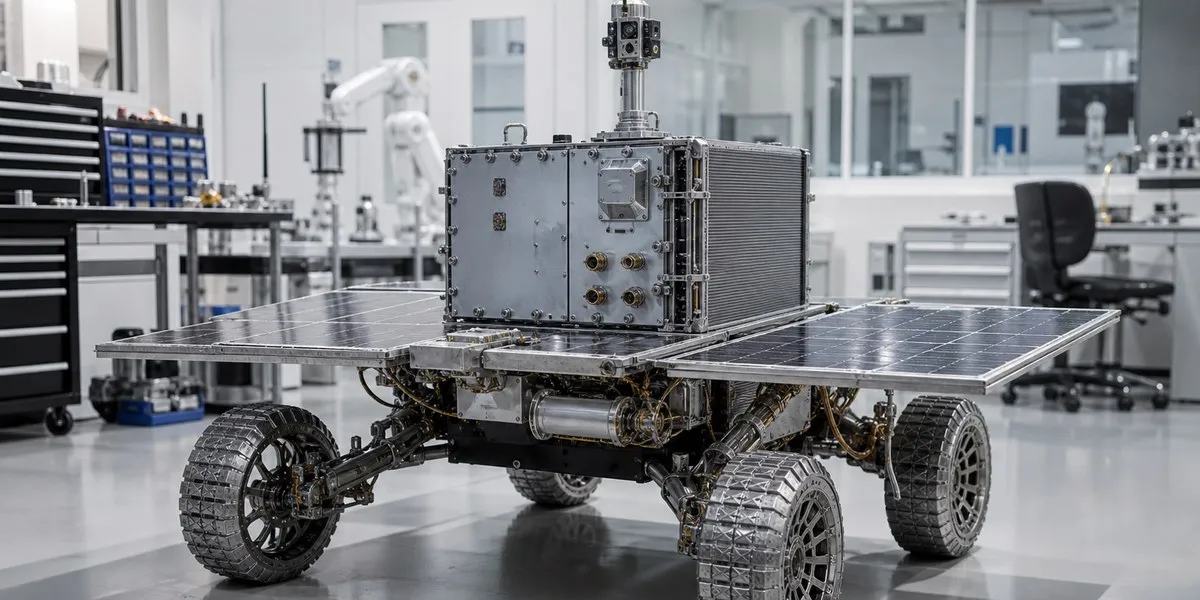
US company Astrolab plans to send the uncrewed FLIP rover to the Moon’s south pole later this year, carrying Hewlett Packard Enterprise’s Spaceborne Computer-4 high-performance computing module. The mission is to be carried out as part of Griffin Mission 1 using Astrobotic’s Griffin lander.
As Space.com reports, this is expected to be the first test of high-performance computing and artificial intelligence technologies directly on the lunar surface. Astrolab founder and CEO Jaret Matthews also said that a graphics processing unit will be tested on the Moon for the first time. Astrolab is one of two companies selected by NASA to develop a crewed rover under the Artemis program.
Computer for extreme conditions
Spaceborne Computer-4 was designed to be compact, lightweight, autonomous, and fanless. It is equipped with a 64-bit central processing unit and a graphics processing unit, as well as KIOXIA solid-state drives. The module will be connected to FLIP’s cooling system, while power will be supplied by the rover’s batteries and solar cells.
More current news is available on the UA.News Telegram channel Telegram.
The equipment was manufactured from thermally conductive aluminum with conditions near the Moon’s south pole in mind. According to Matthews, the platform is designed to operate for a year, including surviving several lunar nights, when periods of complete darkness can exceed 150 hours.
Navigation without GPS
During the lunar mission, the computer is expected to analyze visual data and support autonomous observations, navigation, mapping, and terrain analysis. Planned experiments include localization software developed at NASA’s Jet Propulsion Laboratory. It was previously used on Mars.
A machine-learning algorithm will compare features of the local terrain with a map stored in the device’s memory. This is expected to help the rover determine its location in the absence of GPS and avoid dangerous craters. In addition to FLIP, Griffin-1 is to deliver CubeRover, the LandCam-X optical navigation system, and the Nanofiche GLPH miniature archive of human history.




