
Perseverance rover detects 100-nanometre dust on Mars — Channel NewsAsia
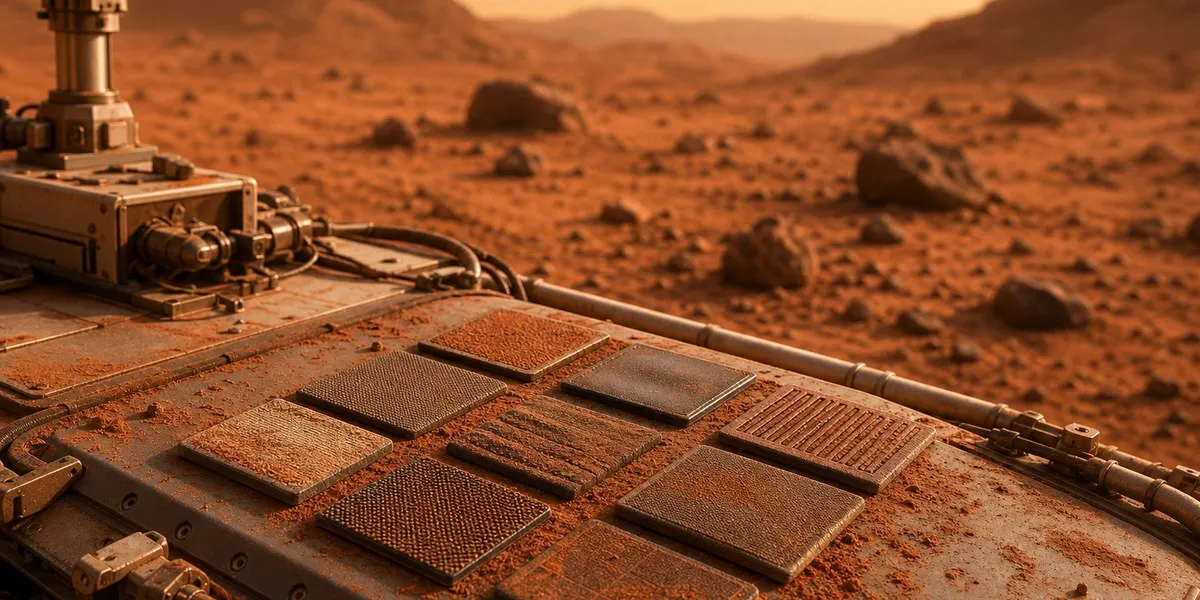
NASA’s Perseverance rover has detected ultrafine dust particles measuring about 100 nanometres in Jezero Crater in Mars’ Northern Hemisphere. This is approximately 500 times thinner than a human hair, Channel NewsAsia reports.
Two categories of dust
Perseverance has been operating in the Jezero Crater area since landing in 2021. The particles were detected on the rover’s equipment, including samples of materials that could be used for future spacesuits.
Previously, measurements made it possible to distinguish Martian dust particles with diameters of about up to 3 micrometres. The Planetary Instrument for X-ray Lithochemistry, or PIXL, documented two categories of even smaller particles: ultrafine particles measuring about 100 nanometres and fine particles with diameters of less than 2.5 micrometres. The latter are approximately 30 times thinner than a human hair.
These findings are described in a study published in the journal Proceedings of the National Academy of Sciences.
More current news is available on the UA.News Telegram channel Telegram.
Preparing for human flights
Washington University in St. Louis planetary scientist Scott VanBommel noted that smaller particles have a greater potential to penetrate deeper into the human body and are more difficult to remove from it. At the same time, he stressed that the danger depends on the dose and duration of exposure.
Martian dust contains silica, iron compounds and chlorine compounds, including perchlorates, which are harmful on Earth at sufficiently high doses. According to the researchers’ assessment, such fine particles could potentially enter astronauts’ lungs, reach the bloodstream and damage vital organs.
Perseverance carries samples of synthetic Vectran fibre and a protective Teflon coating measuring about 20 millimetres. Vectran retained larger dust particles, while less dust settled on Teflon, but it was finer. NASA is also studying designs for spacesuit docking systems and two-chamber airlocks that could limit dust from entering living modules during future crewed missions to Mars.




