
Saab unveils AI agents for future aviation projects — Breaking Defense
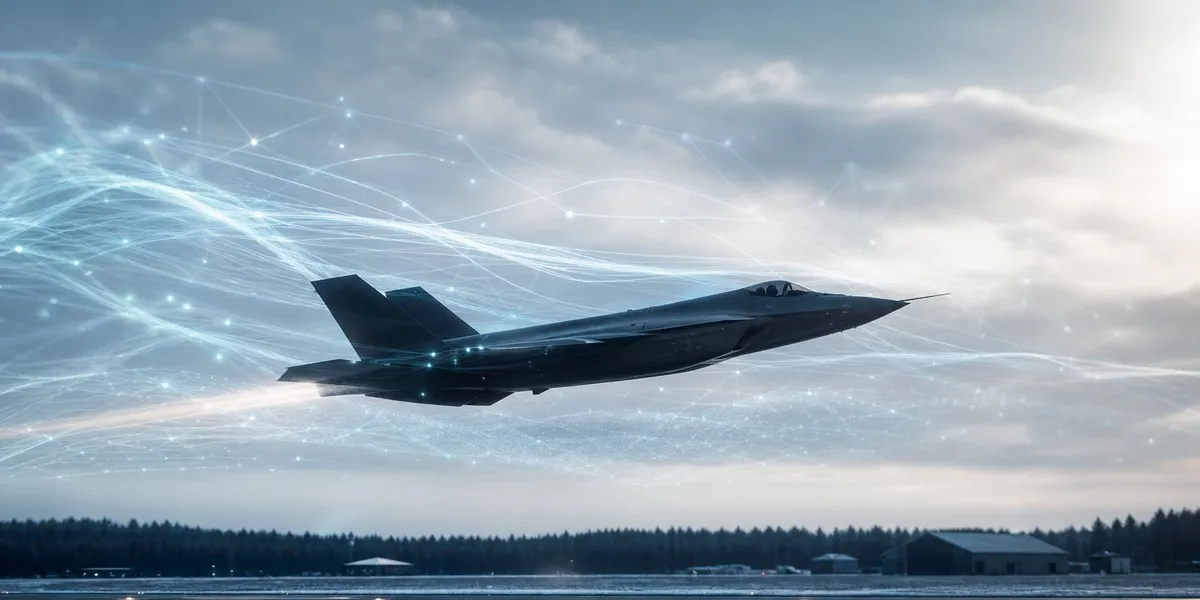
In Sweden, Saab has unveiled a range of proprietary artificial intelligence-based agents for future aviation platforms. The new technologies have already been tested on the Gripen E multirole fighter, Breaking Defense reports.
Testing on the Gripen E
Saab said the agents use various artificial intelligence methods to make tactical decisions in complex operational conditions. They can interact with a pilot in the cockpit or operate from their own unmanned aerial vehicle.
The foundation of the project is the AI Fighter Jet Pilot Academy. It is intended to develop AI agents and create infrastructure for their development, training, and evaluation.
Peter Nilsson, head of Advanced Programs in Saab's aviation business, said the academy's main task is to turn successful flights with agents into a reliable capability that can learn, improve, and remain relevant over time.
More current news is available on the UA.News Telegram channel Telegram.
Combat scenarios and unmanned systems
So far, AI agents have mainly been tested and integrated with the fighter in beyond-visual-range combat scenarios. Saab also plans to use its own AI technologies in the development of future aviation programs.
The company is developing three unmanned aerial vehicles — A1, A2, and A3 — as part of its work on a future loyal wingman-class drone, an unmanned aircraft that accompanies a combat aircraft.
Computing capacity in Sweden
To expand computing resources for AI agents, Saab became one of the founders of the Swedish government-backed Sferical AI initiative. According to Nilsson, this should help retain control over data in Sweden and avoid dependence on external providers of computing resources.
According to a Saab slide, Sferical AI is built on Nvidia DGX SuperPOD architecture and is intended, among other things, to develop large language and vision-language models that will support interaction between agents and operators. Nilsson also said that applying the system to a one-hour simulated training flight could provide the equivalent of one billion hours of human pilot flight time.




