
China identifies potential lithium deposit areas — South China Morning Post
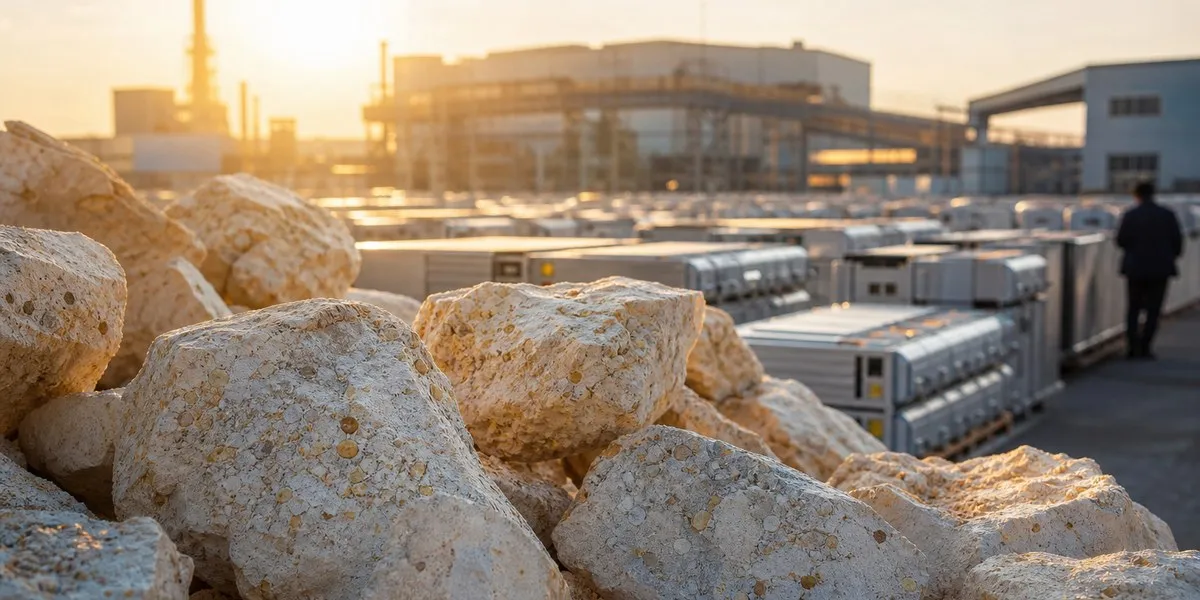
Researchers have identified potential areas of volcanic clay lithium deposits in southeastern China that coincide with industrial clusters producing lithium batteries in the country’s eastern and southern regions. This is a preliminary assessment of geological potential, rather than confirmed reserves suitable for commercial extraction, South China Morning Post reports.
The article was published in September in the peer-reviewed Chinese journal East China Geology. The study, which involved scientists from the Nanjing Center of the China Geological Survey, compared the geology of the country’s southeastern coast with major deposits in the United States and Europe. One of the co-authors, geologist Duan Zheng, works at the Institute of Geology of the Chinese Academy of Geological Sciences.
Areas for priority exploration
Scientists named the Shizhenbei Basin in Heping County, Guangdong Province, as the first priority for further research. Lithium mineralization has already been recorded there in clay-rich layers of volcanic rocks. The Shouchang Basin in Jiande City, Zhejiang Province, ranked second on the list.
Areas near Jinyun and Lucheng in Zhejiang, where the clay minerals smectite and illite are present, are also considered promising. Duan Zheng said drilling should focus on areas where the upper parts of ring caldera faults intersect with deposits of ancient caldera lakes.
More current news is available on the UA.News Telegram channel Telegram.
The potential still requires verification
According to the study, Late Mesozoic acidic volcanic rocks extend along China’s southeastern coast for about 1,200 kilometers and reach 500 kilometers inland. Their total area is about 150,000 square kilometers; 105 calderas have been identified in the region.
However, lithium concentrations in the studied areas of southeastern China range from several hundred to about 1,000 parts per million, which is lower than figures recorded at some sections of the McDermitt deposit in the United States. In some layers in Heping, the lithium oxide content is 0.1–0.2%, and the layers themselves are relatively thick.
Duan Zheng stressed that at this stage these are only guidelines for exploration and an assessment of potential. Additional drilling is needed to determine the size, continuity and lithium content of possible deposits, while the economic viability of extraction is complicated by the costs and technologies required to process clay raw materials.




