
Age of Martian meteorite determined in Mali: at least 4.1 billion years — Channel NewsAsia
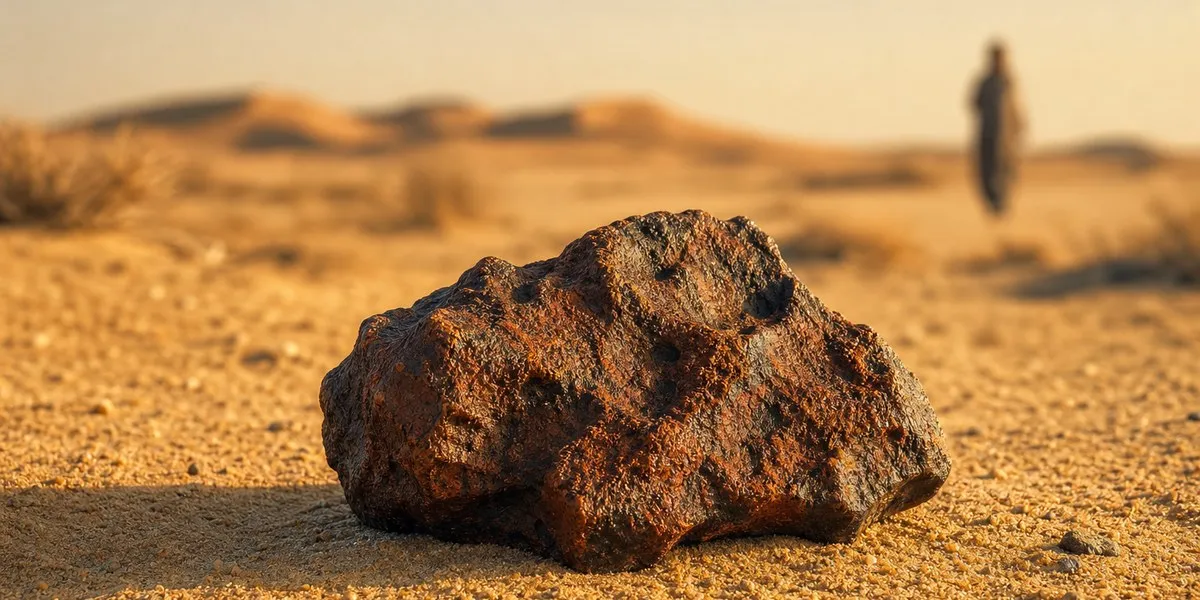
In the Sahara in Mali, scientists studied the Martian meteorite Teghaza 001, which formed in Mars’ crust at least 4.1 billion years ago. The reddish igneous rock may be the oldest among the 435 known meteorites of Martian origin on Earth, Channel NewsAsia reports.
Traces of ancient water
The chemical composition of the sample indicates that the rock interacted with water as it slowly cooled and crystallized beneath the surface of Mars. The meteorite was part of the Martian crust, but formed from magma that came from deeper layers of the planet’s mantle.
Oxygen and hydrogen isotopes in Teghaza 001 indicate that water penetrated deeper layers of the crust and mixed with molten rock from the mantle. According to planetary scientist Lee Saper of NASA’s Ames Research Center and the BAER Institute, the findings support the assumption that early Mars had the conditions and necessary ingredients for life to exist, but do not directly answer whether life was there.
More current news is available on the UA.News Telegram channel Telegram.
A sample from the Martian crust
The meteorite was discovered in 2022 in eight fragments in the desert about 34 kilometers from the Malian village of Bir Shali. The largest fragment was the size of a fist. Its main minerals are feldspar and pyroxene; the rock also contains zircon crystals with uranium.
The age of Teghaza 001 was determined using a method based on the radioactive decay of uranium into lead. Only three Martian meteorites, including Teghaza 001, are dated to the planet’s early history. One of them, found in Antarctica in 1984, was initially estimated to be 4.5 billion years old, but its age was later determined to be close to that of Teghaza 001. The new study indicates that Teghaza 001 is likely older.
Journey to Earth
Researchers estimate that Teghaza 001 may have originated in the southern highlands of Mars, likely in the Hellas basin area, one of the planet’s largest impact craters. The fragment was ejected from the surface of Mars as a result of an impact, then traveled through space, crossed Earth’s trajectory, passed through the atmosphere and fell in the Sahara. Scientists do not know exactly when the meteorite reached Earth.




