
Spiders found to compensate for REM-like sleep — ScienceAlert
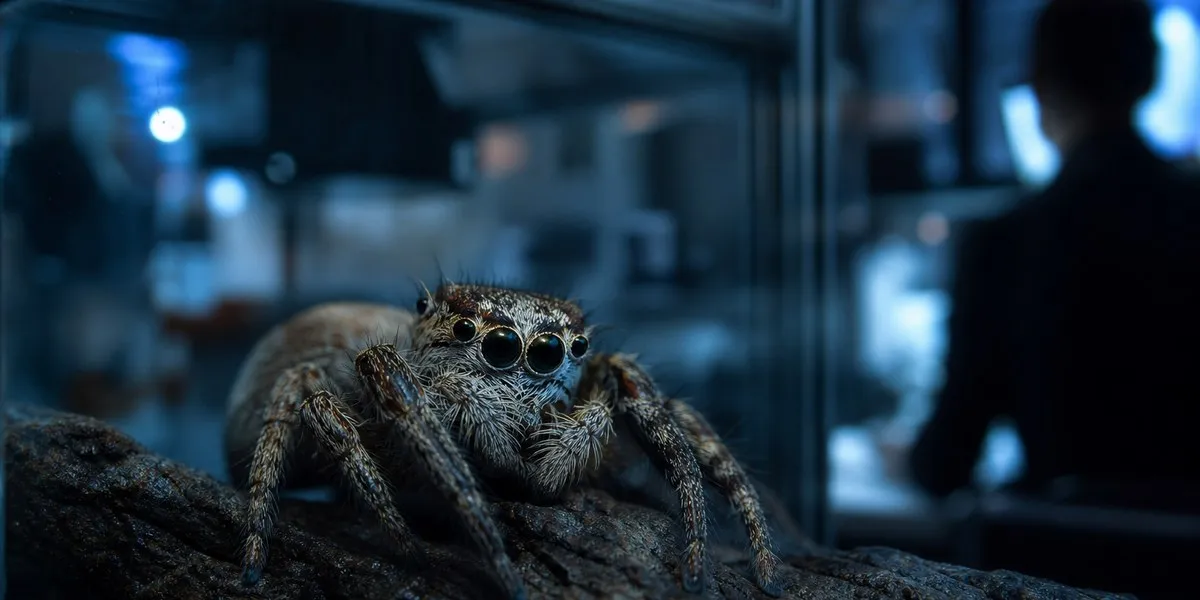
Researchers at the University of Bonn in Germany found that spiders of the species Portia fimbriata displayed nearly 80% more REM-like behavior after their nighttime rest was disrupted. This includes leg twitching, trembling of mouthparts, and movements of retinal tubes. ScienceAlert reports on the findings of the study published in the Proceedings of the National Academy of Sciences.
How the spiders’ sleep was tested
A team of behavioral ecologists, Nadja Geiger and Daniela K. Rößler, studied the nighttime behavior of jumping spiders using infrared cameras. During the day, the animals were mostly active, while at night they adopted a characteristic resting posture and responded less strongly to external stimuli. Their response was particularly reduced during episodes involving leg twitching and movement of retinal tubes.
To disrupt their nighttime rest, the scientists released 25 live fruit flies into each terrarium. The following night, when the spiders were allowed to recover, they had more episodes of REM-like behavior. The duration of individual episodes did not increase; it was their number that rose.
More current news is available on the UA.News Telegram channel Telegram.
REM rebound in invertebrates
The authors call this phenomenon REM rebound: the body compensates for lost time in the active phase of sleep after a shortage of it. According to the researchers, this is the first demonstration of REM rebound in invertebrates known to them. In their view, the result indicates that the active phase of sleep serves a biological function rather than being an incidental feature of rest.
Previously, similar REM-like behavior was recorded in jumping spiders of the species Evarcha arcuata, but it was not confirmed at the time that the animals were actually sleeping. The new experiments also did not establish whether this state is linked to learning, memory, or dreaming. The scientists suggest that further research into spider brain activity will help determine whether they replay experiences acquired while awake during sleep.




