
US researchers create tattoo ink that can be hidden in sunlight — Live Science
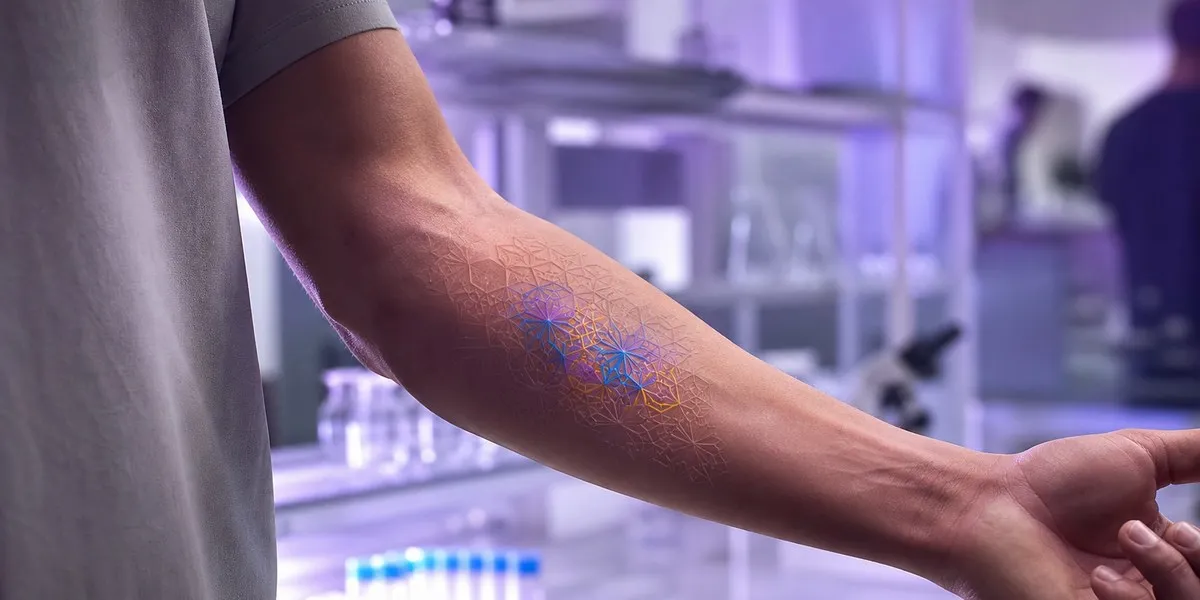
Researchers in the United States have developed PhotoTat, a tattoo ink whose images can be activated by light and then hidden without removing the tattoo. The pigment remains in the skin, but its visibility and color change depending on the lighting, Live Science reports.
How photoactive ink works
The system contains three primary colors: blue, magenta, and yellow. It uses photochromic dyes — light-sensitive compounds capable of changing color when exposed to light of a specific wavelength. The dyes were placed in polymethyl methacrylate nanoparticles, a medical plastic already used in implants and dermal fillers.
According to study co-author Carson Bruns, an associate professor of biomedical engineering at the University of Colorado Boulder, a 365-nanometer ultraviolet LED activates the pigments in about two to three seconds. Under normal indoor lighting, the colors can remain visible for several hours to several days. After exposure to bright sunlight, they disappear within seconds.
More current news is available on the UA.News Telegram channel Telegram.
Separate control of colors
Different parts of the design can be activated with light of different wavelengths. For example, the magenta pigment responds to green light, while the yellow one responds to blue light. This makes it possible to change the appearance of one tattoo by turning on only individual colored elements.
The team found that all three PhotoTat color channels retained their switching ability in the skin for 1.4 to 2.2 years. Bruns tested different versions of the ink on himself: his tattoo consists of separate scale-like sections, each containing a different version of the experimental pigment.
The technology can also be combined with conventional tattoo ink. For example, hidden PhotoTat elements can be added to a permanent black design and will appear only after activation. Bruns also believes such tattoos could be useful in medicine, when an image should be visible only during an examination by a doctor.




