
Artem Shilo was sentenced to 8 years in prison but will not serve time: what the agreement between the former SBU employee and investigators entails
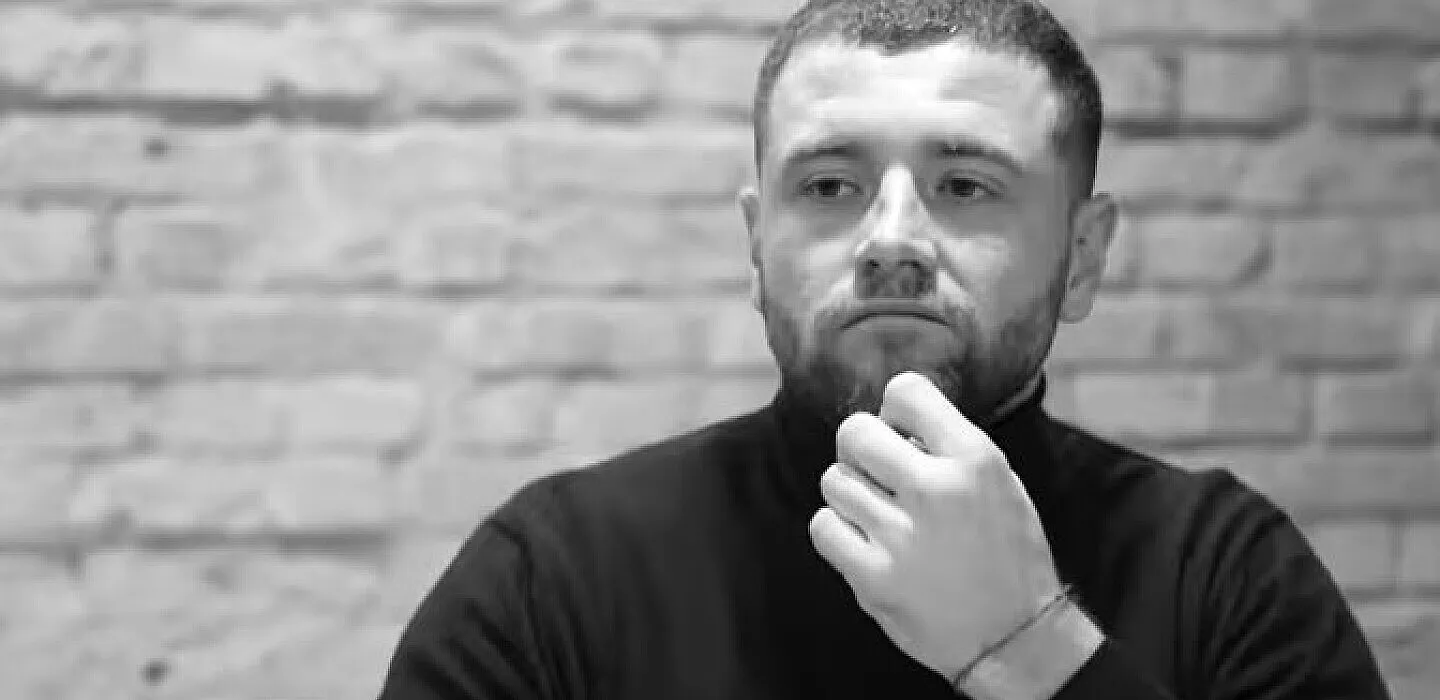
Artem Shilo, a former adviser to the Office of the President and a former employee of the Security Service of Ukraine (SBU), was sentenced to eight years in prison in a case involving procurement fraud at Ukrzaliznytsia; however, he will not serve his sentence behind bars. The High Anti-Corruption Court approved his plea agreement with prosecutors, under which Shilo was exempted from serving his sentence and placed on a three-year probationary period. Instead, he must pay a fine, transfer funds and real estate to the state, compensate for damages, and transfer 80 million hryvnias to the “Come Back Alive” fund. In addition, Artem Shilo has pledged to expose other individuals involved in the case.
People’s Deputy Yaroslav Zheleznyak explained the details of this agreement and its potential consequences. According to him, the total value of the payments and confiscations stipulated in the agreement amounts to nearly 670 million hryvnias. At the same time, the main intrigue of this case lies not in how much Shilo must return to the state, but in what testimony he will provide to law enforcement.
As a reminder, on October 13, the High Anti-Corruption Court (VAKS) approved Shilo’s plea agreement with investigators. Under its terms, he received an eight-year prison sentence but was released from serving his sentence with a three-year probationary period. He was also barred from holding positions in military units and law enforcement agencies for three years.
As Zheleznyak explained, the agreement includes several financial obligations. Shilo must pay a fine of 204 million hryvnias. He was allowed to pay this amount over the course of a year in four installments of 51 million hryvnias per quarter. An additional 325.7 million hryvnias is subject to special confiscation, along with three apartments.
In addition, the agreement calls for the reimbursement of 60 million hryvnias in damages and the transfer of 80 million hryvnias to the “Come Back Alive” fund. According to Zheleznyak’s calculations, the total amount of these obligations, together with the confiscated funds and real estate, amounts to nearly 670 million hryvnias.
The lawmaker drew attention to the scale of the assets involved in the case: one of the apartments has an area of 183 square meters, and the other two are 102 square meters each. It is likely that all three are located in the “Novopecherski Lypky” residential complex. A Mercedes car, which had been seized, was also mentioned in the case.
The plea agreement is significant not only because of the money. According to official information from the Specialized Anti-Corruption Prosecutor’s Office, Shilo has agreed to provide incriminating testimony against other SBU employees and to disclose details about another crime currently under investigation by NABU.
It is this part of the agreement that could have consequences for other individuals implicated in the case. Zheleznyak speculates that Shilo, who held a leadership position in the SBU and served as an advisor to the Office of the President, may have had information about people involved in other potential schemes. At the same time, the specific group of individuals he is implicating and the content of his testimony have not been publicly disclosed.
Why Shilo Will Not Serve an Actual Prison Term
The plea agreement provides for an exchange: the defendant pleads guilty to the agreed-upon charges, fulfills specified obligations, and cooperates with law enforcement; in return, he may receive an agreed-upon sentence approved by the court.
The MP explains that the decision to exempt Shilo from actually serving his eight-year sentence may cause outrage—especially given the scale of the case and the amount of damages cited in the indictment. On the other hand, however, if the case were heard without a plea agreement, the legal proceedings could drag on for years due to appeals. The state would not necessarily receive all the funds and property stipulated in the current agreement within the specified timeframes. Similarly, the investigation might not have obtained testimony that could help uncover other crimes.
The effectiveness of such an agreement will depend on whether Shilo fulfills his obligations and whether his testimony helps identify others involved in potential crimes.
Will Shilo’s testimony implicate other officials?
It is important to acknowledge Shilo’s influential position within the law enforcement system prior to the UZ embezzlement case. He had worked at the Security Service of Ukraine (SBU) since 2012, and in 2022, according to a journalistic investigation by Bihus.Info, he headed the Department for the Protection of Critical Infrastructure. In 2021, Shilo became an advisor to the Office of the President.
Yaroslav Zheleznyak claims that Shilo had high-level contacts and participated in meetings with President Volodymyr Zelenskyy attended by law enforcement officials. Zheleznyak also mentioned Shilo’s former interests in the drone and cryptocurrency industries and suggested that he might have known about the financial transactions and connections of other officials.
At the same time, claims that Shilo allegedly testified against specific high-ranking officials have not yet been confirmed by publicly available case materials. Zheleznyak separately noted that he cannot confirm or deny reports on Telegram channels regarding possible testimony against former SBU Head Vasyl Malyuk.
According to the lawmaker, Shilo’s plea deal could mark the beginning of new revelations if the investigation is able to use the testimony obtained to identify other participants in potential schemes. Whether the deal will live up to these expectations will become clear once its terms are fulfilled and the investigations proceed further.
What Was Artem Shilo Accused Of?
According to the prosecution, the case involved several incidents related to Ukrzaliznytsia’s procurement activities and the origin of funds. As part of the plea agreement, Shilo admitted to the charges described by Zheleznyak.
The first incident concerned the procurement of power transformers in 2022. According to the investigation, through individuals under their control at Ukrzaliznytsia, they ensured that certain companies won the tenders. The equipment was purchased from an Uzbek manufacturer through Bulgarian and Ukrainian intermediaries, and its cost, according to the prosecution, was doubled. The losses in this episode were estimated at 95 million hryvnias.
The second episode concerned the procurement of cable products. Investigators believed that the conspirators received kickbacks amounting to 7% of the procurement value, and the resulting losses exceeded 140 million hryvnias.
Another episode involved 173 million hryvnias, which, according to the prosecution, Shilo had accumulated during his service in the security agencies. According to the investigation, the funds were laundered, in particular through the purchase of luxury apartments in central Kyiv and transfers to an individual entrepreneur under the guise of payment for beauty salon services.
Thus, the two procurement-related episodes involved over 240 million hryvnias in losses to “Ukrzaliznytsia,” while another episode concerned the origin and laundering of 173 million hryvnias.
Shila was detained on April 2, 2024, by NABU detectives under the procedural supervision of the SAP. He was later released on bail of 30 million hryvnias. According to Zheleznyak, the case went to trial in August 2026.
In total, through criminal schemes, the group’s leader laundered over 175 million hryvnias (the initial suspicion cited 155 million hryvnias). The money was funneled through front individuals and legal entities under the guise of “payments for beauty salon services,” after which luxury penthouses, apartments, houses, and commercial real estate were purchased for individuals under their control.
As part of the investigation, law enforcement officials secured the seizure of the suspects’ property and assets totaling over 1.4 billion hryvnias.
According to a UA.News investigation, a coalition of politicians, security services, and front companies was behind the large-scale embezzlement schemes at “Ukrzaliznytsia.” Three individuals served as the architects of this corruption empire:
- Artem Shilo (a former SBU employee and former member of the Presidential Office)—the “gray cardinal” and head of the “back office,” who used his influence within the SBU to ensure the elimination of competitors;
- Viktor Bondar (Member of Parliament, former Minister of Transport)—responsible for providing political cover and overseeing the operations of controlled companies (in particular, the “Ukrkabel” plant);
- Volodymyr Kotlyar (businessman)—an intermediary responsible for registering shell companies, handling documentation, and distributing financial flows.
Profits were distributed clearly: two-thirds went to Kotlyar’s companies, and one-third to Bondar’s organization. In total, at least 16 people were involved in the schemes: Ukrainian Railways officials, lawyers, accountants, as well as close associates (for example, MP Galina Bondar’s mother, in whose name a whole series of specialized enterprises were registered).
How the schemes worked: a 5–7% kickback and a “Belarusian” transformer
The investigation established that the Bondar-Kotlyar group had been operating at Ukrainian Railways since 2019, and in the fall of 2021, Shilo’s “back office” joined them. The parties agreed: Shilo, using his influence within the Security Service of Ukraine (SBU), would guarantee wins in tenders at prices inflated by 30–60%, and Bondar would pay him a kickback of 5–7% of the contract amounts.
In the case of the transformers, a front company controlled by a Belarusian citizen with ties to Russia was brought in. It purchased equipment in Uzbekistan and resold it to Ukrzaliznytsia at double the markup. Shilo personally blocked competitors offering cheaper products by citing a letter from the Security Service of Ukraine (SBU) regarding “threats to national security”—while at the same time completely “overlooking” the Russian-Belarusian connection to the supplier under his control.




