
Europe is under threat from Russian sabotage operations that could result in mass casualties
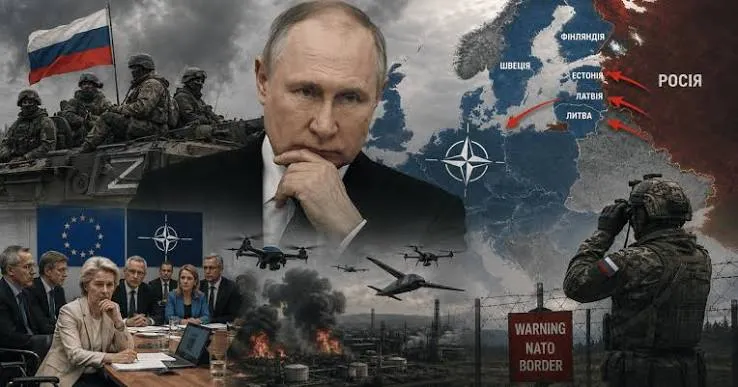
Russia is stepping up its sabotage activities in Europe, and critical infrastructure is increasingly becoming a target. Arson and explosions are threatening railways, airports, and power grids, and the attacks themselves could result in a large number of casualties.
IISS analysts believe that Moscow is waging a covert campaign against European countries, even though it is not formally at war with them. To this end, Russia is using networks of operatives who act under the direction or with the support of Russian intelligence agencies. One of the main goals of such operations is to undermine aid to Ukraine. Russian sabotage is intended not only to disrupt logistics and the delivery of military aid but also to make European governments question the wisdom of continuing to support Kyiv.
According to the report, the number of sabotage incidents involving explosive devices and arson has roughly doubled over the past year. Analysts warn that such attacks are becoming increasingly dangerous and could lead to mass casualties.
Russia is paying particular attention to countries that play a key role in supporting Ukraine. The highest number of incidents was recorded in Germany and Poland. These two countries account for more than half of all incidents that the IISS links to Moscow and that occurred between October 2025 and September 2026. “Strikes are primarily directed at targets critical to Ukraine’s military efforts, while attacks on civilian infrastructure and high-profile targets are intended to undermine public confidence and support for Ukraine,” the report’s authors note.
Poland has become one of the main targets
According to the IISS analysis, 29 incidents linked to Russia were recorded in Poland from October 2025 to September 2026. One of the most high-profile incidents occurred in November 2025, when an explosion damaged the railroad tracks between Warsaw and the Ukrainian border. No one was killed at the time. However, Polish Prime Minister Donald Tusk later stated that the explosion was most likely planned to destroy a train.
This incident demonstrated just how serious the threat to rail service can be. Damage to tracks or other critical infrastructure can not only halt transportation but also endanger the lives of passengers.
How Russian Sabotage Networks Operate
The report states that Russian intelligence services have created networks of operatives capable of carrying out operations in various European countries. For their attacks, they use, among other things, homemade explosive devices equipped with timers and detonators. In some cases, law enforcement agencies have managed to apprehend the perpetrators or expel Russian intelligence officers from the country. However, this has not led to a noticeable decrease in the number of sabotage incidents. “Arrests create problems for the operatives themselves, but so far have in no way affected the Russian intelligence services that direct them and support their activities,” the report’s authors emphasize.
Analysts also noted that sabotage operations occur in waves. This may indicate centralized planning of operations in Moscow. Furthermore, there are signs that one network is coordinating attacks across several countries simultaneously. At the same time, several separate groups that compete with one another may be operating in Europe. Therefore, the arrest of members of one network does not mean that the others will cease their activities.
What Russia Is Trying to Achieve Through Sabotage
The IISS believes that the Russian sabotage campaign operates on two levels. At the tactical level, the attacks are aimed at disrupting aid supply routes to Ukraine or delaying the delivery of aid. This primarily involves transportation and other infrastructure critical to supporting the Ukrainian army. At the strategic level, the goal is much broader. Russia is trying to make aid to Ukraine so costly for European countries—both economically and politically—that their governments will ultimately refuse to continue supporting Kyiv.
Thus, sabotage operations may be aimed not only at physically damaging infrastructure. They are also intended to instill fear, mistrust, and public pressure on the governments of European countries. Analysts warn that the immediate threat posed by such operations extends not only to facilities but also to people who may be near the site of an attack. This is stated in a report by the International Institute for Strategic Studies (IISS), according to CNN.
NATO Secretary General Mark Rutte, speaking at the annual session of the NATO Parliamentary Assembly in Berlin, Germany, noted an increase in hostile activity against Alliance member states. These include, in particular, sabotage on railways, attacks on cargo ships at sea, and continuous cyberattacks, according to the Anadolu Agency.
Polish Minister of National Defense Władysław Kosiniak-Kamysz commented on media reports that, in late October and early November, Russian intelligence services planned a sabotage operation on Polish territory near the border with Russia’s Kaliningrad Oblast. According to this plan, Ukraine was to be blamed for the operation.




