
Culinary Celebration on November 19, 2026 — Bayram Oshi Day: Three Recipes

Bayram Oshi is a traditional Uzbek festive pilaf prepared for large family gatherings, celebrations, and when entertaining guests. Its name translates as “festive pilaf,” and this dish holds a special place in Tashkent’s culinary culture. For Uzbeks, it is not just a meal, but also a symbol of hospitality, generosity, and unity.
Bayram Oshi is a variety of Uzbek pilaf traditionally prepared for holidays and important occasions. The word “bayram” means “holiday,” and “osh” means “food” or “dish.” Therefore, the name can be translated as “festive pilaf.” This variety is particularly well-known in Tashkent, where it is considered one of the signature dishes of the local cuisine.

It is difficult to pinpoint the exact date of Bayram Oshi’s origin. It is not a standalone dish with a clearly established history, but rather part of the ancient tradition of preparing pilaf in Central Asia. Pilaf itself has a long history, and its predecessors existed in various regions of Central Asia and Persia. Researchers link the development of such dishes to the spread of rice, trade, and cultural contacts between peoples. At the same time, it is impossible to pinpoint a single country where pilaf first appeared in its modern form.
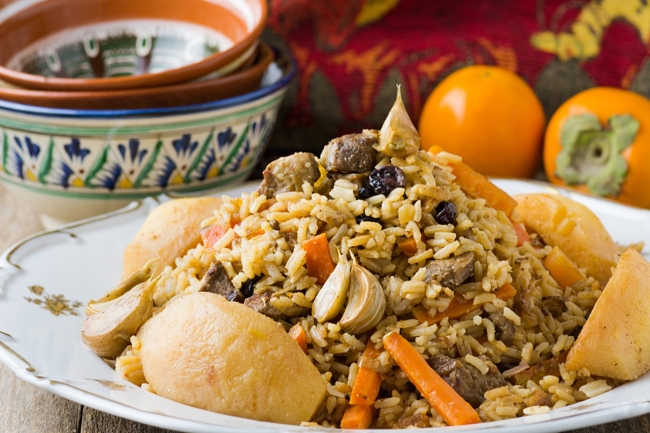
In Uzbekistan, pilaf has, over time, become much more than just an ordinary dish. It is prepared on weekdays, but it plays a particularly important role during weddings, the birth of children, engagements, family celebrations, and gatherings with guests. Bayram Oshi is a festive version of this tradition, which involves preparing a large amount of food for many people. That is why it is often cooked in a large cauldron, with several cooks and assistants involved in the process.
What Bayram Oshi Is Made Of
The dish is based on rice, meat, carrots, onions, oil, and spices. Lamb is most commonly used for Uzbek pilaf, although recipes may vary among different families and regions. Rice plays an important role: it must absorb the aroma of the meat, vegetables, and spices well, while remaining fluffy. Local rice varieties, particularly devzira, are often chosen for preparation.

First, the meat, onions, and carrots are sautéed in heated oil. Then water and spices are added to create the rich base of the pilaf—the zirvak. After that, the rice is added to the cauldron, and the dish is cooked until done. Whole heads of garlic are often placed on top; during cooking, they soften and take on a delicate flavor.
Different cooks may have their own secrets: some add more carrots, others use a special variety of rice, or adjust the proportions of spices. Some recipes include raisins, chickpeas, and other additions. That’s why even within the same city, pilaf can vary in taste and preparation method. At the same time, the main thing remains the same—the dish should be hearty, aromatic, and meant for a shared meal.
Where Bayram Oshi Is Especially Popular
This variety of pilaf is most closely associated with Tashkent—the capital of Uzbekistan. It is there that the festive Bayram Oshi is celebrated as one of the regional variations of this national dish. The city has specialized restaurants where pilaf is cooked in large cauldrons and served in portions throughout the day. These places are called pilaf centers, and they have become part of the city’s culinary culture.

At the same time, pilaf is popular not only in Tashkent. It is prepared in all regions of Uzbekistan, but the recipes differ noticeably. For example, in Andijan, Kovatok Palov—pilaf with stuffed cabbage rolls wrapped in grape leaves—is well known. In Khiva, they prepare a local version called Chalov. Samarkand and Bukhara also have their own cooking methods, which local chefs are just as proud of as Tashkent residents are of their Bayram Oshi.
Pilaf is popular even beyond the borders of Uzbekistan. Similar dishes are prepared in Tajikistan, Kyrgyzstan, Kazakhstan, Afghanistan, and other Central Asian countries. They may differ in rice varieties, types of meat, spices, and cooking techniques. Different peoples have their own names and culinary traditions associated with this dish. Therefore, plov can be considered one of the region’s most famous dishes, although it is the Uzbek tradition of plov that enjoys distinct international recognition.
Why Plov Has Become a Symbol of Hospitality
In Uzbek culture, pilaf is more than just lunch or dinner. Preparing it often serves as an occasion to bring together relatives, friends, neighbors, and acquaintances. The dish is served at weddings, during engagements, to celebrate the birth of a child, upon returning from a pilgrimage, and at other important events. Plov is also prepared during memorial services to honor the memory of the deceased.

The tradition of morning pilaf—nakhorghi osh—holds a special place. It is prepared at dawn, particularly during large wedding celebrations. Hundreds of guests may be invited to the table, and the dish itself is served before the start of the regular workday. Such events require large cauldrons, a significant amount of ingredients, and a team of people to assist with preparation and serving.

Pilaf is also associated with charity and mutual aid. It can be prepared and distributed to people who find themselves in difficult circumstances. In this way, a shared meal becomes not only a sign of respect for guests but also an opportunity to support others. It is precisely this social role of plov that UNESCO highlights: the tradition helps strengthen bonds between people and pass on cultural customs from older generations to younger ones.
Interesting Facts About Uzbek Pilaf
- In 2016, the culture and traditions of preparing Uzbek pilaf were inscribed on UNESCO’s Representative List of the Intangible Cultural Heritage of Humanity. The organization recognized not only the recipe itself but also the customs associated with the preparation and consumption of the dish. These include family gatherings, festive meals, hospitality, and the transmission of culinary skills across generations. In other words, it was not simply a method of cooking rice with meat that received international recognition, but an entire cultural tradition.
- Another interesting feature is that in Uzbekistan, pilaf is often cooked in large metal cauldrons. These can cook dozens or even hundreds of servings at once. This is especially important for major holidays, as hosts strive to treat all their guests. In such cases, preparing plov becomes a collaborative effort, with everyone having their own task.
- There is also a popular legend that links the name “plov” to the dish’s seven ingredients. According to this version, each letter of the word corresponds to one of the ingredients—onions, carrots, meat, oil, and other ingredients. Another legend tells of the physician Avicenna, who allegedly recommended pilaf to the son of the ruler of Bukhara, who had fallen ill due to an unrequited love. However, these are just legends, not confirmed historical facts. They have become part of the popular narrative about the dish’s origins and demonstrate just how important a place plov holds in local culture.
- Bayram Oshi remains an example of how a dish that seems ordinary at first glance can become part of a national identity. It is prepared not only to feed guests, but also to celebrate an important event, support loved ones, or bring several generations of a family together around one table. That is why festive pilaf in Tashkent is not just another recipe in Uzbek cuisine, but a tradition that continues to be cherished and passed down.
Three Pilaf Recipes
1. Bayram Oshi with Vegetables and Olive Oil

A festive pilaf made with rice, carrots, onions, and aromatic spices.
Ingredients
400 g rice (preferably Devzira or basmati)
2 large carrots
2 onions
100 ml olive oil
1 head of garlic
700–800 ml water (depending on the rice)
1 tsp. zira
½ tsp. coriander
salt to taste
black pepper to taste
a pinch of turmeric (optional)
Preparation
1. Prepare the rice. Rinse it thoroughly several times until the water runs clear. Then cover the rice with warm water and let it soak for 30–40 minutes. This will help the grains cook evenly and prevent them from sticking together.
2. Chop the vegetables. Slice the onion into thin half-rings and cut the carrots into long matchsticks. For pilaf, it’s best not to grate the carrots so they retain their shape during cooking.
3. Prepare the base. Heat the olive oil in a cauldron or heavy-bottomed pot. Add the onion and sauté until golden brown. Then add the carrots and cook for another 7–10 minutes, stirring occasionally.
4. Add the spices. Add the cumin, coriander, black pepper, salt, and, if desired, turmeric. Stir the vegetables so the spices release their aroma into the oil. If desired, you can add a little barberry for a slight tang.
5. Add the rice. Drain the rice and spread it evenly over the vegetables. Do not mix the rice with the carrots and onions; simply spread it out evenly.
6. Add water and garlic. Carefully pour in hot water so that it covers the rice by about 1–1.5 cm. Place a whole head of garlic in the center, after removing the top layer of skin.
7. Cook until done. Cook the pilaf over medium heat until the water has almost completely evaporated. Then reduce the heat, cover the pot with a lid, and let it sit for another 20–25 minutes.
8. Let the pilaf rest. Turn off the heat and let the dish sit, covered, for another 10–15 minutes. Before serving, gently stir the rice with the carrots and onions.
The pilaf can be served on a large plate, garnished with fresh herbs. The garlic that was cooked with the rice is also served at the table.
2. Bayram Oshi with Dried Fruit, Almonds, and Olive Oil

An unusual take on festive pilaf with the sweet notes of dried fruit, nuts, and aromatic spices.
This version is perfect for those who want to try a pilaf with a more interesting flavor. The dried fruit adds a subtle sweetness to the dish, while the almonds provide a pleasant texture. Olive oil helps bind all the ingredients together and makes the rice fragrant. This pilaf can be served as a festive dish or prepared for a family dinner.
Ingredients
400 g basmati rice
2 carrots
1 large onion
100 ml olive oil
70 g raisins
100 g dried apricots
50 g almonds
1 head of garlic
1 tsp. zira
½ tsp cinnamon
½ tsp. coriander
salt to taste
black pepper to taste
700–800 ml hot water (depending on the rice)
Instructions
1. Rinse the rice. Rinse the rice several times with cold water to remove excess starch. Let it soak for 30 minutes, then drain the water.
2. Prepare the dried fruit and nuts. Rinse the raisins and pat them dry. Cut the dried apricots into small pieces. You can leave the almonds whole or cut them in half. If you want a more pronounced nutty flavor, lightly toast them in a dry skillet beforehand.
3. Chop the vegetables. Slice the onion into half-rings and cut the carrots into thin strips. This way, the vegetables will retain their texture better and won’t turn to mush.
4. Sauté the onions and carrots. Heat the olive oil in a pot, add the onions, and sauté until golden brown. Then add the carrots and cook for another 7–10 minutes.
5. Add the dried fruits and spices. Add the raisins, dried apricots, cumin, coriander, cinnamon, black pepper, and salt. Stir and heat the ingredients for a few minutes so the dried fruit softens and the spices release their aroma.
6. Spread the rice. Distribute the rice evenly over the vegetables and dried fruit. Do not mix it with the bottom layer so that the rice remains fluffy during cooking.
7. Add water and garlic. Pour in hot water so that it covers the rice by about 1–1.5 cm. Place a head of garlic—with the outer skin removed—in the center.
8. Cook the pilaf. Over medium heat, wait until the water has almost completely evaporated. Then cover the pot with a lid, reduce the heat, and cook for another 20–25 minutes.
9. Add the almonds. Add the almonds 5 minutes before the end of cooking or after turning off the heat. Cover the pot and let the pilaf rest for another 10–15 minutes.
10. Serve. Gently stir the rice, carrots, dried fruit, and almonds. If desired, garnish the dish with fresh herbs or an extra serving of nuts.
3. Bayram Oshi with Chickpeas, Quince, and Olive Oil

An unusual festive pilaf with chickpeas, fragrant quince, and Middle Eastern spices.
This version of Bayram Oshi will appeal to those who love the combination of sweet and spicy flavors. The chickpeas make the dish more nutritious, while the quince adds a pleasant fruity aroma and a hint of tartness. During cooking, the quince softens but retains its shape. Combined with carrots, rice, and spices, the result is a hearty pilaf with a unique flavor. The dish contains no meat, making it suitable for a vegetarian menu.
Ingredients
400 g basmati rice or long-grain rice
150 g dried chickpeas or 250 g pre-cooked chickpeas
1 large quince
2 carrots
2 onions
100 ml olive oil
1 head of garlic
1 tsp. zira
½ tsp ground coriander
½ tsp turmeric
a pinch of cinnamon, if desired
salt and black pepper to taste
700–800 ml hot water (amount depends on the type of rice)
Preparation
1. Prepare the chickpeas. If using dried chickpeas, soak them in cold water for 8–12 hours beforehand. Then rinse and boil until tender, but don’t let the chickpeas fall apart. If using canned chickpeas, simply drain the liquid and rinse them with water.
2. Prepare the rice. Rinse it several times until the water runs almost clear. Cover with clean water and let stand for 20–30 minutes. Drain the water before cooking.
3. Chop the vegetables and quince. Slice the onion into half-rings and the carrots into long strips. Wash the quince thoroughly, remove the core, and cut into wedges. You can leave the skin on if it’s not too tough.
4. Sauté the vegetables. Heat the olive oil in a cauldron or deep pot. Add the onion and sauté until golden brown. Then add the carrots and cook for another 7–8 minutes, until they soften slightly.
5. Add the quince and chickpeas. Place the quince pieces and cooked chickpeas in the pot. Add the cumin, coriander, turmeric, salt, and pepper. Gently stir and heat for a few minutes so the ingredients absorb the aroma of the spices.
6. Add the rice. Spread the rice evenly over the vegetables, quince, and chickpeas. Do not mix the layers together. Place a whole head of garlic in the center, after removing the top layer of skin.
7. Add water. Carefully pour in hot water so that it covers the rice by about 1–1.5 cm. Cook over medium heat until most of the water has been absorbed.
8. Finish cooking the pilaf. Reduce the heat to low, cover the pot with a lid, and let it sit for about 20–25 minutes. During this time, the rice should become soft, and the quince should be tender but not overcooked.
9. Let the dish rest. Turn off the heat and leave the pilaf covered for another 10–15 minutes. Then gently stir the ingredients, taking care not to break up the quince pieces.
10. Garnish and serve. Transfer the pilaf to a large plate. Top with quince slices, chickpeas, and garlic. If desired, add a little fresh herbs or toasted almonds.
A little culinary secret: if you want the quince to have a more pronounced flavor, sauté it separately in a small amount of olive oil until it develops a light golden crust. This will help it retain its shape better and give the pilaf a pleasant fruity aroma.




