
Cabbage, potatoes, and cucumbers are getting cheaper: what's happening with prices in Ukraine
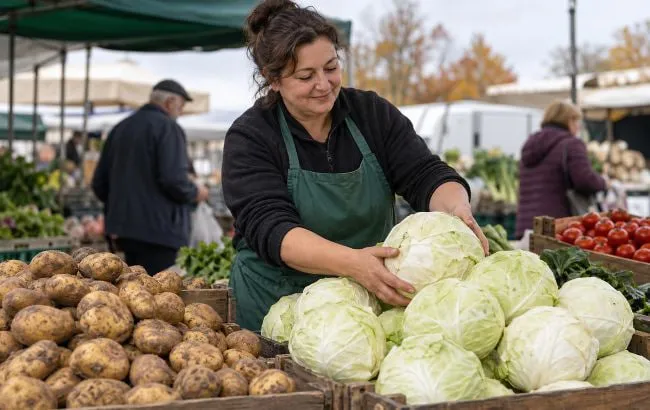
In Ukraine, the price of white cabbage continues to fall, while tomatoes have become more expensive again. Over the past week, potatoes, cucumbers, and a number of other vegetables have also become cheaper. Fruit prices varied: some items became cheaper, while others became more expensive.
Last week, market changes were uneven. An increase in the supply of white cabbage was accompanied by a drop in prices. At the same time, tomatoes continued to become more expensive.
Which vegetables are getting cheaper, and which are getting more expensive
During the week of October 9–16, prices for white cabbage fell from 17–20 to 16–18 hryvnias per kilogram. Potatoes became cheaper, dropping from 11–14 to 10–13 hryvnias, and cucumbers from 50–65 to 40–60 hryvnias per kilogram.
Tomatoes, on the other hand, became more expensive. While they were selling for 55–65 hryvnias per kilogram a week earlier, prices stood at 55–75 hryvnias on October 16.
Zucchini also became cheaper—from 30–35 to 25–30 hryvnias per kilogram—as did eggplant—from 45–60 to 40–55 hryvnias. The price of cauliflower dropped from 50–60 to 40–50 hryvnias per kilogram, and the price range for sweet peppers narrowed from 30–65 to 45–60 hryvnias.
At the same time, prices for some vegetables remained unchanged. Beets cost 13–15 hryvnias per kilogram, napa cabbage—30–35 hryvnias, radishes—45–50 hryvnias, and garlic—70–180 hryvnias.
Among herbs, green onions became more expensive: from 60–100 to 115–125 hryvnias per kilogram. In contrast, dill became cheaper, dropping from 175–185 to 155–165 hryvnias, parsley from 125–135 to 115–125 hryvnias, and lettuce—from 100–120 to 80–100 hryvnias per kilogram.
What’s happening with fruit and berry prices
In the fruit segment, apples lead in terms of the number of listings. The number of sellers offering this fruit has increased. Platform participants also frequently offered grapes and pomegranates, and sales of persimmons from Uzbekistan have picked up again. Pears dropped off the list of the most frequently sold items.
Over the week, grapes became more expensive: prices rose from 50–110 to 75–180 hryvnias per kilogram. Melons also went up in price—from 35–50 to 35–60 hryvnias. Bananas rose in price from 65–70 to 70–75 hryvnias per kilogram.
At the same time, pomegranates became cheaper, dropping from 190–250 to 140–170 hryvnias per kilogram. Prices for lemons fell from 70–95 to 70–85 hryvnias, and for kiwis—from 140–160 to 130–150 hryvnias.
The price ranges for some fruits have also changed. In particular, pears were offered at 35–90 hryvnias per kilogram, compared to 40–80 hryvnias a week earlier, and plums at 35–75 hryvnias, compared to 50–65 hryvnias.
The price range for raspberries narrowed from 220–370 to 250–270 hryvnias per kilogram, for nectarines—from 90–140 to 100–120 hryvnias, and for oranges—from 60–120 to 85–110 hryvnias.
This was reported with reference to data from EastFruit.
Certain food products have become more expensive in Ukraine over the past three days: a list has been published.
As a reminder, prices for berries are rising in Ukraine due to a European shortage.
Changes in the dollar exchange rate may affect the cost of a number of products in Ukrainian stores. Goods that Ukraine imports or produces from foreign raw materials are most at risk of becoming more expensive.
Ukraine has seen a rise in wholesale prices for domestically grown tomatoes. At the capital’s wholesale market, red, pink, and ground tomatoes have become more expensive. At the same time, prices in retail chains vary significantly depending on the type of product, region, and the availability of special promotional offers.




