
Who Is Undervaluing Ukrgasbank Ahead of Privatization?
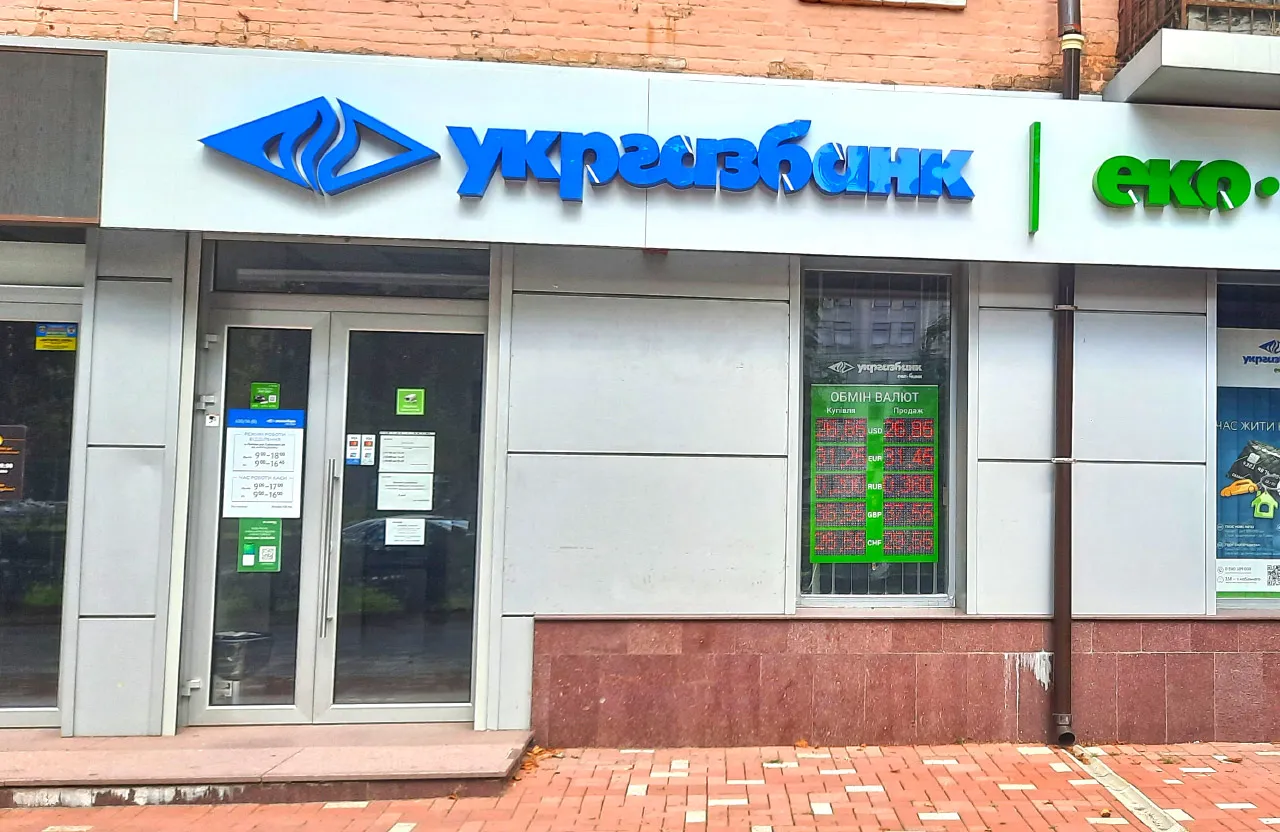
The state-owned Ukrgasbank is preparing for privatization, but billions of hryvnias in non-performing loans, issues with internal audits, and the concentration of managerial influence pose serious risks to its value.
The spotlight has fallen on Acting Chairman of the Board Volodymyr Ponomariov and Director of the Banking Security Department Yuriy Irkliyenko. Their actions raise questions regarding adherence to the principles of collegial governance, the independence of internal controls, and the proper protection of state funds.
On October 23, the Ministry of Finance announced that it had engaged Rothschild & Co and FinPoint to prepare for the sale of Ukrgasbank. The international advisors are tasked with evaluating the financial institution and helping to identify potential investors. However, successful privatization depends not only on financial indicators but also on transparency in management and the absence of hidden risks.
Concerns about the situation within the institution have already spread beyond the bank. Concerned Ukrgazbank employees have sent a letter to Andriy Pyshnyy, Governor of the National Bank of Ukraine; Serhiy Marchenko, Minister of Finance of Ukraine; and Yaroslav Zheleznyak, Chair of the Verkhovna Rada’s Temporary Investigative Commission on Economic Security.
The appeal cites possible violations of the law, abuse of official authority, interference in internal audits, and risks of financial losses at the state-owned bank. The main focus is on the activities of Volodymyr Ponomariov and Yuriy Irkliyenko.
Who Actually Controls the Management of Ukrgazbank
Volodymyr Ponomariov has been working at Ukrgazbank since 2017. Until 2023, he headed the risk management department, after which he joined the board of directors. Since October 3, 2026, he has served as acting chairman of the board.
His many years of work in the risk management system raise questions about the independence of this area. In particular, there are reports that Ponomarev retains informal influence over his former subordinates, who are responsible for assessing credit risks.
Yuriy Irkliyenko, director of the banking security department, plays an equally important role in the management system. It is this department’s responsibility to detect violations and protect the bank’s assets. At the same time, questions arise regarding Irklienko’s involvement in approving the results of internal audits that may have pertained to the activities of his own department.
Such a potential concentration of influence over risk management, banking security, and internal investigations poses a threat to the independence of control functions. If decisions are effectively made by a small circle of officials, the principle of collegial governance could become a mere formality.
Non-performing loans totaling hundreds of millions of hryvnias
One of the most telling examples of financial risks is the lending to Odessagaz-Postachannya LLC and Yu-Gaz LLC for a total amount of approximately 612 million hryvnias. After problems arose with loan repayment, the bank, according to available information, commissioned an external forensic audit to determine the causes of the losses and possible violations during the lending process.
Preliminary audit results allegedly pointed to shortcomings in the work of the risk management department, which was previously headed by Ponomarev. At the same time, reports emerged of possible pressure being exerted on employees to soften the audit’s final conclusions. These circumstances require independent verification.
Another high-profile case involves transactions with NextTrade LLC and entities affiliated with ERU. According to available information, the company’s debt exceeds 17 million euros.
The legality of these transactions has already become the subject of an investigation by the National Anti-Corruption Bureau of Ukraine (NABU). According to court documents, investigators examined the possible provision of high-risk financing disguised as bank guarantees and letters of credit with insufficient collateral.
A separate issue is the objectivity of internal audits regarding these transactions. There are reports of Ponomarev and Irkliyenko influencing the relevant procedures, although the activities of the units under their control also required evaluation.
Another negative incident occurred in 2023, when the NBU fined Ukrgasbank 64.6 million hryvnias for violations in the area of financial monitoring. At the time, Ponomarev headed the risk management department. Although the fine itself does not establish his personal culpability, the issue of the effectiveness of controls remains relevant.
Ponomarev’s Role in Lending to VS Energy and Ties to Russia’s VTB
Ukrgazbank’s lending operations in late 2017 deserve special attention, when companies within the VS Energy group received financing for two hotel assets.
These included loans totaling 910 million hryvnia, or approximately $33 million, for the “Premier Palace” in Kyiv, and an additional 130 million hryvnia for the “Dnister” hotel. The total amount exceeded 1 billion hryvnia.
In early 2018, VS Energy also settled its debt obligations to VTB Bank, which is linked to Russian state capital. According to available information, financing from Ukrgasbank may have been used to repay these debts, although the direct flow of funds still requires documentary confirmation.
The then-leadership of the risk management department played a key role in this story. It was Ponomarev who headed the department responsible for analyzing lending risks. According to information provided to our editorial team, he personally signed the department’s recommendation to grant the loan. The original document must be examined for definitive confirmation.
This story raises questions about the possible indirect use of state funds to repay debts to a Russian bank. Additional risks stem from the fact that VS Energy had interests in Ukraine’s energy infrastructure, and the group was linked to Russian businessmen.
It is necessary to determine whether these circumstances were properly assessed during the lending process and whether the state’s financial interests were protected.
Reputational concerns regarding Irklienko arose even during his time at the Deposit Guarantee Fund
Yuriy Irkliyenko previously worked at the Deposit Guarantee Fund, where he served as the temporary administrator and liquidator of troubled banks, including “Mykhailivskyi” and “Platinum Bank.”
His decisions have repeatedly been the subject of legal disputes.
In 2019, the Supreme Court confirmed the illegality of Irkliyenko’s inaction as an authorized representative of the Deposit Guarantee Fund for failing to provide information about a depositor of “Mykhailivskyi” Bank to receive guaranteed compensation.
In 2020, the Supreme Court upheld rulings regarding unlawful actions and inaction in the case of a “Platinum Bank” depositor related to the payment of 198,000 UAH.
Will Management Problems Lead to a Decline in Ukrgazbank’s Value?
In addition to non-performing loans, personnel changes at Ukrgazbank are raising concerns. Reports have emerged of pressure being exerted on certain department heads, the dismissal of experienced specialists, and the possible exclusion of some officials from decision-making in collegial bodies.
If confirmed, these circumstances would indicate a risk of a weakening of the internal control system at precisely the time when the bank needs to demonstrate transparent management to potential investors.
Non-performing loans, potential conflicts of interest, and non-transparent personnel decisions could negatively impact Ukrgazbank’s investment appeal. Potential buyers will factor in the risks of additional financial losses, legal disputes, and corporate governance shortcomings.
That is precisely why the state, as the owner of 94.94% of Ukrgasbank’s shares, must not ignore reports of possible violations.
The Ministry of Finance must ensure an independent audit of the bank’s management, particularly that of Volodymyr Ponomariov and Yuriy Irkliyenko. If abuses are confirmed, drastic personnel changes are needed to protect this state asset from further losses, restore effective corporate governance, and prevent the failure of the planned privatization of Ukrgazbank.




